
Manchester United's Decline: Apathy and Accountability
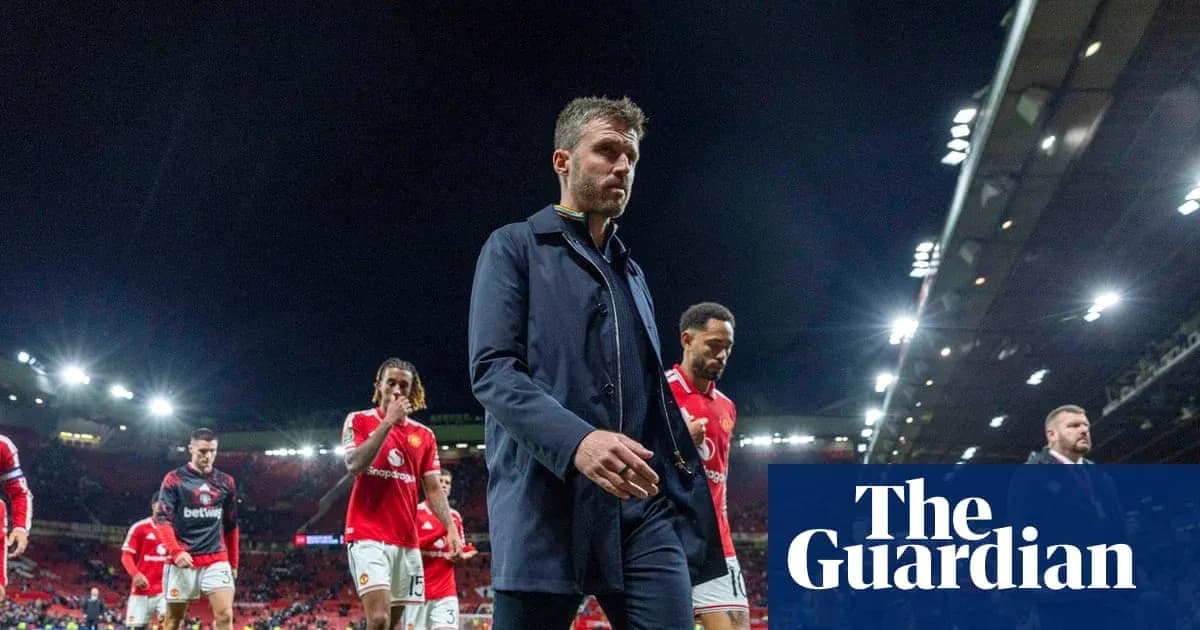
The boos came first. Then the apathy. Manchester United’s limp exit from the Carabao Cup on Wednesday felt less like a shock and more like the latest chapter in a domestic cup decline that has become grimly familiar.
Michael Carrick, expression set and shoulders heavy, walked towards the tunnel as the jeers rained down. His players followed, heads bowed. Up in the directors’ box, Jason Wilcox barely disguised his displeasure. Yet for all the anger trained on the dugout, the blame runs far higher.
Supporters understand this. They always do. They know who fronts the club and who runs it. Carrick and his squad are the public face, wheeled out for sponsor events and post-match interviews, left to explain what others have helped create.
The head coach is the one who stands on the touchline, so he becomes the lightning rod. Tactics, transfers, mentality – it all gets laid at his door. But United’s problems are not the work of one man and one bad night.
Carrick only returned in January. The long-term blueprint – such as it is – predates him. Others have been steering the strategy that has left United in this state. Still, he carries the pressure. Lose at Fulham on Sunday and that pressure will escalate sharply.
Boos for the night, apathy for the era
United’s fanbase is no longer naïve about the powerbrokers. Protests against the Glazer family and Sir Jim Ratcliffe have become a recurring soundtrack. They know not every misplaced pass or missed tackle is on the head coach or the players. The boos are for the performance. The apathy is for the project.
It stings that a club back in the Champions League found itself outspent in the summer by promoted sides. Yet that is the inevitable cost of years of financial mismanagement. When the money finally arrives, it has to be used with clarity and courage. United did not manage either.
Nothing illustrated the malaise more starkly than the defeat by Brighton. Two goals up inside 10 minutes, United then vanished. For the remaining 80 minutes they were barely participants, and they deservedly lost. That is not bad luck. It is structural.
Brighton, heavily rotated, still looked the more coherent and imaginative side. Their squad has been assembled with shrewd scouting and smart recruitment, drawing from seven different countries this summer alone. United, by contrast, went back to the familiar – four signings from fellow Premier League clubs. Where Brighton embraced risk and range, United retreated into the comfort of the known.
The irony? The most effective signing last summer, judged on value and consistency, was Senne Lammens from Royal Antwerp – precisely the sort of deal United rarely attempt.
A lopsided rebuild
Carrick and Wilcox cannot be judged fully until Carlos Baleba, the most expensive of the three summer arrivals, is fit and available. On paper, his athleticism should address United’s chronic lack of mobility in midfield. Targeting that area after Casemiro’s departure and Manuel Ugarte’s struggles made sense. But it was never the only weakness.
Inside the club, there was recognition that the squad needed broader surgery. Yet the market activity did not reflect that. The narrow focus in recruitment already looks naïve.
Raiding other Premier League clubs is almost always expensive, but there is at least a logic: players know the league, the pace, the demands. Even so, given the shortage at left-back and Joshua Zirkzee’s limitations, spending £50m on Andrey Santos rather than sourcing a cheaper midfield option looks questionable. It left other areas exposed.
Someone at United needs to explain why £155m went on three players in the same position. Why that was considered the best route to balance. Why Carrick must now improvise a plan B at left-back when Luke Shaw’s injury lay-off was widely anticipated.
Silence at the top
Wilcox has spoken publicly before – selectively. On 30 October 2025, with United buoyed by three straight wins, he gave an in-house interview about the long-term vision. Within 10 weeks, that plan had been ripped up with the sacking of Ruben Amorim.
Since then, Wilcox’s voice has largely disappeared, save for the formal statements that accompany dismissals. As results have dipped, the silence has grown louder.
Across Europe, sporting directors regularly front up to the media. They explain strategy, justify decisions, absorb some of the heat. The Premier League, and United in particular, remain resistant to that culture. With the team sitting 13th, the absence of senior accountability feels stark.
Wilcox’s journey to this role matters. He arrived from Southampton in 2024, initially as technical director, and played a part in the decision to keep Erik ten Hag after an eighth-place finish. Ten Hag was then sacked after a poor start to the following season. Amorim came in from Sporting, despite his tactical approach clashing with the squad profile and no budget available for the overhaul he required.
The outcome was predictable: 15th in the league and a meek Europa League final defeat by Tottenham. After 14 months, Amorim was removed. Wilcox stayed, granted another opportunity to get it right.
Carrick under fire, but not alone
Carrick cannot be spared criticism. This United team are underperforming. Heavy wins over promoted Ipswich and Azerbaijan’s Sabah are not enough to disguise a disappointing start.
Defensively, they look fragile. Seven goals conceded in four Premier League games tell their own story, but the reality has looked even worse. Against Brighton, the central pairing of Leny Yoro and Ayden Heaven veered close to calamitous. Up front, the attack has lacked cohesion, with movements and ideas seemingly out of sync.
Wilcox’s reputation from his time as Manchester City’s head of academy remains strong. Those who worked with him speak highly of his eye for talent and suitability for youth development roles. At United, where the stakes and scrutiny are far higher, that reputation is being tested.
One potential flashpoint looms in JJ Gabriel’s future. Many supporters will be furious if the teenager departs. On this, though, Wilcox has pushed hard to keep him, working through the player’s inner circle in an effort to persuade him to stay. Not every looming problem is of his making.
But the broader truth is unavoidable. With power at United comes responsibility, and right now only one figure is consistently forced to carry it in public.
Ten Hag paid with his job. Amorim did too. The structural architects remained. Carrick and Wilcox are both deeply invested in making this work, yet if results do not turn quickly, it feels inevitable that only one of them will be made to pay.
Related News
Michael Olise and Harry Kane Shine in Bayern's Victory
Liverpool Target Bayern Star Lennart Karl as Wirtz Struggles
Mikel Arteta Confirms Max Dowman Will Stay at Arsenal
Max Dowman: Arsenal's Teenage Sensation and Loan Prospects
Liverpool's Season Challenges and Mac Allister's Contract Situation
Lauren Hemp Shines as Manchester City Defeats Liverpool 4-2