
Manchester United Faces Crisis as JJ Gabriel Seeks Exit
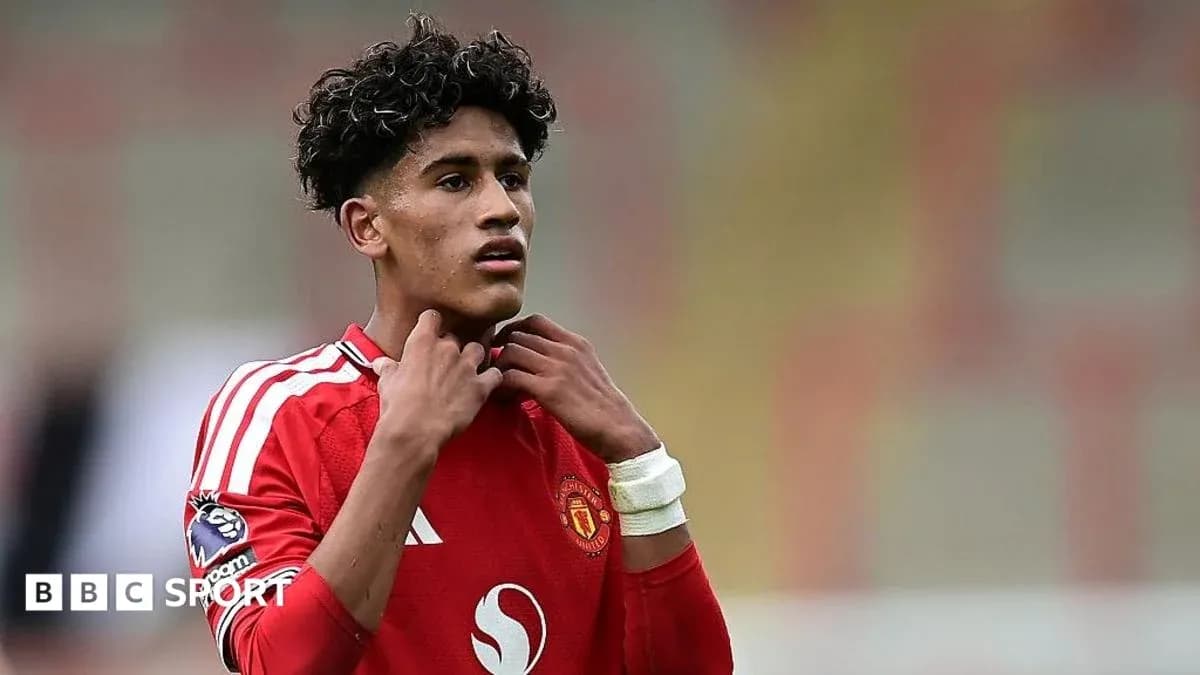
Old Trafford was supposed to be preparing for a record-breaking debut. Instead, Manchester United are dealing with the shock that JJ Gabriel wants out.
The mood has turned abruptly. A week ago, the 15-year-old was the club’s next great story: a hat-trick on his Uefa Youth League debut at Leigh, the buzz that he would become United’s youngest ever player in the Carabao Cup against Brighton, the sense of a carefully managed rise to the top.
Now, United are in firefighting mode.
Chief executive Omar Berrada and director of football Jason Wilcox are locked in talks, trying to convince Gabriel to reverse his decision and commit his future to the club. Those close to the situation sense it is an uphill battle. Trust has eroded. Promises, they believe, have not been kept. Gabriel and his camp are convinced both of his current level and his long-term ceiling. They no longer feel United are matching that belief.
And Europe has noticed.
Real Madrid, Barcelona and Paris St-Germain are tracking developments, circling a teenager some inside United have privately called “the best 15-year-old in Europe”. Elite academies recognise elite talent quickly. Gabriel has been on that radar for a while.
A prodigy with numbers to match the hype
The numbers from last season tell the story. Gabriel was named Premier League Under-18 Player of the Year, and United’s own Under-18 Player of the Year, despite starting the campaign as a 14-year-old.
He scored 23 goals in the Premier League Under-18 competition and added three more in the FA Youth Cup. He drove United to the Premier League Under-18 Cup final and the FA Youth Cup final, often looking a level above his peers.
Those who work with him talk about balance, pace, tight control and a fierce shot. This season, he has added a more combative edge, showing a willingness to press, tackle and win the ball back. The raw talent is not in question.
Adam Lawrence, United’s Under-21s coach, put it bluntly after Gabriel’s hat-trick against Sabah FK in the Uefa Youth League.
“The first thing in my job is not to ruin him,” Lawrence said. “When you have a talented player like JJ, you obviously don't want to stifle their freedom and their creativity.”
That kind of ability doesn’t stay secret. It drifts across borders, into recruitment meetings in Madrid, Barcelona and Paris. That is where United now find themselves: trying to protect a jewel that everyone can see.
Contracts, loopholes and a ticking clock
United’s first move when news of Gabriel’s unrest leaked out was to stress privately that they would try to persuade him to stay, and to point out that his registration runs until the end of the season.
That gives them some protection against domestic rivals. It is less reassuring when it comes to Europe.
Gabriel holds an EU passport. His mother is of Greek-Cypriot heritage, his father represented the Republic of Ireland twice. That detail matters. In 2016, the Court of Arbitration for Sport ruled in favour of a 16-year-old dual Argentine-Italian national leaving Velez Sarsfield for Manchester City, deciding that as an EU national he could move within the European Union despite coming from a non-EU league.
There is precedent too for English clubs losing talented teenagers for little or nothing. West Brom received no compensation when 16-year-old Louie Barry left for Barcelona in 2019, with Fifa ruling they had not formally offered him a scholarship. West Brom had claimed €130,000 in training compensation. Six months later, Barry moved on to Aston Villa for just under £1m.
The nightmare scenario for United is clear. Gabriel turns 16 on 6 October. If he walks then, they could end up with no compensation for a player whose market value, even at this early stage, would already be measured in millions.
Broken pathway, broken trust
Gabriel is not the first teenager to clash with a club over his development.
Jadon Sancho stopped training with Manchester City at 17 to force a £10m move to Borussia Dortmund, convinced he would play more in Germany than under Pep Guardiola. Morgan Rogers, a team-mate of Barry’s in West Brom’s 2019 FA Youth Cup semi-final side, left for City on his 17th birthday.
United sources believe that when Gabriel agreed to stay last summer, after meetings with the hierarchy, a clear pathway was laid out. Those around the player now feel that path has not been honoured.
He did get exposure to the senior environment, first under Ruben Amorim and then Michael Carrick. There was talk of a first-team debut last season in the FA Cup. That idea was shut down by Under-18s coach Darren Fletcher, who had stepped up as interim senior manager after Amorim’s dismissal. Fletcher believed it was too soon.
The expectation then moved to this season. Gabriel was tipped to be involved in pre-season and to make his senior bow in the autumn, most likely in the EFL Cup.
The reality has been far more frustrating.
Pre-season promises that never materialised
Gabriel missed the early pre-season trip to Helsinki to face Wrexham on 18 July, with his absence attributed to his return date for training. After that, he travelled with every squad.
He barely played.
He featured only once, for eight minutes, against Atletico Madrid in Stockholm. He went to Trondheim for the friendly against Rosenborg on 24 July. Carrick used 11 substitutes that day. Gabriel was one of only two outfield players who did not get on the pitch. Five of those who did play have since left the club, either permanently or on loan.
Another moment stuck in the memory. At Croke Park, 18-year-old Tynan Thompson, who had joined from Tottenham just three weeks earlier, was handed a 45-minute senior debut against Leeds United. Gabriel travelled, but again did not feature.
Inside the club, there was still a belief that his time would come, that he would become United’s youngest ever player this autumn. The Carabao Cup, with a home tie against Brighton, looked ideal. So did the Champions League group, where Azerbaijani champions Sabah appeared the weakest visitors to Old Trafford on paper.
United led Sabah 3-0 at half-time. By the 72nd minute, Carrick had used all five substitutes. Gabriel was nowhere near the action.
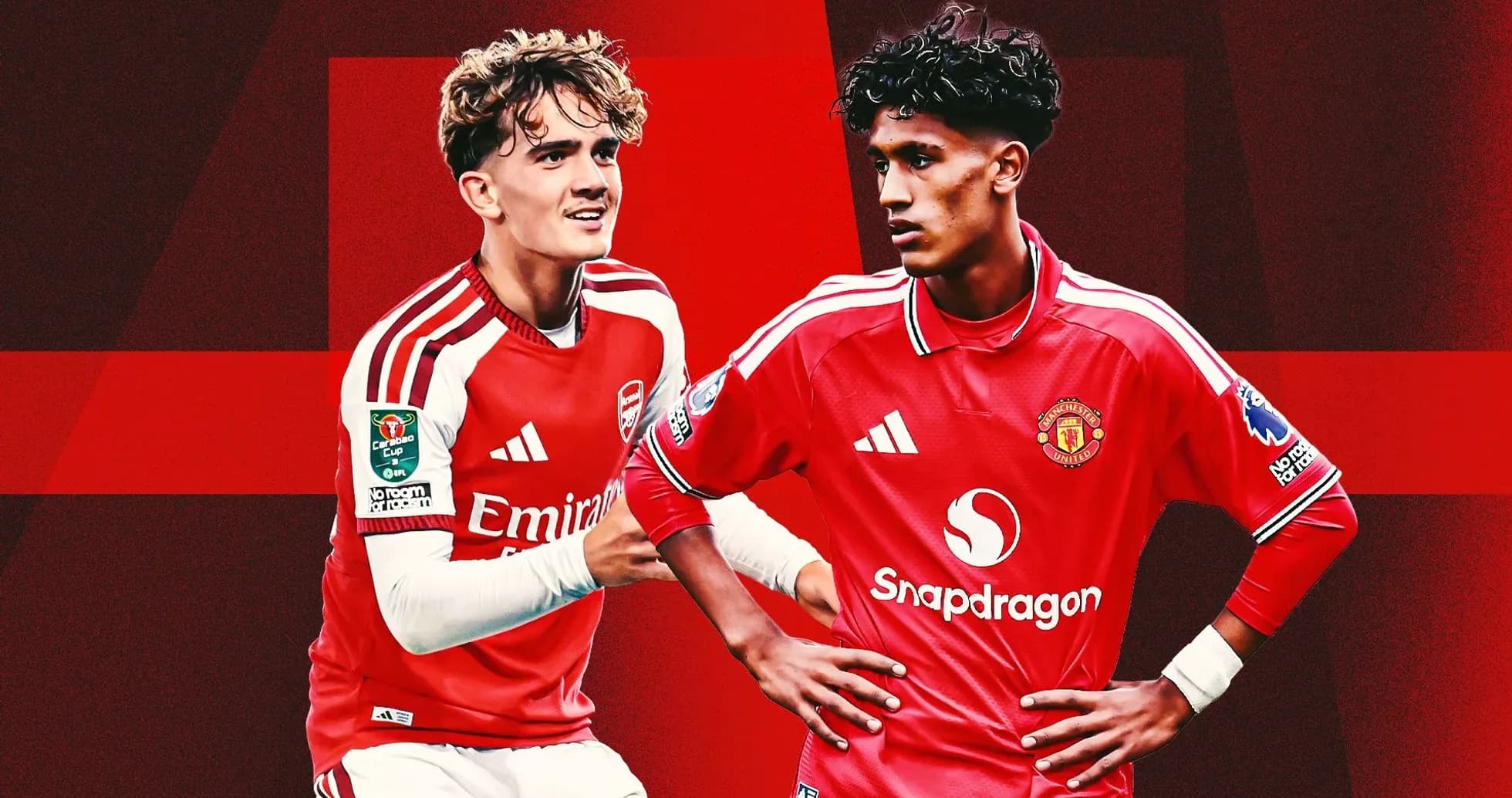
This time, there was a technical barrier. As with Max Dowman at Arsenal last season, Uefa rules meant a 15-year-old could only play if listed on the club’s A list. Gabriel was not on it.
United filled their allocation of 25 players, including Manuel Ugarte, who will not feature until after the registration window reopens in January because of a knee injury. Thompson did make the list. Gabriel did not.
Inside Carrington, some staff have argued Gabriel is not yet at the physical level required to cope with senior football. Those close to the player reject that outright. They look at Dowman making his Arsenal debut at 15, at Bayern Munich handing Lennart Karl his bow at 17, and they ask why United are hesitating with a player they themselves have lauded as Europe’s best in his age group.
The question now is no longer when Gabriel will play for Manchester United.
It is whether he will play for them again at all.
Related News
Taylor Harwood-Bellis Set for Aston Villa Debut
Kendry Páez's Journey at Chelsea: From Starlet to Scrutiny
Manchester United Faces Crisis as JJ Gabriel Seeks Exit
Soufiane Rahimi Rewrites Al Ain History in AFC Champions League
Gabriel: Manchester United's Rising Star Amid Transfer Speculation
Andoni Iraola Addresses Liverpool Transfer Speculation