
Manchester United's Left-Back Dilemma: The Gamble of 2023
As the clock hit 23:00 BST on 1 September and the window slammed shut, one question hung over Manchester United like a cloud.
What about a left-back?
All summer, as arguments raged over Manchester United’s transfer priorities and Michael Carrick’s evolving squad, one assumption felt safe: the club would not go into a season that could stretch beyond 60 games with just one senior specialist on the left side of defence.
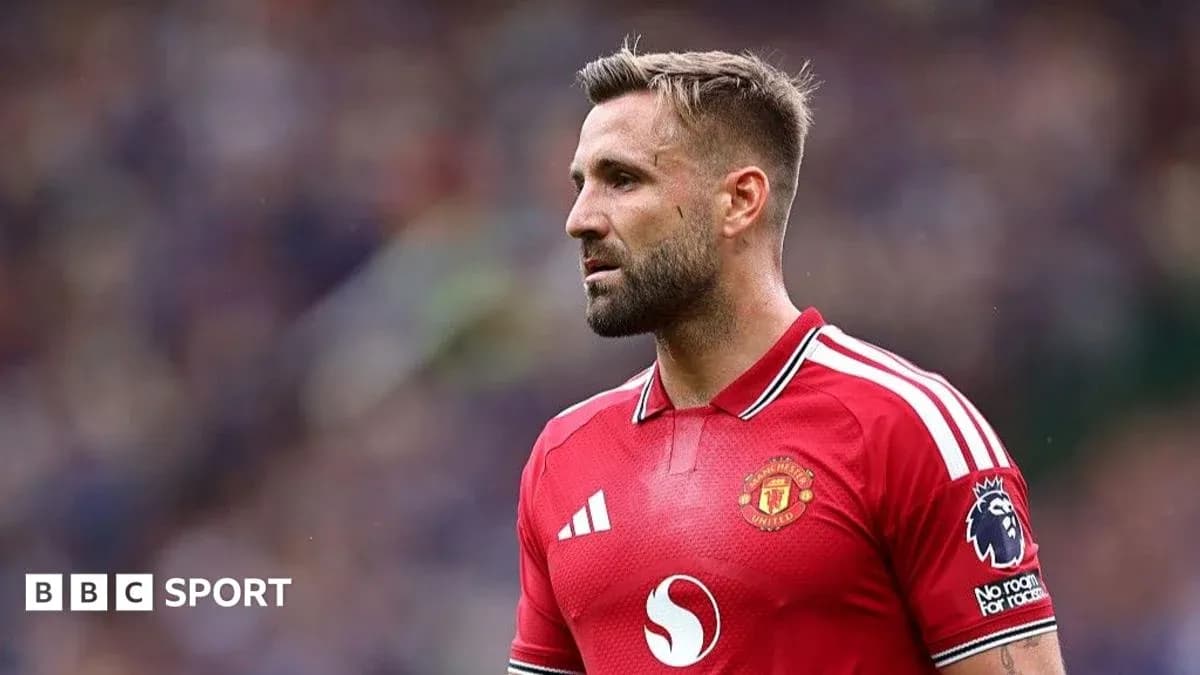
Luke Shaw is that one. He started all 38 Premier League matches last season, a remarkable effort given his chequered injury history. It was a marathon, and he somehow made it look manageable.
No-one inside the club believes he can do it again.
Tyrell Malacia’s departure at the end of June, when his contract expired, only sharpened the focus. With the 31-year-old Shaw expected to be managed carefully across four competitions, reinforcement felt less like a luxury and more like basic squad planning.
Names were lined up. Lewis Hall at Newcastle. Alejandro Balde at Barcelona. Jorge Salinas at Racing Santander. Then, late in the window, came a bold swing: Rayan Ait-Nouri, prised from the other side of Manchester on loan.
City refused. Talks never got close once it became clear United would have to commit to a future obligation to buy. Faced with that, the club chose to wait for what they see as their top targets rather than move for a compromise.
So now the deadline has passed. The gamble is real.
Hall, Baleba and a budget with limits
Inside Old Trafford, there is no doubt about how highly they rate Lewis Hall.
If Newcastle had shown any genuine willingness to do business at a reasonable price, United would have moved. But a club already stripped of key players by Premier League rivals this summer was never likely to let a highly regarded 22-year-old go cheaply.
Discussions quickly made one thing clear: the fee would be huge.
United’s budget was not. With finite funds and multiple areas to address, they chose to double down on what they viewed as the real priority – central midfield. That decision ended with a £70m commitment to bring Carlos Baleba in from Brighton.
Hall, they decided, could wait. Next summer, not this one.
Balde was only available to buy, not on loan. Salinas had a relatively low release clause, but Atletico Madrid were in pole position and stayed there. When United eventually circled around to Argentina defender Nicolas Tagliafico, they missed out again – and by then, their thinking had already shifted.
The late move for Ait-Nouri, triggered by an agent’s approach, betrayed that shift. It also betrayed something else: an unease. United were not entirely convinced by the path they had chosen.
The plan: Shaw, Mazraoui… and a teenager in limbo
Strip it back and the plan looks like this: Shaw as first-choice left-back. Noussair Mazraoui as his main deputy, even though he is naturally a right-sided defender and more commonly used there at club level. Diogo Dalot as another option, capable of switching flanks. And Harry Amass somewhere in the background.
Mazraoui does at least play left-back for Morocco, which helps the logic. Dalot has covered there before. On paper, the numbers add up.
The Amass situation does not.
A natural left-back, the 19-year-old came through United’s academy, impressed on loan at Sheffield Wednesday last season, then saw his progress checked by injury shortly after joining Norwich in the winter window. This summer, he was back in red, shadowing Shaw in pre-season and catching the eye of those watching closely.
Yet, for reasons the club have not fully explained, United were open to letting him leave.
The pattern is not new. In 2024, Erik ten Hag left Amass out of his Community Shield squad, barely a week after the teenager had handled himself well against Mo Salah in a pre-season game in the United States. Ten Hag’s view at the time was that Amass was not yet physically ready.
Two years on, the defender is older, stronger and more experienced. Multiple clubs have registered interest. His absence from United’s Premier League 2 game against Leicester on Monday only fuelled the expectation he would go out again, probably on loan.
He stayed. The window closed. No move. No clarity on his role.
Yoro’s emergence and the full-back shuffle
One reason United feel able to stretch their defensive options lies on the opposite flank.
Leny Yoro, signed from Lille for £52m in 2024 as a central defender, spent most of this pre-season playing as a right-back under Carrick. Against Ipswich on Sunday, he again came on in that role, replacing Dalot, while Mazraoui took Shaw’s place on the left.
At 20, Yoro is still learning the craft of a full-back. Positioning, timing of runs, when to step infield – all of it is new. But he has the tools: pace, strength, composure on the ball. United only need to look across the city at Josko Gvardiol’s successful adaptation at Manchester City to see how a centre-back can be reshaped into a modern full-back.
This is where the risk becomes clear. United are not just betting on Shaw’s fitness. They are betting on Mazraoui to translate his international role into a Premier League one, on Dalot to continue as a reliable utility man, and on Yoro’s rapid development to free up those around him.
Scar tissue from Telles, Darmian and Reguilon
There is a reason they have gone this way.
United have spent the summer holding a hard line on fees and refusing to pay beyond what they believe a player is worth. The scars of previous “solution signings” are still visible.
Alex Telles. Matteo Darmian. Sergio Reguilon. All arrived in recent years as stop-gaps or depth options. None truly matched the level required for a side with United’s ambitions.
This board and this football department did not want to repeat that cycle: overpaying for a player who clogs the wage bill, blocks a pathway, and has to be moved on again in two years.
On a spreadsheet, the decision makes sense. On a balance sheet, it probably looks like the right call.
But matches are not played on spreadsheets.
The emotional surge of a tight game, the panic when Shaw pulls up in the 70th minute away at a title rival, the scrutiny when a makeshift left-back is exposed in a Champions League knockout tie – that is where this gamble will be judged.
United have chosen flexibility over a specialist, development over a short-term fix, patience over panic.
The season will decide whether that was smart restraint or a risk that comes back to haunt them.
Related News
Bournemouth's Transfer Window Review: A Solid 7 Out of 10
Manchester United's Left-Back Dilemma: The Gamble of 2023
Piero Ausilio Set to Leave Inter Milan After 28 Years
Manchester United Target Cole Palmer Amid Chelsea's Future Plans
Ralf Rangnick's Warning About Manchester United's Left-Back Issues
Sam Johnstone Joins Celtic on Season-Long Loan from Wolves