
Manchester United's Dilemma: Lewandowski or Future Striker?
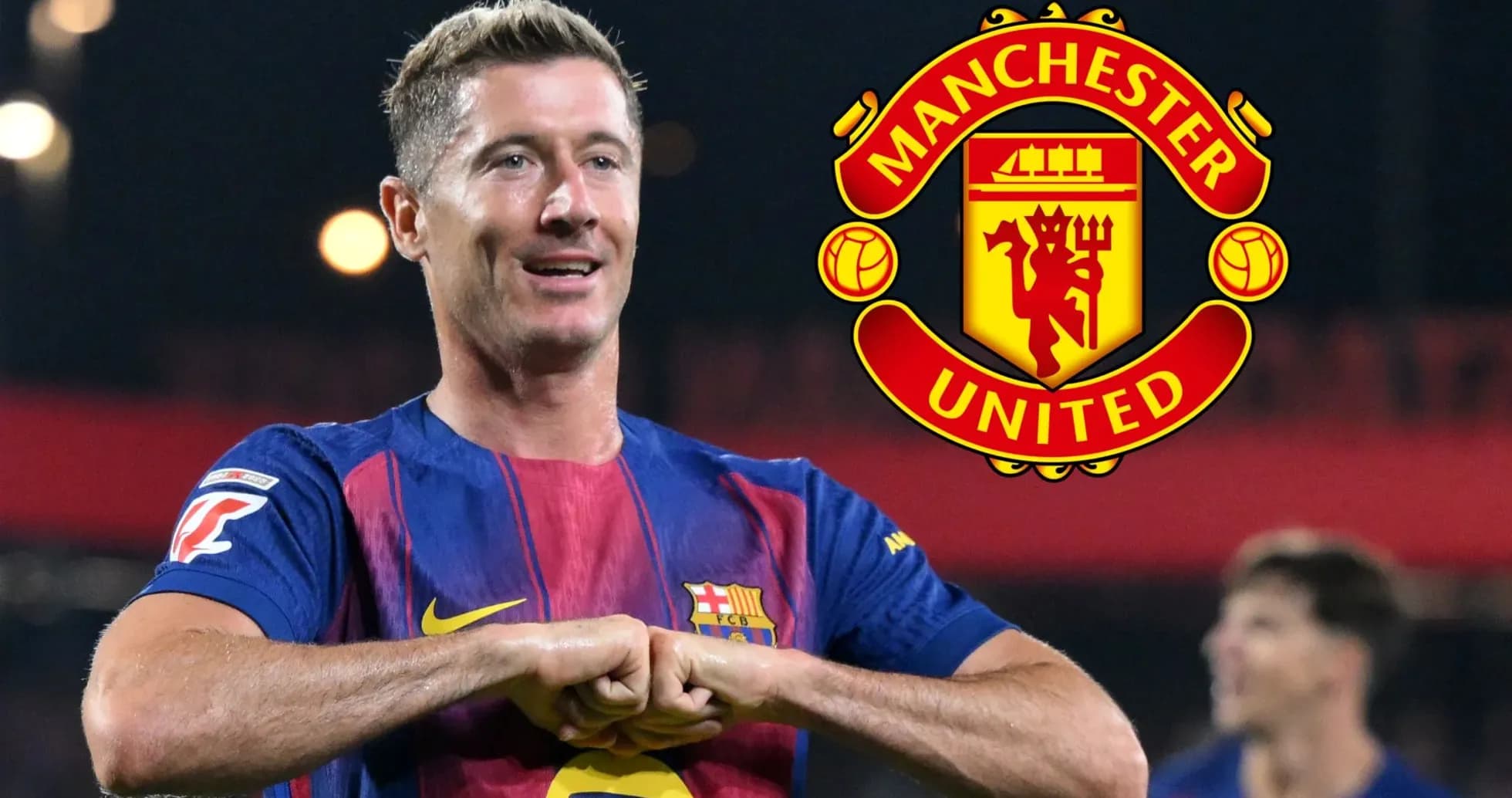
Manchester United’s search for the next great Old Trafford goalscorer has burned through money and patience in equal measure. Big cheques, bigger promises, and too many false dawns.
Last summer finally felt different.
Under Michael Carrick, the baton passed on from Ruben Amorim did not slip. It quickened. Matheus Cunha and Bryan Mbeumo brought thrust and intelligence to United’s attack, and the team stopped looking like a collection of signings and started to resemble a plan. The reward was a surge towards Champions League qualification.
At the heart of that charge stood Benjamin Sesko. The £74 million arrival from RB Leipzig took time to find his range, then exploded. Ten of his 12 goals came in just 16 appearances in 2026, the numbers of a striker suddenly working out the tempo of English football and bending it to his will. Powerful, direct, still raw, but clearly climbing.
Carrick now faces a familiar United dilemma: how to turn promise into power in Europe’s elite competition. The answer on the table is a name that has terrorised Champions League defences for more than a decade.
Robert Lewandowski.
A free agent. A record of 109 Champions League goals. A striker whose reputation alone still tilts a dressing room. No transfer fee, only wages and the weight of expectation. For a club that has overspent on potential, the lure of proven class for nothing is obvious.
But does a 37-year-old Lewandowski truly fit the modern United project?
Louis Saha, who knows what it means to lead the line at Old Trafford and to win both the Premier League and Champions League in red, did not dismiss the idea. Far from it.
“I would think about it,” he said, speaking to GOAL in association with CasinoNews. Experience at that level, in those stadiums, under that pressure – it still matters. “He will definitely help.”
The attraction is clear. In the league, Saha can see Sesko and Lewandowski sharing the load, the veteran easing the burden on the younger man, setting standards in training, dragging the group up by sheer professionalism. Leadership, ruthlessness, the daily example of what a world-class No.9 looks like. Saha even believes Lewandowski could still bring “15 to 20 goals in some way or another”.
That kind of output, at zero transfer cost, is not easily ignored.
Yet the warning lights flash around the longer-term picture. Saha’s mind goes back to Zlatan Ibrahimovic, another free-transfer heavyweight who walked into Old Trafford in 2016 and immediately bent the season to his will. Twenty-eight goals, three trophies – the Community Shield, League Cup and Europa League – and a swagger that had been missing since Sir Alex Ferguson retired.
Ibrahimovic was a triumph, but always a short-term one. “He will leave in two years” was the unspoken caveat attached to every superlative. Saha sees the same question hanging over Lewandowski. You can sign him. You can enjoy him. You cannot build around him.
That is where the debate sharpens.
If this is United’s first step back into the Champions League after years in the wilderness, does a statement signing make sense? Saha accepts that from a pure impact point of view, it does. The name alone would send a message. This is not a club content just to sneak back into Europe; it wants to walk in with its chest out.
But football logic cuts deeper than marketing.
“The problem I see,” Saha explained, “is just because Lewandowski still has the same style as Sesko.”
Two penalty-box predators. Two central reference points. Two players who want to occupy the same zones. For Saha, that complicates the romantic image of a devastating partnership.
He talks about a 4-4-2, but even there he struggles to picture Sesko and Lewandowski truly complementing each other. It feels more like rotation than combination, “sharing the spot a bit more” rather than forming the kind of dovetailing pair that defined some of United’s greatest attacks.
That is why, when he imagines the ideal profile, Saha’s mind drifts to a different type of forward altogether.
“I would prefer someone like, I don’t know if I’m saying something crazy, but Kylian Mbappe, or someone that style,” he said. Not specifically Mbappe, but that mould: explosive, wide-to-central, a forward who can spin in behind, drift into pockets, and play off a more traditional No.9.
He invokes Olivier Giroud’s role for Mbappe with France – the selfless target man who occupies defenders and frees space for the star. United, in his view, have always been at their most dangerous with that blend of foil and finisher, runner and reference point.
Dwight Yorke buzzing around Andy Cole. A mobile partner circling Ruud van Nistelrooy. Different eras, different managers, same formula. One striker to pin, one to probe.
That is the template Saha wants Carrick to chase.
United’s financial position means they are not trapped. The summer window opens on June 15, and there is money to spend. The club does not have to trawl the free-agent market for a bargain just to fill a gap. Midfield needs reinforcing. Other areas of the squad demand attention.
Snapping up Lewandowski for nothing would change the budget lines. It would allow heavier investment elsewhere. It would also bring in a master of the art for Sesko to study every day, perhaps accelerating his development to the point where United never again feel compelled to throw another £70 million at a “ready-made” No.9.
That is the crux of it. Short-term statement or long-term structure? A legendary finisher nearing the end, or a profile that unlocks Sesko and restores the old United formula of movement, pace and variety around the central striker?
Carrick and the club’s hierarchy know the stakes. The next decision up front will not just shape a season. It will say everything about what kind of Manchester United they intend to be in the Champions League era ahead.
Related News

Wilfred Ndidi’s Marriage Reportedly Ends as He Enters New Relationship

Cristiano Ronaldo's Top 5 Most Valuable Cars in His Extraordinary Collection
Ben Whittaker’s Challenge to Prove Eddie Hearn’s Bold British Boxing Bet
Peter Handscomb on the Challenge of Facing Indian Bowlers
How to Watch UFC 332: Silva vs. Wang Live on CBS and Paramount+ This Saturday
Raul Rosas Jr. Shares His Thoughts on the Shocking UFC Vegas 121 Finish Against Raoni Barcelos