
Manchester United's Midfield Overhaul: Can Carlos Baleba Provide Balance?
Manchester United have ripped up their midfield and started again. More than £150million has gone into the engine room. And yet one big question still hangs over Old Trafford: have they finally found the balance they’ve been chasing for years?
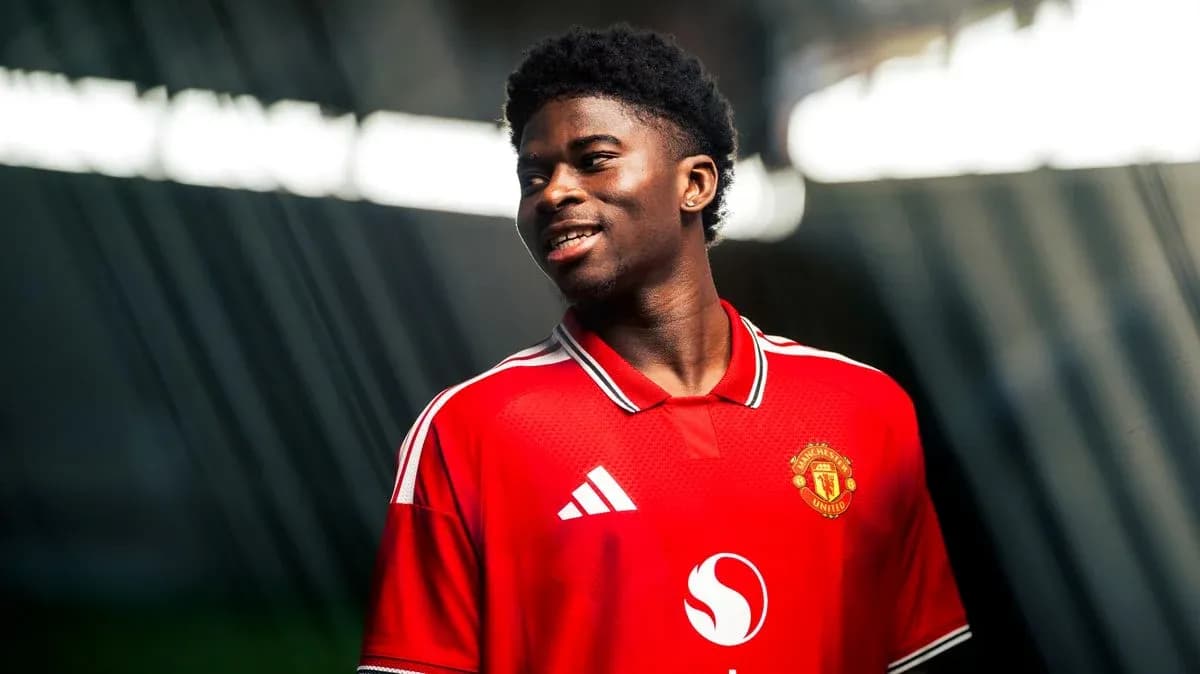
Carlos Baleba is the headline act. On Tuesday, the Cameroon international became United’s third midfield signing of the window, following Andrey Santos and Youri Tielemans through the door. The deal for Baleba could rise to £70m – a long way short of the nine-figure sum Brighton once believed they could demand.
Back in the summer of 2025, Brighton were talking about north of £100m. They had leverage: Baleba was in form, the club had just banked a huge fee for Moises Caicedo from Chelsea, and the market for dynamic defensive midfielders was wild. Then came 2025/26. Underwhelming. Stop-start. The asking price came down, and United sensed an opening.
From their side, it’s a calculated risk. One they clearly feel is worth taking.
United’s long search for steel
United’s midfield has been a problem area for years. They have tried to bolt on steel at the base of midfield, only to find the pieces didn’t quite fit.
Casemiro arrived as the destroyer, then drifted into a more advanced, goal-threatening role in his final season. Manuel Ugarte brought bite but also his own limitations. The team never fully settled around either of them. The structure kept creaking.
Baleba, at his best, offers something different: balance. He can anchor, he can cover ground, he can let others play. And he can do it in different shapes, which matters to a coach like Michael Carrick, who wants flexibility in and out of possession.
The numbers from Baleba’s breakout 2024/25 campaign at the Amex back up the eye test. He completed 79 tackles in the league, according to official Premier League stats – joint 25th overall and just behind Casemiro and Bruno Fernandes. That alone doesn’t capture his influence.
Per Fotmob, he ranked 14th in the league for interceptions per 90 minutes, averaging 1.6. Among United’s current crop, only Harry Maguire bettered that figure. He hit the same 1.6 per 90 last season as well, though the total dropped from 46 interceptions to 29 as his minutes and rhythm fluctuated.
The raw tools are obvious. So are the reasons people inside the game rate him.
Rio Ferdinand is among the admirers. “He brings that ability to get around the pitch, that physical prowess,” the former Champions League-winning centre-back said on YouTube. “I think his duels power is great, his press resistance, and I think more so than most of the others.
“He can beat the press with the ball but his vertical ball progression with the ball especially... is an asset to this team now and he can do it with real pace. I think he complements every other one of those midfielders he's coming into the team with. Whoever he plays with, he complements them.”
That’s the theory. The reality of last season still lingers.
The blip that won’t go away
Critics will not ignore Baleba’s 2025/26 dip. Nor should they. For a fee of up to £70m, scrutiny is part of the package.
There were reasons, though. Brighton manager Fabian Hurzeler openly acknowledged that United’s long-running interest might have unsettled the player early in the campaign. A young midfielder, reading about a “big, big offer” from Old Trafford, suddenly playing with the weight of a possible life-changing move in the background.
“For sure, when a young boy reads there is interest from Manchester United with a big, big offer, it might affect him deep, deep (down),” Hurzeler said early in the season. He spoke of the need for Baleba to stay humble, to keep pushing at Brighton, to accept that big offers follow good performances but cannot replace the work.
He also made a broader point: Baleba is not a machine. Form isn’t a switch. Emotions matter, background matters, development is messy. That responsibility, Hurzeler insisted, lay with the coaching staff as much as the player.
Then there was AFCON. Baleba’s season was broken up by the Africa Cup of Nations, another disruption to rhythm and consistency. That won’t be an issue this time around.
Minutes, durability and a new core
There is another wrinkle. Baleba arrives injured. United supporters might need to wait before they see him in full flow. Patience, not something that comes naturally to Old Trafford, will be required.
Yet his recent workload still tells an important story. In 2024/25, Baleba logged 2,673 Premier League minutes – a full, heavy season for a young midfielder. Even last term, with AFCON in the middle, he still managed 1,662 league minutes. That kind of durability is exactly what United have lacked at the base of midfield.
Look at the rest of Carrick’s options. Tielemans, Mainoo, Santos – all talented, all with question marks over their ability to churn through a full campaign.
Tielemans played 1,863 minutes for Aston Villa last season, his year punctured by two separate injury lay-offs. Kobbie Mainoo totalled 1,654 league minutes after being used sparingly before Carrick’s appointment. Santos finished with 1,255 league minutes for Chelsea, though he did end up playing more across all competitions than Mainoo.
Depending on your view, that’s either a positive – three relatively fresh midfielders with room to grow – or a red flag. Can this group handle the grind of two games a week, the tactical demands, the pressure of bedding into new partnerships in the most scrutinised midfield in England?
Baleba’s profile suggests he can be the constant. The one who plays, and plays, and plays. If he holds up physically, Carrick suddenly has the option to rotate around him, to keep Tielemans’ creativity, Mainoo’s intelligence and Santos’ energy sharp rather than stretched.
Carrick’s project and Baleba’s test
For Baleba, the move is as much about coaching as it is about platform.
“I cannot wait to work with Michael Carrick; his experience and knowledge of the game make him the perfect coach to help me to reach the highest level,” he said after signing. It is a big statement, but a logical one. Carrick knows the position, understands the tempo of a Premier League midfield, and has already shown a willingness to build around technical, progressive players.
Baleba has the tools: the legs, the tackling, the interceptions, the vertical passing, the press resistance Ferdinand highlighted. United have paid for that package, banking on the idea that last season was the exception, not the start of a trend.
They’ve rebuilt the attack. They’ve now thrown more than £150m at the midfield. The gamble is clear.
What isn’t clear yet is whether Carlos Baleba becomes the missing piece – or just another expensive chapter in United’s long search for control.
Related News
Newcastle Triumphs in Five-Goal EFL Cup Thriller
Liverpool Nears £120 Million Barcola Deal as Iraola Implements Power Football
Manchester United's Midfield Overhaul: Can Carlos Baleba Provide Balance?
Frank Lampard's Journey: Blending Influences at Coventry City
Birmingham's Phil Neumann Stars in Wrexham Defeat
Julian Alvarez's Atletico Madrid Future in Doubt Amid Training Absence