
Manchester United's Missed Opportunities in 2-2 Draw Against Everton
Manchester United walked out of Goodison Park with a point, but it felt like two dropped and a familiar story retold. They played well in long spells, twice led, scored from clever restarts – and still couldn’t finish the job at either end of the pitch.
They lacked a killer in the box. They lacked control with a lead. And when it mattered most, they lacked resistance at the back.
Everything but the Finish
United’s attacking play often looked sharp. Three creative forwards knitted moves together, found pockets, dragged Everton’s back line around. The structure was there. The ideas were there. The final presence in the area was not.
Too many promising moves fizzled out before the ball reached a truly dangerous position. The team cried out for someone to attack the six-yard box, to make the run across the front post, to gamble on cut-backs. Benjamin Sesko’s late goal showed exactly what that kind of movement can bring, and his return to fitness may yet solve part of the problem. Bryan Mbeumo stepping back into a central striker role is another option on the table.
On the right, though, the absence of Amad still hangs over this side. Shea Lacey has talent but may not be ready to shoulder that responsibility every week, and there’s little indication that Michael Carrick sees Matheus Cunha as a realistic solution out wide. So United are left with plenty of technicians and not enough natural finishers in the most punishing part of the pitch.
The bigger picture is more alarming. Three games into the season, three times United have conceded twice. Six goals shipped to Hull City, Ipswich Town and now an Everton team that has been blunt in attack. This isn’t just a blip; it’s a pattern that will demand a tactical rethink until key personnel return and the side regains some balance.
An Unstable Back Four
The numbers say it clearly: two goals conceded in each of the first three matches. The manner of those goals is what will really trouble Carrick.
This was a better outing from Luke Shaw, at least for a while. After two shaky performances at left back, he responded with something closer to his old self. He blocked shots, overlapped Marcus Rashford, and delivered several dangerous crosses – one of which Sesko buried with an 88th-minute header that should have been the winner.
But even Shaw’s improvement came with a sting. On Tyrique George’s 83rd-minute equaliser, he drifted too far inside, a mistake we’ve already seen from him this season. That gave George the pocket he needed to lash a ferocious strike into the near-post top corner. Arne Lammens got a hand to it and might feel he should have done better, but the ball still flew in and United’s lead disappeared.
The rest of the back line did little to inspire confidence. Harry Maguire, Lisandro Martinez and Diogo Dalot all had subpar afternoons. As a unit, they allowed Everton too many looks at goal.
Maguire was fortunate when Thierno Barry headed over in the 42nd minute after losing his man – a chance that, on another day, would punish United. Dalot mis-hit a clearance in first-half stoppage time straight to Jarrad Branthwaite, who could only fire at Lammens. Later, a poor Dalot cross in midfield sparked a scramble, with Shaw and Martinez forced to race back and eventually deflect Brennan Johnson’s effort over the bar.
The pattern repeated after the break. Holding a 1-0 lead for most of the second half, United retreated. They stopped pressing with conviction, stopped looking after the ball, and invited Everton on. The hosts dominated possession while United sat deep and absorbed pressure. That passivity opened the door for long-range strikes and spectacular finishes. Everton walked through it.
Carrick’s late changes did not help. After George’s equaliser, he introduced Noussair Mazraoui at left back and Leny Yoro on the right. The reshuffle only added chaos. In the 90th minute, Mazraoui lost George again, allowing him another crack at the near post. Lammens saved, and the flag went up for offside, but the warning was clear.
United didn’t heed it. With virtually the last attack of the game, Hayden Hackney drifted past Yoro too easily and rolled the ball to Kiernan Dewsbury-Hall. Mazraoui’s attempted clearance fell straight to Ainsley Maitland-Niles, who unleashed a stunning, Puskas-level strike to snatch Everton a point and leave United floored.
Carrick’s fullback substitutions failed, but the uncomfortable question lingers: would keeping Dalot and Shaw on have changed anything? The issues run deeper than fresh legs.
Matthijs de Ligt is edging towards his first appearance since November 2025 and will be expected to add authority, yet even his return may not fix a unit that looks structurally fragile. Ayden Heaven is another name pushing for minutes, and at some point Carrick may have to test whether youth and hunger can offer more than experience and hesitation.
Right now, whoever plays, United can’t keep the ball out of their own net.
A Lopsided Squad
The defensive frailty is no longer a subplot. It’s the headline.
United’s midfield has taken shape. The team looks more comfortable on the ball, more capable of stitching together attacks and controlling phases of play. There is genuine quality going forward, and spells of this match showed what the attack could become with sharper finishing and better runs in the box.
But the squad feels unbalanced. The summer’s energy went into rebuilding the middle of the pitch. The fullback positions, the obvious weak points, stayed largely untouched. That decision is being exposed week after week.
Shaw can still deliver, but his lack of recovery speed becomes a glaring issue whenever United push high. Dalot faces similar problems on the opposite flank. When both are advanced and possession is lost, the centre-backs are left to defend huge open spaces, often against quicker forwards. Better sides will target those zones relentlessly, drag United into foot races they cannot win, and punish the space behind.
Carrick now faces a tactical puzzle with no easy answer. Does he sit the line deeper and blunt his own attack to protect a vulnerable defence? Does he persist with aggressive fullbacks and hope returning players, or de Ligt’s presence, tighten things up?
Because one thing is clear: United can score plenty this season. They can entertain. They can dominate stretches of games. But unless they find a way to stop these collapses at the back, the Champions League campaign looming this week could expose just how costly this imbalance really is.
Related News
Kylian Mbappé Makes Champions League History with 71st Goal
Liverpool Signs First Pro Deal for Haydn Murray-Holmes
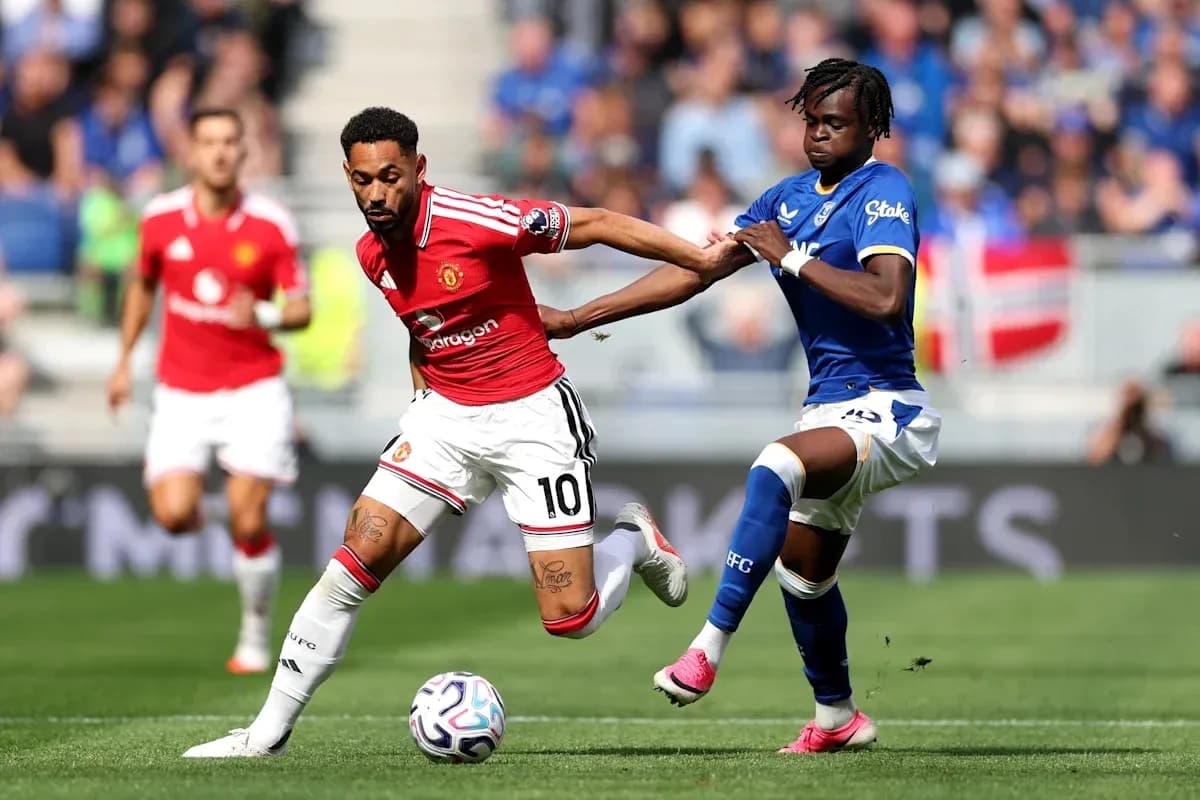
Manchester United's Missed Opportunities in 2-2 Draw Against Everton

Ghana's President Mahama Warns About Young Talent Drain in Football
Haaland Praises Bouaddi as Manchester City Secures Porto Victory
Zamalek Reclaims Top Spot with Victory Over Abu Qir