
Manchester United Women: A Pivotal Summer for Ambition
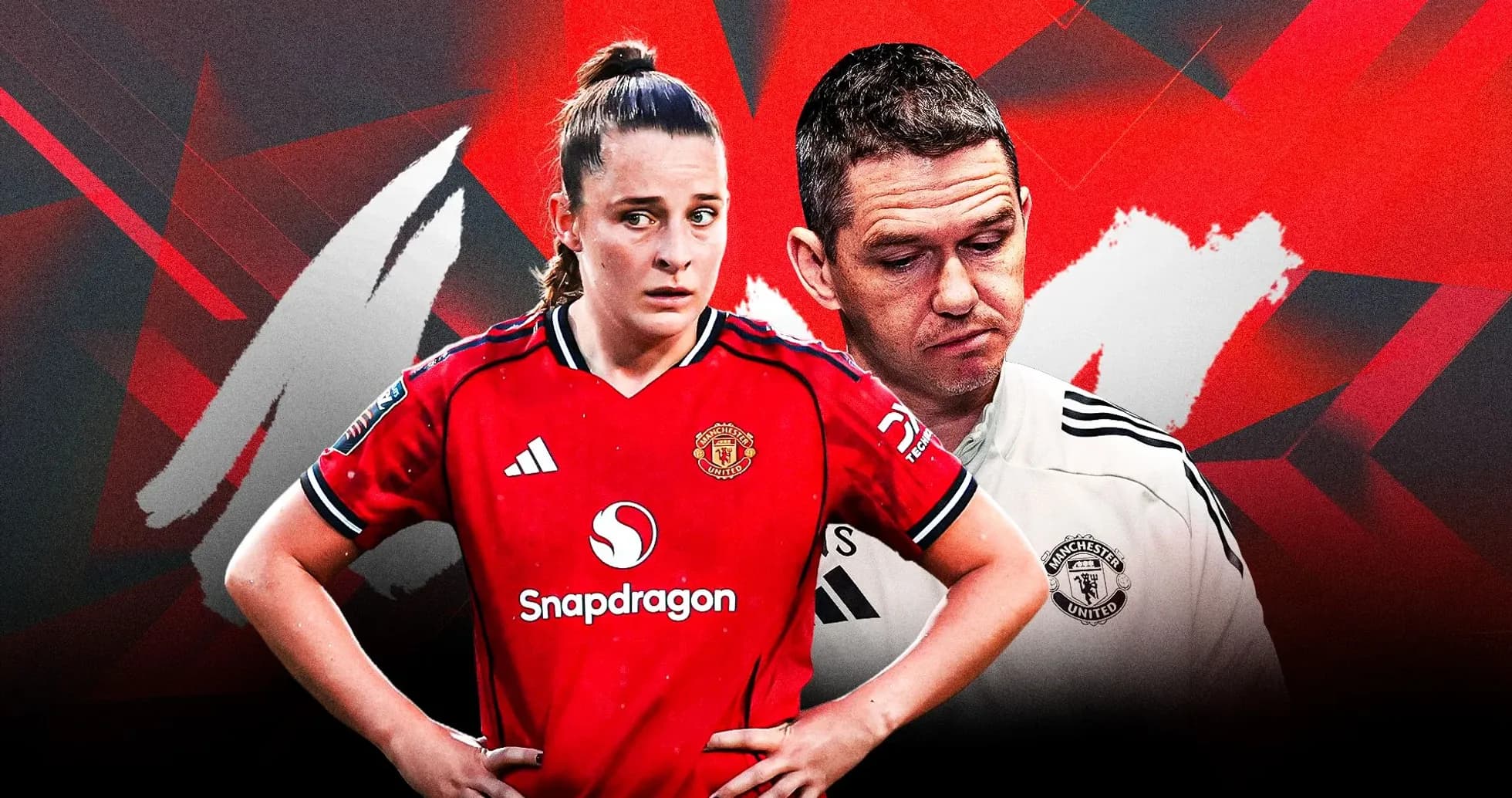
Manchester United Women stand at a crossroads. Last season’s story tells you why.
They reached a Champions League quarter-final and traded blows with Europe’s elite, yet still fell short of qualifying for any European competition through the league. That contradiction captures the state of this team: capable of climbing to the highest level on a given night, unable to live there week after week.
This is not a failure born overnight. United only reformed their women’s team eight years ago. City, Arsenal and Chelsea have been building for much longer, laying down layers of infrastructure, recruitment networks and culture. United have made up some ground in a short time – Champions League qualification, three cup finals, an FA Cup in the cabinet – but they are still running uphill while others are already on the plateau.
The problem now is that the climb is getting steeper.
Rivals accelerate, United hesitate
Everyone around them is moving. Hard. That is what makes United’s quiet summer so jarring.
Squad depth has been their glaring weakness, exposed brutally last season when the demands of Champions League football collided with domestic expectations. United knew they were short. They knew they had undercooked the previous window. They knew four competitions would stretch them. And yet, three senior signings arrived last summer.
The quality of those additions is not in question. Julia Zigiotti Olme and Jess Park were smart, successful pieces of business. The issue was volume. Three signings for a team trying to compete on four fronts was never going to be enough, and the season proved it.
The early weeks of this transfer window have not yet suggested a change in approach, while their rivals move with purpose and clarity.
Manchester City, fresh from winning the WSL and FA Cup, made it clear they would not overhaul a title-winning squad. They didn’t need to. But even in a “quiet” window, they have added real weight: Beth Mead, a top-level attacker steeped in big-game experience; Niamh Charles, an England international who plugs a long-standing gap at left-back; and, crucially, a new contract for Khadija Shaw, the WSL Golden Boot winner, despite Chelsea circling.
Arsenal have gone in the opposite direction: aggressive, ambitious, impatient with a seven-year wait for another league title. In a whirlwind two-week spell, they unveiled Georgia Stanway, Ona Batlle, Selina Cerci, Geraldine Reuteler and Lisa Baum. On top of that, they continue to pursue Barcelona free agent Salma Paralluelo. That is the sort of recruitment that shifts the balance of power.
Chelsea’s window has been messy at times, but not weak. Their search for a striker has been public and painful, with Shaw, Paralluelo and Felicia Schroder all turning them down. Yet amid that frustration they have still landed Katie McCabe and added Matsukubo, one of last season’s standout players in the NWSL at just 21. Reports in the Netherlands suggest Paris Saint-Germain forward Romee Leuchter is also on her way. If that deal is completed, Chelsea will have reshaped their front line again.
Against that backdrop, United’s activity feels painfully thin.
Andrea Medina has arrived – a talented, versatile 22-year-old who can play centre-back or left-back and immediately helps with depth. It is a smart signing, the sort of profile they need more of.
But so far, it is the only one.
Noise about exits, silence on arrivals
The transfer chatter around United has been dominated not by who might come in, but who could leave.
Melvine Malard is understood to be closing in on a move to Chelsea. The Athletic reports that United are open to selling Elisabeth Terland, last season’s top scorer, if a suitable offer lands. The logic is brutal but clear: cash in now and reinvest, or risk losing the Norway forward for nothing when her contract expires next summer.
Terland turned down a new deal in November. She is not alone in approaching a decision point. Ella Toone’s contract also runs out next year, and her comments last month were telling.
“Obviously it’s now time to talk,” she said. “I just know I have got to make a decision on what’s best for me.”
That is not the language of a player fully locked into the project. It is the language of a player weighing up her options at a club still trying to prove it can match her ambitions.
United’s gaze cannot only be fixed on the traditional big three. The danger is no longer just above them. It is creeping up from below.
The pack below is closing in
London City Lionesses are the most obvious new threat. Backed by billionaire Michele Kang, who also owns Washington Spirit and Lyon, they have changed the landscape of the league in a single window. The headline signing is staggering: two-time Ballon d’Or winner Alexia Putellas in England. Alongside her, four-time Champions League winner Mapi Leon, former United and England goalkeeper Mary Earps, and prolific Germany forward Nicole Anyomi have all walked through the door. That is a statement, and then some.
Tottenham are not standing still either. They finished just one place and four points behind United last season, drawing both league meetings. This summer they have already added five new faces. Among them: Shekiera Martinez, who scored 16 goals in 32 league games for a struggling West Ham; Kirsty Hanson, whose scoring record last term left her behind only Shaw and Alessia Russo in the WSL; and goalkeeper Selma Panengstuen, who reportedly chose Spurs over Arsenal and PSG. That is the profile of a club with a clear plan.
Brighton, who caused United plenty of problems last year and reached the FA Cup final, have also strengthened with real intent, bringing in former Arsenal midfielder Lia Walti. It is the kind of astute, targeted move that nudges a mid-table side upwards.
The message is blunt: if United stand still, they do not just risk missing out on titles. They risk sliding into the chasing pack.
United’s dilemma: ambition versus reality
Marc Skinner has never hidden from the financial reality. As the women’s transfer market surged into seven-figure territory last summer, he acknowledged United could not go toe-to-toe with the biggest deals that took Olivia Smith to Arsenal and Grace Geyoro to London City.
“The reality is we have to try and find our own way to do it,” he said.
To a degree, they did. United’s recruitment has not been a disaster. It has been selective, often clever. The problem is scale. They have not done enough of it to build a squad that can absorb injuries, rotate across multiple competitions and still maintain a title challenge.
This season, there will be no Champions League to juggle. In theory, that should help. City used a European-free campaign to reset and power their way to the WSL title. United will hope to follow a similar path: fewer games, more recovery, more time on the training ground, more focus on the league.
They will also expect more from their January arrivals. Lea Schüller arrived from Bayern Munich with a fearsome goal record, but managed just two goals in her first 18 appearances. Six months of adaptation are now behind her. United need the version of Schüller that terrorised defences in Germany, not the one still finding her feet in England.
Even with those internal improvements, the squad still looks light for a team with top-four, let alone title, aspirations. The spine needs reinforcing. The bench needs upgrading. The gap to City, Arsenal and Chelsea is not just about star names; it is about having two high-level options in every position and the tactical flexibility that comes with that.
Right now, United are short on both.
A window that will define the next phase
This is a pivotal summer for Manchester United Women. The club stands between eras: no longer the plucky newcomers, not yet the established powerhouse they want to be. The decisions made in this window – who they keep, who they lose, who they bring in – will shape the next three to five years.
A quiet start does not automatically doom them to failure. Some of the best work in transfer windows happens away from the noise, late and decisive. But the league around them is louder, bolder and moving fast.
United have already learned the hard way what happens when you fall just short: Champions League nights without the league position to show for it, an FA Cup high followed by domestic inconsistency, a sense of being close but not quite close enough.
They cannot afford another season defined by that same sentence. The question now is simple: will this window finally give them the staying power to match their best nights, or will they watch the rest of the league disappear over the horizon?
Related News

India's Record Chase of 406 Against West Indies Highlighted by Gill's 223 and Rohit's Century

Alex Pereira Hints at Major UFC Bout: 'Big Challenge' Ahead

Three Hall of Famers, Ten Fights, 109 Rounds: The Forgotten Rivalry That Shaped Lightweight Boxing's Golden Era

Khamzat Chimaev and Colby Covington Set for RAF Abu Dhabi Title Clash in November
Thomas Tuchel Confident Harry Kane Will Join 100-Goal Club for England Soon

Cristiano Ronaldo Vows to Reveal Truth After Leaving Portugal Squad Amid Conflict