
Manu Kone: The Missing Piece for Manchester United's Midfield?
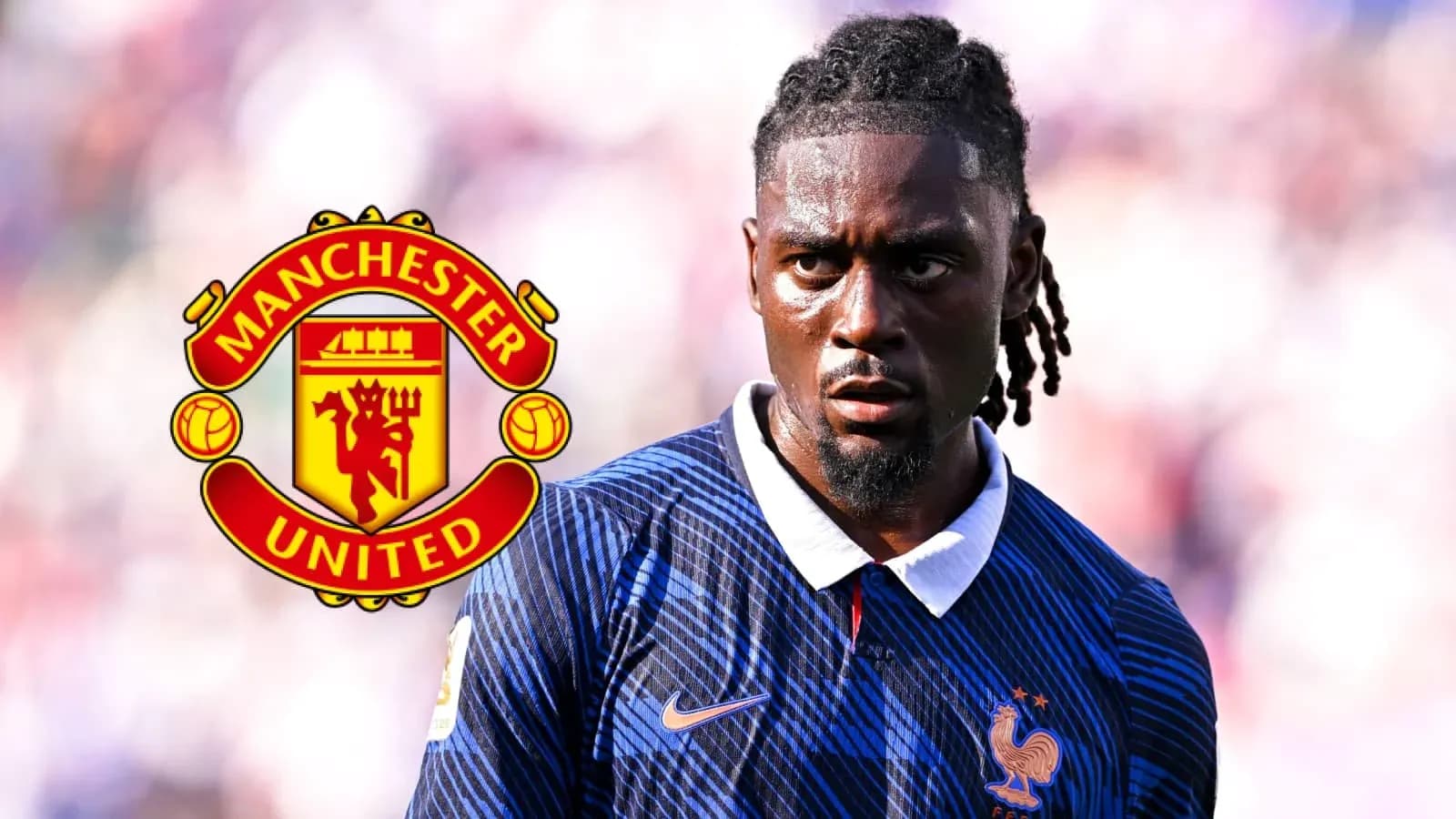
Manchester United know what they’re missing. They just look in danger of buying the wrong answer.
The midfield rebuild at Old Trafford has moved quickly. Andrey Santos and Youri Tielemans have arrived to plug the gaps left by Casemiro’s exit and Manuel Ugarte’s serious injury. On paper, the numbers add up again. Premier League experience? Box ticked. Fresh legs? Box ticked.
But the profile is still off. United are still one specialist short.
Michael Carrick needs a Michael Carrick – a player who lives in that strip of grass in front of the back four, who organises, screens, and starts attacks with the first clean pass. Not just a body who can stand there. A genuine anchor.
Which is why the growing idea that Manu Kone is the missing piece should set alarm bells ringing.
A midfielder mislabelled
Kone’s World Cup performances for France have pushed him into the spotlight. That can be a dangerous shop window, but in his case the tournament has largely reflected what he is: a powerful, dynamic central midfielder with the tools to play at the very top.
He is 25 now, entering his prime after five years in Europe’s top leagues – three seasons with Borussia Monchengladbach in the Bundesliga, two with Roma in Serie A. In Rome, he quickly became one of the club’s prized assets, a deadline-day signing in the summer of 2024 who injected energy and drive into a stale midfield.
Not because he was shielding the defence. Because he was tearing past it.
In his debut Serie A campaign, Kone’s standout trait was his ball-carrying. He didn’t just step into space; he attacked it. He would barrel up the pitch, shrugging off challenges, dragging his team 20, 30 yards higher. His role looked far closer to a number eight than a classic number six.
That changed under Gian Piero Gasperini. When the coach arrived, many assumed Kone would be a natural fit for that relentless, man-to-man, high-intensity system refined at Atalanta. Instead, Gasperini reined him in. Kone was often asked to drop into the back line when Roma built from deep, sacrificing some of his licence to surge forward.
He still had a good season. But his influence became subtler, less explosive. The very thing that makes him special was dulled.
Any club looking at Kone as a pure holding midfielder needs to understand that trade-off. If you chain him to the centre circle, you’re paying a premium for a player and then blunting his best weapon.
United’s recurring mistake
United have been here before. They have a habit of miscasting midfielders and then wondering why the picture looks wrong.
The Fred–Scott McTominay double pivot became a symbol of that muddle. Two willing, hard-running players, both asked to plug gaps and build play from deep in roles that didn’t quite suit either of them. The result was a partnership that never truly functioned, and a team constantly trying to paper over the cracks.
Casemiro briefly steadied things. He delivered big moments and leadership, but he arrived at 30, not 25. United essentially paid top dollar for a player whose peak years were already behind him and then watched the physical drop-off come quickly.
The Ugarte move was another calculated gamble. Elite tackling numbers in Ligue 1 with PSG suggested an ideal ball-winner, but the metrics have not translated smoothly into United’s system.
Now Tielemans and Santos are in the door, and neither has been signed to live as the deepest midfielder. That’s where United seem to see Kone. He can “do a job” there. He has the frame, the aggression, the defensive instincts to survive in that zone.
But if you lock him there permanently, you lose the surging runs that separate him from a dozen other options.
The data backs it up. Last season, even with Gasperini curbing his forward bursts, Kone still ranked in the 78th percentile among Serie A midfielders for average distance of progressive carries. That’s him on a leash. Take the leash off, and you see why Roma value him so highly.
Strengths, flaws and the price of potential
Kone is not the finished article. Nowhere near. For a player who likes to arrive in advanced areas, his shooting is a glaring weakness. Four goals in 82 games for Roma tells its own story. In the final third, he often lacks conviction, the composure and clean contact you expect from a true box-to-box threat.
Gasperini said as much in December, when Kone finally scored his first goal of the 2025-26 season. The coach admitted that if Kone added goals, he’d already be operating at a different level, at a different club. Since that strike, he has played 22 more times for club and country and found the net just once.
That lack of end product helps feed the lazy label of “defensive midfielder”. He doesn’t score, so he must be a holder. It’s a convenient shortcut. It’s also wrong.
At his best, Kone is a central midfielder who can defend, not a defender who happens to play in midfield. He breaks lines with the ball. He snaps into duels. He covers ground. He can screen, but he wants to drive.
There are other flaws. His off-the-ball movement in possession phases still needs work. Too often last season he failed to drift into the right pocket to offer a passing lane, or he occupied a space that blocked a better option for a teammate. If you plant him as the deepest midfielder in a possession-heavy side, that positional sharpness has to be near-perfect.
All of this feeds into the question that will hang over any deal: what is he worth?
The current midfielder market is wild. Elliot Anderson just joined Manchester City for £116m despite contributing fewer than 10 goals and assists last season. Tottenham paid £85m for Mateus Fernandes, another player United liked but ultimately walked away from.
Roma will want at least £50m for Kone, and probably more. The World Cup exposure only pushes the price north, and they have already turned down around £38m from Inter. That kind of money demands clarity. You need to know exactly what you’re buying.
How he fits – and where he really belongs
In United’s 4-2-3-1, there is a version of reality where Kone works. He could line up in a double pivot with Tielemans or Santos, sharing the responsibilities. One goes, one stays. Then they switch. The key is that it genuinely alternates, not that one quietly becomes the full-time sitter.
We’ve already seen the template with France at the World Cup. Kone has operated alongside Adrien Rabiot and Aurelien Tchouameni, both of whom are comfortable holding when he steps up. At Roma, Bryan Cristante often provided that balance, even if the Italian himself pushed on more at times.
If United sign Kone and then ask him to be a pure anchor, they repeat old mistakes. If they build a true partnership – if Tielemans roams while Kone sits, and then Kone roams while Tielemans sits – they unlock what he really offers: power, progression, and presence across the pitch.
He will have other suitors. Atletico Madrid have hovered. Arsenal have looked and then seemingly turned their gaze to Bruno Guimaraes. Liverpool have tracked him since his days in Germany and still need a number six.
Even there, the same caveat applies. At Arsenal, the presence of Martin Zubimendi as a fixed anchor would free Kone, much as it did for Declan Rice when he first pushed higher. At Liverpool, if Andoni Iraola leans into a 4-2-3-1, Kone could dovetail with someone like Ryan Gravenberch, both taking turns to surge and sit.
The right system won’t ask him to be something he isn’t. It will lean into what he already is.
Make no mistake: Manu Kone is a high-level midfielder with time to iron out the rough edges. He brings aggression, athleticism and forward thrust – the kind of profile that can tilt games in the Premier League.
But if Manchester United see him as the long-term answer to their holding-midfield problem, they are chasing the wrong solution.
Sign him as a runner, a carrier, a partner who shares the load, and he can elevate their midfield. Sign him as the lone shield, and they may discover, again, that the missing piece of the puzzle is still missing.
Related News
India's Record Chase of 406 Against West Indies Highlighted by Gill's 223 and Rohit's Century
Alex Pereira Hints at Major UFC Bout: 'Big Challenge' Ahead
Three Hall of Famers, Ten Fights, 109 Rounds: The Forgotten Rivalry That Shaped Lightweight Boxing's Golden Era
Khamzat Chimaev and Colby Covington Set for RAF Abu Dhabi Title Clash in November
Thomas Tuchel Confident Harry Kane Will Join 100-Goal Club for England Soon
Cristiano Ronaldo Vows to Reveal Truth After Leaving Portugal Squad Amid Conflict