
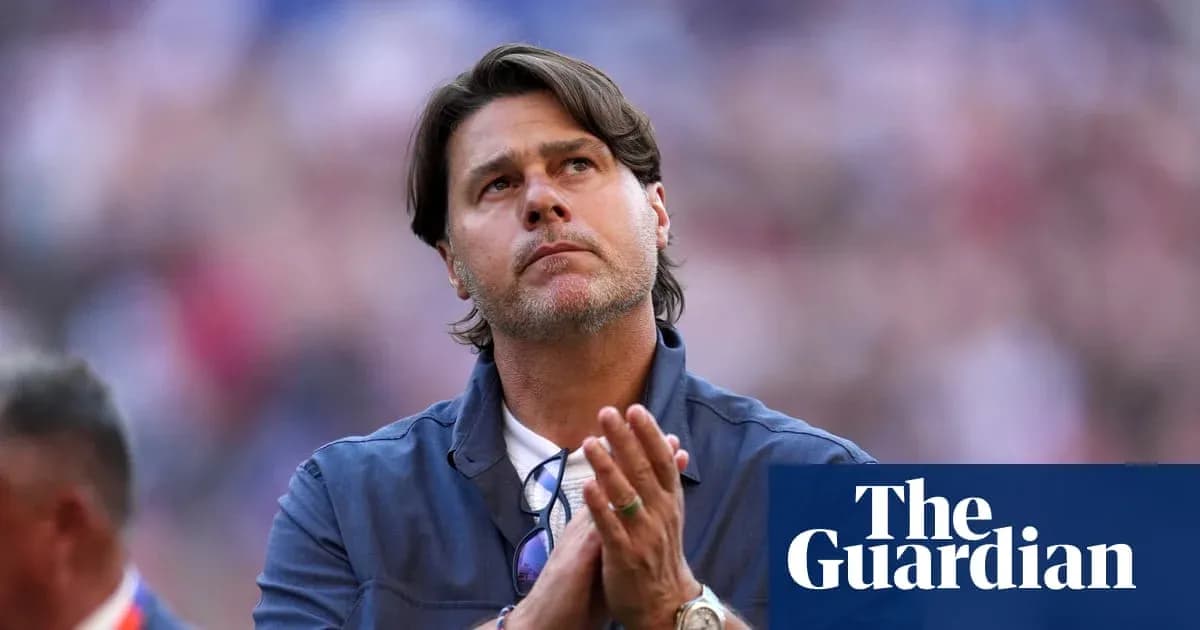
Mauricio Pochettino Returns to USMNT with Ambitious Vision
Mauricio Pochettino is back at work, but this doesn’t feel like a simple reset.
Two months after the US men’s national team crashed out of their home World Cup with a thud, the Argentinian coach has returned not just with a new contract, but with a mandate that stretches far beyond the next qualifying campaign.
He was supposed to be a short-term solution when he arrived in 2024 – a big-name manager hired to squeeze the most out of a once-in-a-generation opportunity on home soil. Somewhere between then and this summer, that plan changed. In August, US Soccer quietly turned the page and extended Pochettino’s deal, tying him to a project that now runs through the 2030 World Cup and potentially beyond.
The friendlies against Peru, Chile, Mexico and Canada later this month and in early October will offer the first glimpse of “version two” of Pochettino’s USMNT. In truth, they are little more than a warm-up act for what he and the federation say they really want: to reshape how the sport works in the United States.
A coach, and something more
The new contract came with an unusual twist. Pochettino is no longer just the head coach of the senior men’s team. US Soccer has handed him a broader brief: influence the direction of youth development, help steer coaching education, and advise on how the federation works with the professional game.
This kind of sweeping influence isn’t unheard of globally, but in the US context it’s a significant shift. No previous national team coach has been invited so directly into the engine room of the program.
He steps into that role at a moment of upheaval. US Soccer is in the middle of a major restructuring, including the creation of two new director positions to oversee the men’s and women’s senior and youth setups. Pochettino said on Monday that he has already offered to be involved in the hiring process – with one caveat.
“It can’t [just] be my guy,” he joked, making clear he wants to contribute without handpicking loyalists.
Underneath the laughter sat a serious ambition.
“This is the future of the USA,” Pochettino said. “We want to try to perform in the World Cup and to create something special with the fans. And now it’s about being a part of the legacy that the federation wants to create – becoming one of the most powerful countries in soccer. That is a dream, no? It’s amazing. If we can be part of that, we are so excited and so happy.”
The message was unmistakable: this is about legacy, not just lineups.
Balogun’s deadline day collapse
For all the talk of structure and long-term plans, the human side of the job arrived at Pochettino’s door in a far more immediate way on transfer deadline day.
The USMNT’s summer window was relatively muted. Gio Reyna left for Strasbourg. Sebastian Berhalter moved to Middlesbrough. Highly rated teenager Zavier Gozo jumped from MLS to Crystal Palace. Most of the core stayed put.
Folarin Balogun did too – but not by design.
After a breakout World Cup, the Monaco striker looked set for a big-money move to Everton. The deal collapsed at the last moment, with the Premier League club citing a possible fitness concern. Monaco disputed that reasoning. So did Balogun.
Instead of a new league and a fresh start, the 25-year-old woke up the next morning in the same place, with a lot of questions and no move.
Pochettino, who has seen enough transfer sagas to know the emotional cost, made it clear he intends to reach out.
“Yes, it’s difficult because you cannot influence that decision,” he said. “You need to support what they are doing with the people making the decisions. In some special cases, like Flo’s, I will call in the next few days. I wanted to give him a little bit of space after that situation in Everton. I want to know from him what happened. But we are always offering our support, and that’s it.
“I think he’s an important player for us, he was an important player in the World Cup and I hope that he can find being in Monaco, or in another place, his best place to perform in the best way.”
For a manager tasked with building a long-term project, keeping his key striker mentally right is not a side issue. It’s central.
The tug-of-war for talent
If Balogun’s story is about stability, another storyline hanging over this camp is all about choice.
Pochettino kept his cards close to his chest when asked about the 26-man roster he’ll name for the upcoming friendlies. One absence is already confirmed: Augsburg center-back Noahkai Banks will not be involved.
The 19-year-old, who holds eligibility for both Germany and the United States, remains undecided about his international future. He has said he wants to make a call by “the next international break, or at the latest by the international break after next.” In the meantime, he is being watched closely. German reports say new Germany head coach Jürgen Klopp has already scouted him in person.
For the US, this is familiar territory – another high-upside dual national weighing his options. For Pochettino, it’s part of the job description.
“We are in contact with all the potential dual nationals,” he said. “I think it’s important for us, of course, because that is the human connection that is so important.
“Even if they, like in that case, Noki, didn’t change his mind and is waiting still, no decision, and of course we cannot consider him for the next camp … But the organization is working with all the dual nationals and players with the possibility to make a decision.
“That human connection is important because if one day they feel that they can defend and they want to fight and to be part of our national team … Of course, if they deserve it, and we consider that they deserve to be involved, of course we are going to call [them up].”
The US cannot outbid Germany, Brazil or any other powerhouse in tradition. What it can do, under a coach like Pochettino, is build relationships and present a clear, ambitious path.
Eyes on 2030 – and Los Angeles
The immediate calendar is busy enough. Four friendlies. A new cycle. A squad that still carries the scars of a failed home World Cup.
Beyond that lies a crowded horizon: qualification for the 2030 World Cup, a home Olympics in Los Angeles in 2028, and the strong possibility of a Copa América appearance that same summer. It’s a demanding roadmap and exactly the kind of platform Pochettino wanted when he chose to stay.
He talked about “being part of the legacy” on Monday, about helping the US become “one of the most powerful countries in soccer.” Those are big words in a country still wrestling with what it wants the sport to be.
The next few years will reveal whether this expanded role for Pochettino is bold vision or overreach. For now, he has the job, the trust, and the time to try to bend the direction of the game in America.
The real question is whether the US can match his ambition where it matters most – on the pitch, under pressure, when the next World Cup cycle begins to bite.
Related News
UEFA Champions League Matchday Preview: Key Showdowns
Wolves Sign Bertrand Traoré for Championship Push
Mauricio Pochettino Returns to USMNT with Ambitious Vision

Worthing Strengthen Attack with Jordan Young Signing
Chelsea Suffers Narrow Defeat Against Arsenal: Lacroix Reflects on Performance
Motherwell's £5,000 Fine Upheld Despite Appeal