
Max Dowman Shines in Arsenal’s 4-2 Victory Over Ipswich
Max Dowman had been waiting. On Tuesday night, he kicked the door down.
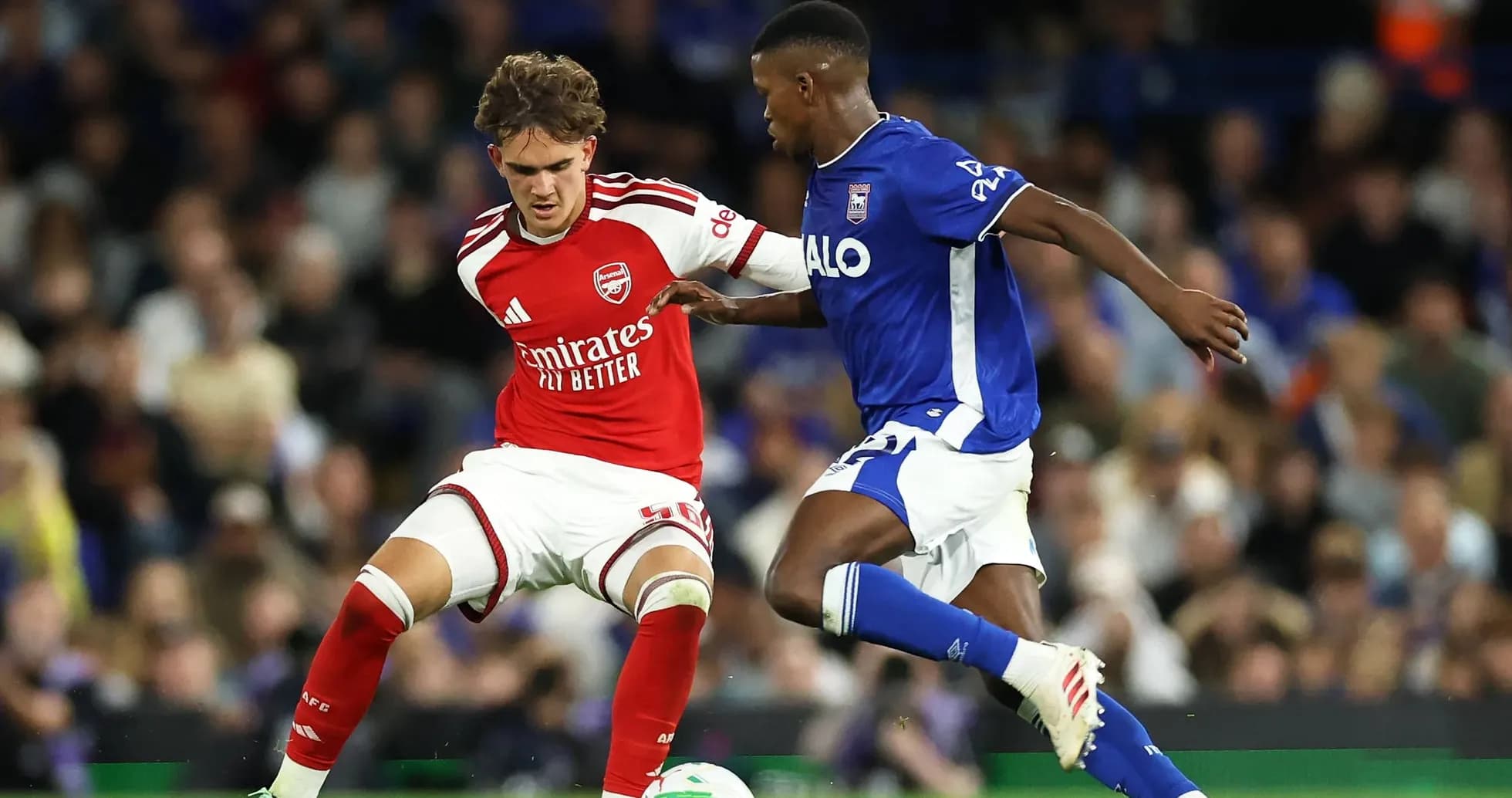
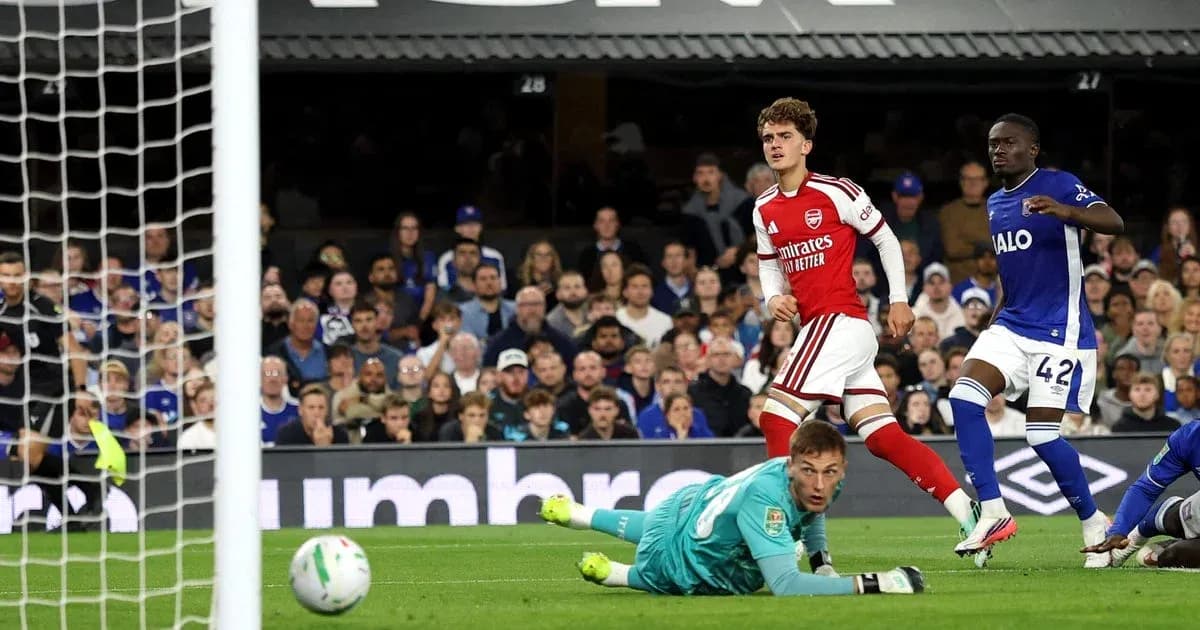
Six minutes into his first senior outing of the season, the 16-year-old lit up Arsenal’s 4-2 win at Ipswich with the kind of goal that already feels familiar. The run, the glide, the shimmy — it was all there again.
He picked up speed, full throttle, ball tied to his right boot. Two touches, then that now-recognisable sway of the hips. A sharp shift inside onto his left left Cedric Kipre scrambling on all fours. Christian Walton braced for the obvious finish across goal. Dowman looked one way, went the other, and rolled a right-footed shot into the near corner.
If it felt like a rerun, that’s because it was.
This was Everton in March all over again — the night he became the Premier League’s youngest scorer. Back then, it was Kiernan Dewsbury-Hall sent tumbling by the same shimmy before the Emirates exploded. Different ground, different competition, same devastating movement.
Mikel Arteta has seen enough to know this is no fluke.
“That’s something very natural for him, and he can deliver those actions effortlessly, I would say,” the Arsenal manager said afterwards, when asked about what is fast becoming Dowman’s signature move. “That’s his biggest quality. And defensively, his application, his capacity as well to sustain the actions, which is not easy.
“He’s 16 and he can create moments but consistently to go through the game, every phase with the demands that we put on him. To be able to do that is extremely difficult. And he’s coping better and better and better.”
The second goal underlined the point. This time, he finished with a nutmeg into the far corner, a cool, ruthless touch to cap another burst of pace and balance. Arsenal already knew he could live with seasoned professionals after his breakout last season. That doesn’t dull the impact of watching a teenager dismantle a Championship defence on a churned-up Portman Road pitch.
Dowman’s return to the senior side did not come out of nowhere. He has been ticking over with the Under-21s: 90 minutes and an assist in a 1-1 draw with Crystal Palace on August 22, then an hour in a 5-0 defeat to Chelsea on September 12. Those games are not a demotion, just the reality of a quieter midweek schedule for the first team. Myles Lewis-Skelly followed the same path at the start of his own breakthrough year.
Arteta had hinted opportunities would arrive after Arsenal’s 2-0 win over Sunderland on the same night the Under-21s were beaten by Chelsea. When the chance finally came, Dowman did far more than score twice.
His pressing set the tone. It was his pressure on Walton that forced the mistake leading to Noni Madueke’s strike for 2-0. Arteta highlighted that detail as quickly as the finishes.
“He did the action where he regained the ball and wins it for the first goal, too,” he said. “That’s the thing that we need to reiterate with him because he’s an unbelievable player.
“He really wants to do it (pressing). The more he plays, the more he trains with us, and the more ready he is physically to sustain that level, he will do it. And that will help in his attacking phase because he will force errors from the opponent, and then be in a really open situation to exploit his qualities.”
The hunger to be Arsenal’s “first defender” did not fade after the break. If anything, it grew. Yet his work without the ball was only one layer of a performance that hinted at how Arsenal see his future.
Last season, most of his senior minutes came off the right flank. He came through the academy as a midfielder, but wide roles often open up faster for young attackers. Central spots at Arsenal are crowded and unforgiving. He did, however, start twice in the middle last season — at Mansfield Town and Crystal Palace — and Arteta trusted him there again at Portman Road.
This was a different type of midfield display to the ones Martin Odegaard and Ethan Nwaneri have produced in that creative role. Dowman was not anchored to a single pocket between the lines. He roamed. He drifted left to link with Bruno Guimaraes, making himself easier to find. He appeared early in the box, constantly threatening to arrive rather than simply receive.
Later, as the game drifted towards its conclusion, he moved out to the right. The intensity did not drop. One moment summed up the away end’s mood: Dowman tore back to shut down Jack Clarke on a counter-attack, a lung-busting recovery run that earned a booming chorus of “Super Max Dowman” from the travelling supporters.
Arteta knows the noise around him will only grow.
“If he does what he does on the pitch, I understand it’s not easy (to quieten the hype),” he said. “We have to look after him. He’s 16. You don’t see that in this league. In other leagues in Europe, that’s a totally different context. But with the demands that the (Premier League) has, we need to make sure every time we throw him in, he’s in the right context with the right preparation.
“You don’t (normally) see players (of Dowman’s age) with the capacity to handle just the physicality of the game. Not only that, but the demands that you have to put your body through in the week to be able to be in a good condition to compete, the amount of information, the challenges that you have to face. But he’s doing it really well.
“But he will dictate that in terms of how he behaves every single day and how many reasons he gives to play because he’s part of our squad.”
That last line matters. Dowman is not a token academy story or a late-cup-round novelty. He is part of the squad, and that status makes his case unusual.
Football has seen teenage prodigies before, but not many like this in the Premier League era. At 15 and 16 last season, Dowman played 13 times for the first team. Nwaneri debuted at 15 years and 181 days, but only truly broke through at 17 in the 2024-25 campaign. Barcelona’s Lamine Yamal first appeared at 15 years and 289 days, then waited until the following season to rack up 37 La Liga games as a 16-year-old — in a league Arteta points out is less physically punishing.
Cesc Fabregas, Jack Wilshere, Lionel Messi: all debuted at 16, but their first full seasons came a year later. Even Wayne Rooney’s explosive 2002-03 campaign, with 33 league appearances (14 starts) as a 16/17-year-old, sits in its own category because of his extraordinary physical maturity.
Dowman is different again. A 16-year-old, slight but sharp, asked to meet the Premier League’s athletic and tactical demands week after week. That is the experiment Arsenal are running, with Arteta determined to control every variable he can.
For all the “wow” moments — and Ipswich provided a few more for the reel — the message from inside the club is clear: let him breathe. Let the development curve stay his, not ours.
The next step might arrive as soon as this week. England’s first youth squads of the season are due, and a move up from the Under-19s would feel like a natural progression. If it comes, it will be another marker in a career that is accelerating quickly. If it does not, nothing really changes.
Arsenal have their plan. England know what is coming. The only real question now is how fast Max Dowman decides to move.
Related News
JJ Gabriel's Bold Move: Leaving Manchester United?
Dowman Shines as Arsenal Defeats Ipswich Town 4-2 in Carabao Cup
Reading's VAR Controversy and Upcoming Challenge Against Notts County
Max Dowman Shines in Arsenal’s 4-2 Victory Over Ipswich
Manchester United's JJ Gabriel Requests Exit Ahead of Senior Debut
Rodri Wants Julián Álvarez at Barcelona