
The Mental Toll of the World Cup Calendar
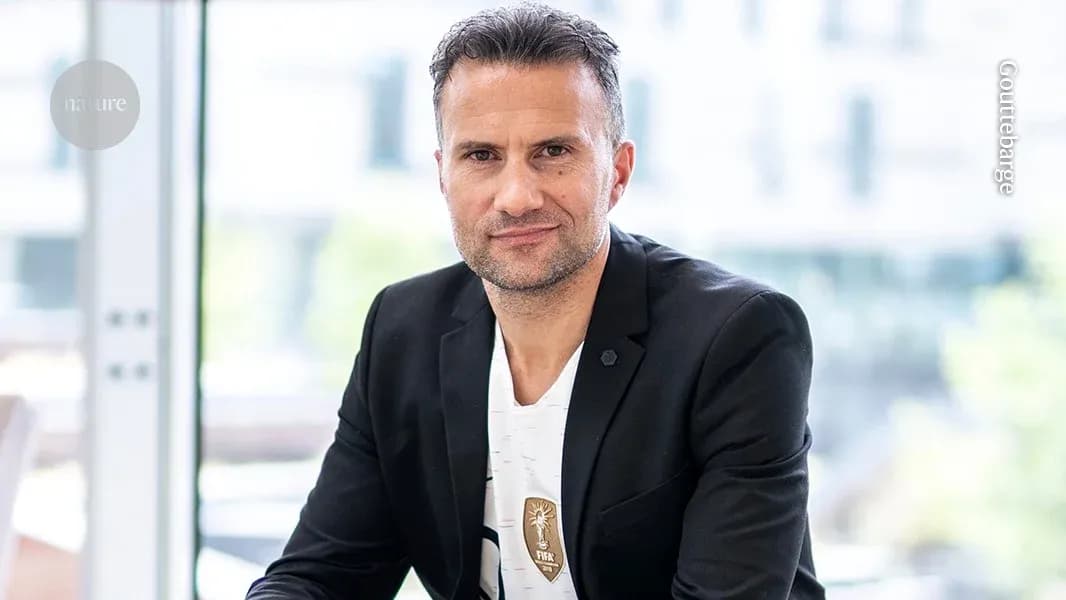
Vincent Gouttebarge spent more than a decade living the life every young player dreams of. Professional contracts in France and the Netherlands, packed stadiums, the grind of daily training. He also lived the part most fans never see: the injuries, the doubts, the quiet moments when the body and mind start to fray.
He retired in 2007. The boots went away; the medical journals came out.
Today, Gouttebarge is medical director at FIFPRO, the global players’ union, and chairs the International Olympic Committee’s Mental Health Working Group, while holding research roles at the University of Pretoria and Amsterdam University Medical Centre. Few people sit closer to the fault line where elite football meets human vulnerability.
With the 2026 men’s World Cup kicking off in the United States, Canada and Mexico, his message is blunt: the spectacle is extraordinary, but the cost to the players is mounting.
World Cup Euphoria, World Cup Fallout
Being called up by your country for a World Cup is as good as it gets. For most professionals, it is the pinnacle of a career, the moment that validates all the lonely hours on training pitches and in treatment rooms.
But the glow is fragile.
How a player experiences a World Cup depends on details the outside world often ignores: Are they starting or stuck on the bench? Is the team flying or going home early? Are they returning to their club as a hero, a scapegoat, or simply exhausted?
Once the final whistle goes on the tournament, the clock starts again. Players are expected back at their clubs almost immediately. If they are fortunate, they snatch a week or two of rest. Many do not. There is effectively no buffer between one season and the next.
That is not just a performance issue. It is a health issue.
A Calendar That Breaks Bodies – and Minds
The modern match calendar is relentless. Domestic leagues, cups, continental competitions, international breaks, expanded tournaments. At the top level, players can be pushed into two or even three games a week, stacked one after another with barely a day to breathe.
Gouttebarge and FIFPRO have been sounding the alarm. In 2024, together with the World Leagues, the union publicly urged FIFA to rethink and reschedule major competitions, to build in proper recovery time between tournaments.
The concern is not only about tired legs.
“The match calendar… puts a huge burden on the players, not only physically and physiologically, but also emotionally and cognitively,” he explains. Fatigue is no longer just about muscle soreness. It is about the brain, the nervous system, the constant strain of being required to perform at the edge of human capability with no real pause.
And that is before you add the noise of the modern game: social media, 24-hour commentary, criticism and abuse that follow players through the season and into their holidays.
The Hidden Injuries
Inside dressing rooms, the injuries everyone talks about are obvious: torn ligaments, hamstring strains, fractured bones. Those are measured, scanned, reported.
The mental side is not.
Footballers, Gouttebarge insists, “are not superheroes.” They are exposed to the same range of mental-health problems as anyone else. They have families, relationships, financial pressures, personal setbacks. The difference is that these collide with sport-specific stressors unique to elite competition.
Injury sits at the top of that list. Research now shows a clear two-way link between physical injury and mental health. Poor mental health can make a player more vulnerable to musculoskeletal problems. A serious injury, in turn, can be the single most traumatic event of a sporting career, ripping away training, competition, and daily routine for months.
Unexpected poor performance can be just as corrosive. One bad season, one costly mistake, one spell of form that deserts you at the wrong time – all of it can chip away at confidence and identity.
To understand the scale, Gouttebarge and his colleagues have been running epidemiological studies in professional football and across elite sport since 2012. Instead of formal clinical diagnoses – too time-consuming and intrusive at this level – they track symptoms: self-reported thoughts, feelings, and behaviours that signal mental-health problems.
The patterns are clear. The pressures are real.
The Stigma That Still Lingers
Progress has been made, but the old culture has not vanished.
Football remains, in many ways, a conservative environment. In Europe, the conversation around mental health has opened up, and Gouttebarge believes the game is moving in the right direction. Yet even there, players often weigh every word when it comes to discussing depression or anxiety.
Elsewhere, the barriers are higher. In South America, Africa and parts of Asia, where football is a social force and often a route out of hardship, admitting to mental-health struggles can still be seen as a sign of weakness.
The contrast is stark. A player with an ankle injury will talk about it openly in a press conference. A player with panic attacks or a depressive episode will usually stay silent. The fear is simple: if the coach knows, will I still be in the starting XI? Will I still have a career?
Changing that mindset, Gouttebarge argues, requires work from both ends.
From the bottom up, players and coaches need education – mental-health literacy programmes that explain symptoms, risks, and support options, and that place mental health on the same level as any physical injury.
From the top down, governing bodies must treat mental health as a core part of medical care. At many national federations, medical committees are packed with sports physicians, orthopaedic surgeons and cardiologists. Mental-health professionals are often absent. That, he says, has to change.
Education That Shifts Behaviour
In 2018, FIFPRO rolled out a mental-health education programme aimed directly at players. It was not designed as a perfect randomized controlled trial. It was designed to be practical.
The results were encouraging. After the programme, players showed better attitudes and behaviours around mental health than before. They were more open to acknowledging problems, more willing to seek help, more likely to treat mental-health challenges as legitimate medical issues rather than personal flaws.
For Gouttebarge, it was proof of concept. A relatively small investment of time in mental-health literacy can pay off in tangible improvements in how players think and act.
In a sport that spends billions on transfers and wages, the implication is obvious: if the game truly values its talent, it cannot afford to ignore the psychological side.
Isolation as Punishment
One practice cuts particularly deep for Gouttebarge: the routine isolation of players who fall out of favour.
It is a familiar story. A new coach arrives, the squad is deemed too big, and certain players are told to train alone or with the youth team. On paper, it is a technical decision. In reality, it can be a form of sanctioned exclusion.
From a trade-union perspective, it is already problematic. These players have signed contracts. They are employees. Forcing them away from the main group raises questions about fair treatment.
From a mental-health perspective, it is worse.
Social support is one of the strongest protective factors against mental-health problems. Stripping that away – removing a player from their daily environment, their teammates, their sense of belonging – increases the risk of psychological harm. In almost any other industry, deliberately isolating an employee would be unacceptable.
In professional football, it still happens regularly. Gouttebarge traces it back to poor leadership at club level, a failure to understand that management decisions carry medical consequences as well as tactical ones.
The World Cup will deliver drama, goals, and global celebration. It always does. The question is whether the sport’s leaders are finally ready to treat the players at its heart not as indestructible assets, but as workers and human beings whose bodies and minds can only be pushed so far.
Related News
UFC 332 Preview: Natalia Silva vs. Wang Cong Fight Card, Odds, Start Time, and Details
Andy Roddick Responds to Andre Agassi’s Comments on Alexander Zverev at the Laver Cup
Knicks Prepare for Flexible Roles in Title Defense
Rui Hachimura Swaps Lakers Fans to Clippers in Surprising Jersey Exchange
Who Will Be the NBA's Next First-Time All-Stars? Top Picks and Long Shots for 2027
How Strong Is Your Team at Home? Check Out the 2026 Brasileirão Home Standings