
Monterey Bay Dominates Loudoun United 4-1 at Cardinale Stadium
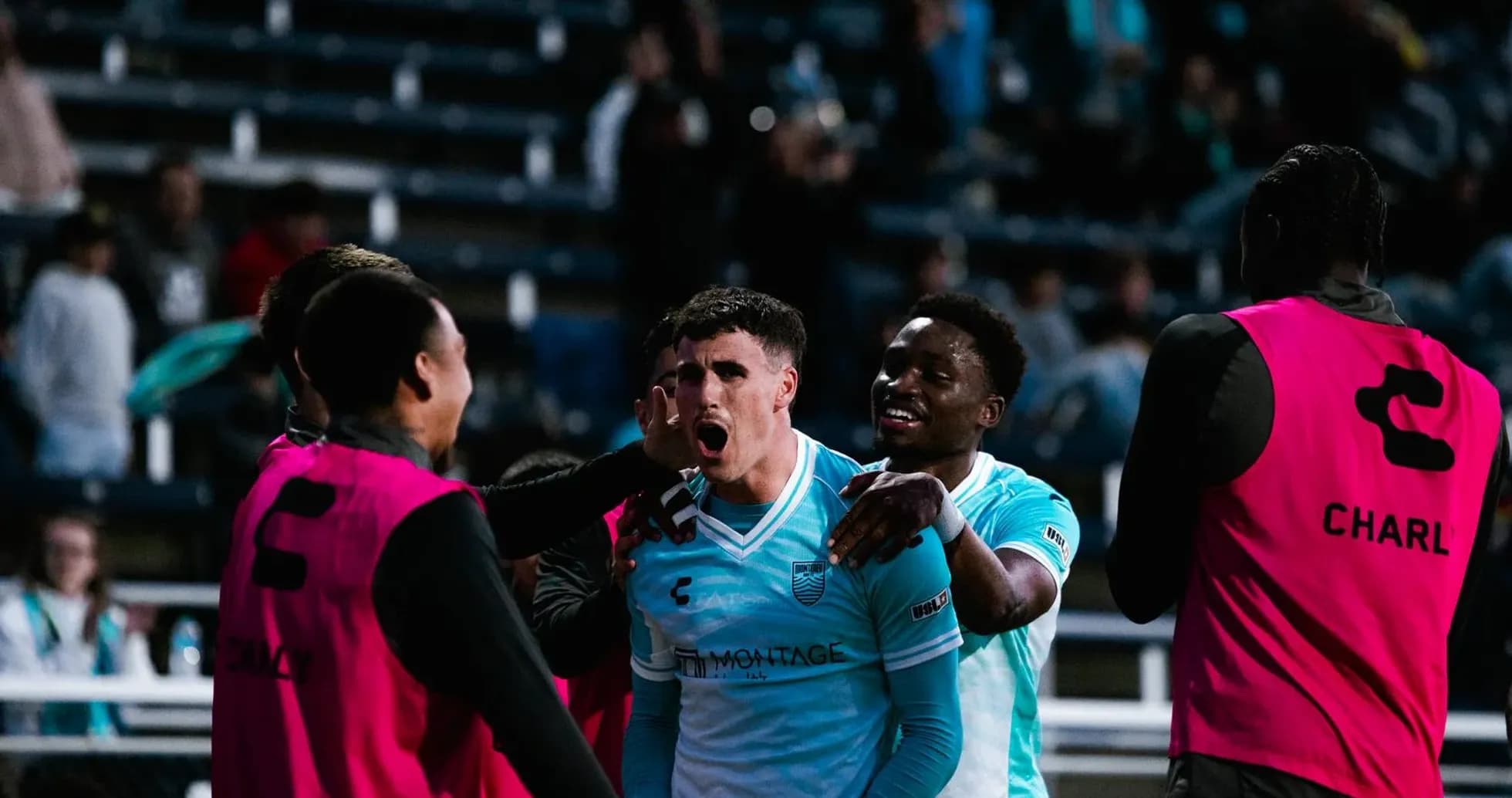
Under the lights of Cardinale Stadium, this USL Championship Group Stage fixture felt, even before kickoff, like a meeting of two flawed but fascinating projects. Monterey Bay, guided by Jordan Stewart, came in as a side searching for identity and stability. Loudoun United, under Anthony Limbrick, arrived with the reputation of draw specialists, a team that rarely collapses but just as rarely seizes full control.
Heading into this game, the table painted a stark picture. Monterey Bay sat 12th in USL 1 with 8 points from 11 matches, their overall goal difference at -8, the product of 11 goals scored and 19 conceded. At home they had been marginally more secure: 6 matches played, 2 wins, 1 draw, 3 defeats, with 7 goals for and 7 against. Loudoun, 11th with 9 points from 10 games and a goal difference of -5 (12 scored, 17 conceded overall), had built their season on stubborn resistance: 6 home draws, 1 away win, and a defensive line that, while leaky, had kept 4 clean sheets in total.
I. The Big Picture: A fragile side finds its voice
Monterey Bay’s seasonal DNA before this contest was paradoxical. Overall they averaged 1.0 goals for and 1.7 against per match, but at Cardinale Stadium their profile shifted: 1.2 goals scored and 1.2 conceded at home. Their biggest home win to date was a 4-1 scoreline, a reminder that when the attack clicks, it does so with force. On their travels, Loudoun had been conservative: 4 away matches, 1 win, 1 draw, 2 defeats, with just 3 goals scored (0.8 per game) and 7 conceded (1.8 per game).
Into this context dropped a fixture that ended 4-1 to Monterey Bay, a result that echoed their biggest home win of the season and hinted at a team finally aligning performance with potential. The half-time score of 2-0 reflected a home side that imposed tempo early, something their form line of “LLDLDLLLLWW” had rarely suggested they were capable of sustaining.
II. Tactical Voids and Discipline: Edges at the margins
There was no explicit injury or suspension list, but the season-long disciplinary patterns framed how both coaches would have approached risk. Monterey Bay’s yellow cards had a pronounced late-game spike: 27.27% of their cautions came between 61-75 minutes and 24.24% between 76-90, a clear sign of a team that often defends under stress as matches wear on. Their lone red card of the season had arrived in the 61-75 window as well, reinforcing the idea that game-state and fatigue can drag them into reckless territory.
Loudoun’s caution profile was even more tilted towards the closing stages. A late-game surge of 36.67% of their yellows came in the 76-90 range, with another 26.67% between 46-60. Limbrick’s side tends to grow increasingly desperate when chasing games, and that desperation often manifests in tactical fouls and delayed challenges.
In this match, Monterey’s ability to build and protect a lead fundamentally changed the usual risk calculus. Protecting a cushion allowed Stewart to manage intensity and rotations rather than chase the game, reducing the likelihood of the late collapses that their card profile hints at. For Loudoun, conceding twice before the interval forced them into precisely the frantic, stretched game that their statistics warn against.
III. Key Matchups: Hunter vs Shield, and the Engine Room
Without formal positional data, the Monterey Bay XI still told a clear story. J. Jackson, in the 98 shirt, anchored the spine, with the defensive line likely built around figures such as N. Gordon and Z. Farnsworth. On the flanks and in advanced roles, the likes of W. Leggett and O. Glasgow provided width, while the creative and connective tissue ran through players like S. Lletget and R. Nakamura.
Up front, R. Bidois and I. Paul formed the sharp end of the spear. Heading into this game, Monterey Bay’s overall scoring record did not advertise a prolific attack, but at home their 1.2 goals per game hinted at a group that thrives when they can push fullbacks high and commit numbers into the box. Against a Loudoun back line that had already shipped 7 away goals in 4 matches, this was the central “Hunter vs Shield” confrontation: Monterey’s need to rediscover their 4-goal home ceiling versus Loudoun’s attempt to hold the line at 1.8 away goals conceded per match.
On the other side, Loudoun’s attack revolved around the technical craft of P. Santos and the presence of T. Ulfarsson. With J. Murphy and B. Akinyode in midfield, Limbrick had an “Engine Room” built to disrupt and recycle, but not necessarily to carve teams open repeatedly. Their overall 1.2 goals per match, dropping to 0.8 away, underscored that this is a team more comfortable in tight, low-scoring contests than in open exchanges.
The clash in midfield zones was decisive. Monterey’s structure allowed N. Ross and Nakamura to contest second balls and dictate tempo, limiting Loudoun’s ability to settle into their usual rhythm of slow strangulation and incremental territory gains. Once Monterey Bay established a two-goal cushion by half-time, Loudoun’s plan to grind the game into a stalemate evaporated.
IV. Statistical Prognosis and What This Result Signals
Following this result, the underlying numbers still caution against overreaction. Monterey Bay’s overall averages of 1.0 goals for and 1.7 against do not transform overnight, and their broader form line still contains long losing streaks. Yet this 4-1 home win slots neatly alongside their season’s statistical outlier: their biggest home victory was also 4-1, suggesting that when Stewart’s side can score first and force opponents to open up, their attacking ceiling is significantly higher than their season-long averages imply.
For Loudoun, the defeat mirrors their heaviest away loss of the campaign, also 4-1. The away profile of 0.8 goals scored and 1.8 conceded remains a concern, particularly when they are dragged into matches where they must chase multiple goals. Their defensive structure, so often adequate in grinding out draws, looks fragile once the scoreboard pressure mounts.
From an Expected Goals perspective, the pre-match trends would have forecast a modest, perhaps cagey contest: Monterey’s home attack at 1.2 versus Loudoun’s away defence at 1.8 conceded, and Loudoun’s away attack at 0.8 against a Monterey home defence at 1.2 conceded. The 4-1 scoreline therefore represents a performance spike for the hosts and a regression for the visitors. Monterey’s attacking unit, with Bidois and Paul as reference points and Lletget knitting phases together, finally produced a display that matched the best version of their statistical identity at Cardinale Stadium.
In narrative terms, this fixture may be remembered as the night Monterey Bay stepped out of their early-season funk and reasserted Cardinale Stadium as a venue where they can not only compete, but dominate. For Loudoun United, it is a sharp reminder that their margin for error on their travels is thin, and that without tightening their defensive structure, the line between a disciplined draw and a heavy defeat can be crossed in just a few decisive moments.
Related News
San Antonio's Tactical Edge Secures 2–1 Victory Over Colorado Springs

Charleston Battery Dominates Loudoun United 4–1 in Statement Win

Miami FC vs Orange County SC: USL Championship Clash Highlights
Colorado Springs vs San Antonio: USL Championship Group Stage Preview

Charleston Battery vs Loudoun United: Match Preview

Miami FC vs Orange County SC Match Preview