
Morocco’s Prime Minister Warns Football Federation President Over World Cup Final Claims
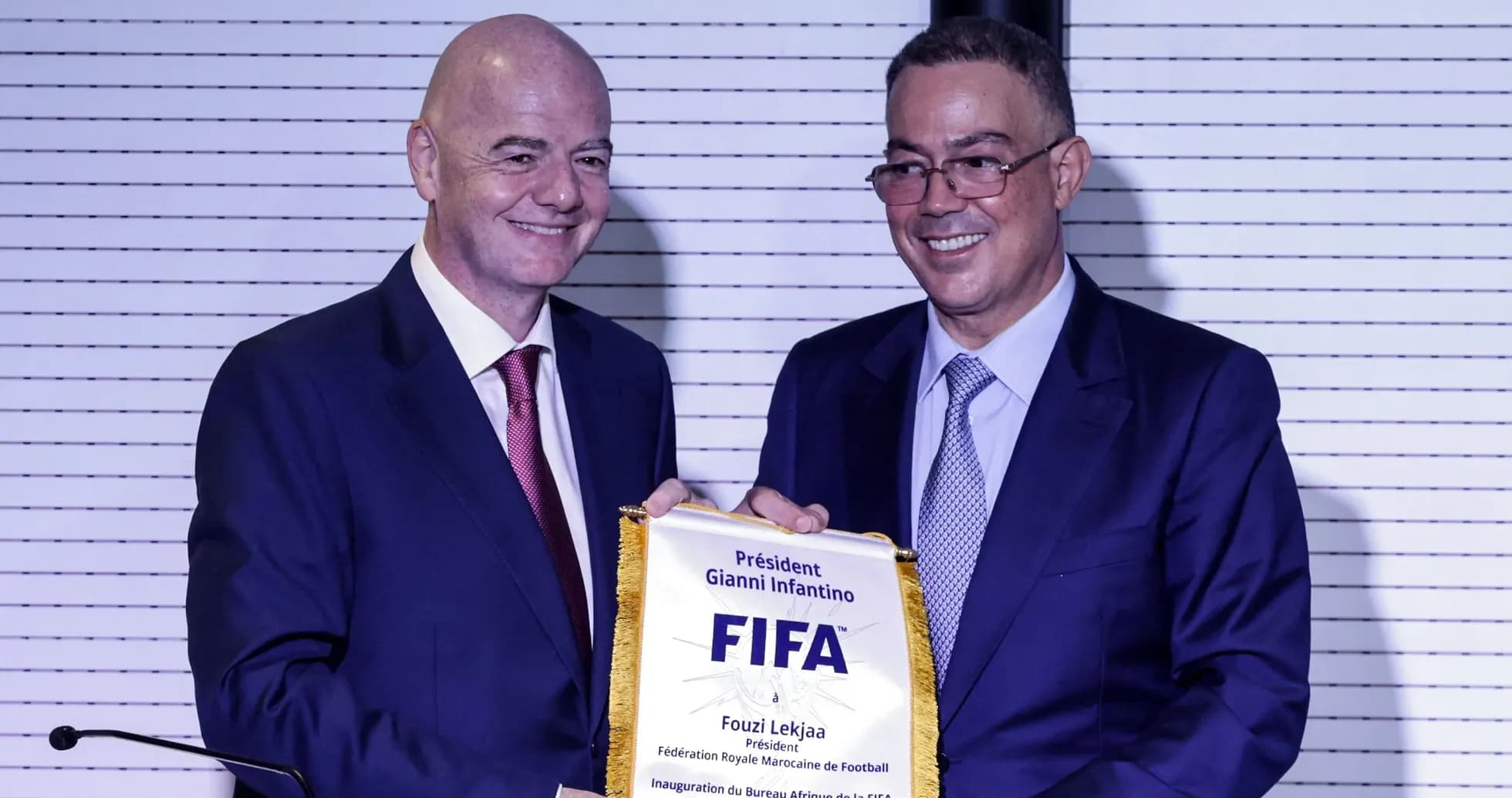
Morocco’s Prime Minister has publicly rebuked one of the most powerful figures in the country’s game, warning Royal Moroccan Football Federation (RMFF) president Fouzi Lekjaa to stop promising that Casablanca will host the 2030 World Cup final.
The message was blunt. And very public.
Political heat over a football showpiece
The 2030 tournament, marking 100 years of the World Cup, will be co-hosted by Morocco, Spain and Portugal, with opening matches also staged in South America to honour the competition’s origins. The final, though, remains officially up for grabs.
That hasn’t stopped the rhetoric. Speaking at a political party event, Lekjaa told supporters that Morocco’s new stadium in Casablanca would have the “honour” of staging the final. It played well at home. It did not play well in government.
Prime Minister Aziz Akhannouch stepped in, wary of igniting a row with Spain and Portugal before FIFA has even spoken.
At a rally, he addressed Lekjaa directly and in no uncertain terms: “Do not offer to host the big final game in Morocco while we still have not discussed the matter with our allies, Spain and Portugal. There should be some respect, brothers. Stop using electoral promises to pull the rug out from under us. These are huge matters. Deciding where the final will be held is a major issue.”
The intervention laid bare the tension between domestic political capital and delicate international negotiations. Morocco wants the final. But it also needs its partners.
FIFA waits, rivals push
On the governing side, there is silence. FIFA has yet to confirm where the showpiece will be played, saying only that “a decision will be made in due course.”
That vacuum has invited competing claims.
Morocco is driving hard to bring the World Cup final back to Africa for the first time since Johannesburg hosted Spain vs Netherlands in 2010. The country is investing heavily, positioning itself as the modern face of African football on the global stage.
Spain, though, is pushing just as hard.
Rafael Louzan, president of the Spanish football federation (RFEF), has been forthright about where he believes the final belongs. Speaking to Cadena SER radio, he said: “Even though no decision has been taken, I believe Spain is the place because it cannot be any other way. As you know, we are currently world champions. I believe Spain’s organisational capacity for major events is beyond question and that is why reality dictates that the grand final cannot and must not be held anywhere other than in Spain.”
No ambiguity. No soft sell. Spain sees itself as the natural host.
Stadiums as statements of intent
Spain’s case leans heavily on infrastructure and pedigree. The men’s national team are reigning world champions, fresh from defeating Argentina to claim a second World Cup crown this past summer. The country already boasts elite arenas, led by the revamped Santiago Bernabeu in Madrid and the expanding Spotify Camp Nou in Barcelona.
Those venues are not just stadiums; they are bargaining chips.
Morocco’s response is to build something that cannot be ignored. The country is constructing a colossal 115,000-seat stadium, designed to be the largest football-specific venue on the planet. It is a clear statement to FIFA and to its European partners: Morocco is not just a co-host, it wants to be the centrepiece.
This mega-project is meant to rival Spain’s legendary grounds and symbolise a new era for African football on the world stage. Yet it also raises the stakes politically at home, where grand promises can easily become campaign tools.
Delicate diplomacy, long timeline
For the Moroccan government, that is the danger. Akhannouch’s warning to Lekjaa was as much about diplomacy as it was about domestic optics. With Spain and Portugal watching every word, premature declarations risk unsettling a fragile three-way alliance.
There is time, though. The 2026 World Cup offers a useful reference point: New Jersey’s MetLife Stadium was only confirmed as the final venue in early 2024, long after the host nations were chosen.
The same slow burn is expected for 2030. FIFA will decide when it is ready.
Until then, Morocco walks a tightrope — selling a dream of a Casablanca final to its people, while trying not to alienate the very partners it needs to make that dream real.
Related News
Roberto Mancini Unveils Bold 34-Man Squad for Italy’s Nations League Challenge
Maza Transfer Battle: Arsenal, Man United, and More Eye Young Talent
Jawwy Elite League U-21: Fifth Round's Title Race Drama
Julian Alvarez Set to Change Agents Amid Transfer Speculation

Arsenal Signs Teenage Forward Vincent Joseph from Liverpool Academy

Tunisia Overhaul: Chaabani Reintroduces Sassi and Maaloul