
Mourinho's Tactical Overhaul at Real Madrid: From 4-3-3 to 4-2-3-1
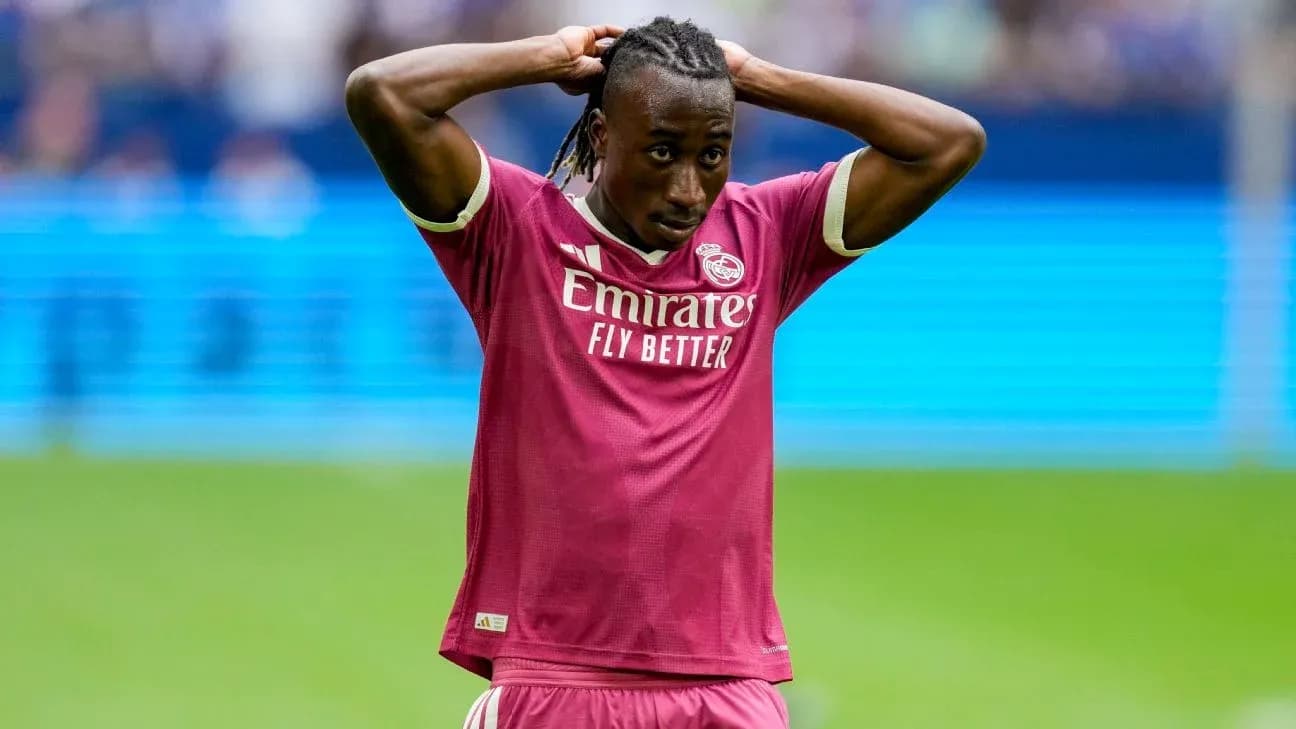
José Mourinho walks into Valdebebas with a very different Real Madrid to the one that limped through last season empty-handed. Álvaro Arbeloa is out, six new signings are in – Marc Cucurella, Bernardo Silva, Ibrahima Konaté, Denzel Dumfries, Carlos Espí and Yan Diomande – and the old 4-3-3 is being pushed aside.
The reset is not subtle. It’s structural.
From 4-3-3 to Mourinho’s 4-2-3-1
Under Arbeloa, Madrid never quite found a settled XI in the second half of the campaign. Lineups shifted, partnerships changed, and the team drifted eight points behind champions Barcelona. The final blow came on May 10 at Camp Nou, a 2-0 Clásico defeat that confirmed a second straight season without a major trophy.
Mourinho has seen enough. Preseason has already laid out his plan: a 4-2-3-1 with a double pivot, Jude Bellingham as the central attacking midfielder and a front line built around Kylian Mbappé and Vinícius Júnior. It’s a clear break from the 4-3-3 that had defined Madrid in recent years.
The money tells its own story. More than €125 million on winger Yan Diomande signals a shift in the way Madrid will attack and how the midfield will be built around them. This is not tinkering. It’s a redesign.
Madrid’s LaLiga season starts late compared to most of the division. While others kicked off their 2026-27 campaigns at the weekend, Mourinho’s first official game comes away at Espanyol on Saturday, Aug. 22. Between now and then, he has big calls to make.
Attack: Diomande or a false winger?
Three names are locked in. Mbappé through the middle. Bellingham just behind him. Vinícius Júnior, fresh from signing a new long-term deal, on the left.
The debate begins on the right.
Mourinho can go with Diomande as a natural winger, stretching the pitch and adding raw pace. Or he can sacrifice that speed for control, using the right flank as a home for an extra midfielder. The shape stays the same on paper, but the feel of the team changes completely.
If he leans toward balance, Bernardo Silva and Arda Güler become direct competitors for that right-sided role. In that case, Diomande – the most expensive signing in Real Madrid history – starts the season on the bench. How quickly the 19-year-old adapts to the club, the league and the pressure will dictate how long that situation lasts.
With Diomande in the XI, Madrid become more vertical, more direct, more dangerous in transition. With Silva or Güler, they gain pause and precision, more hands on the ball and more control of the tempo.
There is a third route. Federico Valverde can still play as a right-sided midfielder, tucking in and exploding forward from wide. For now, though, the new club captain is expected to operate in his preferred central role, where his running and aggression can shape the middle of the pitch.
Diomande’s inclusion would also change the picture behind him. Dumfries, a full-back who loves to surge forward, would likely get the nod at right back, with the Ivorian’s attacking instincts demanding extra defensive cover and overlapping support on that flank.
In that scenario, Madrid’s XI with Diomande and Dumfries looks far more like a classic Mourinho wide-power setup: speed high, force from deep, and a constant threat down the right.
Midfield: Valverde’s engine or Silva’s brain next to Tchouaméni?
The double pivot is the spine of this new Madrid, and Aurélien Tchouaméni sits right at the heart of it. After the failed pursuit of Manchester City’s Rodri, the France international stands as the only true positional holding midfielder in the squad. His place is not really in question.
His partner is.
Mourinho has four main options to work with: Valverde, Silva, Güler and academy product Thiago Pitarch. Each choice sends a different message.
Given the profiles involved, Valverde feels like the most natural fit next to Tchouaméni. Together, they would form a more solid, physically dominant midfield, capable of pressing high, covering ground and protecting the back four. It’s the kind of base Mourinho has trusted throughout his career.
But there will be games where Madrid expect to camp in the opposition half, recycling possession and breaking down deep blocks. On those nights, Silva becomes the obvious alternative. His ability to drop, receive under pressure, carry the ball out and dictate play offers a more creative, ball-playing pivot without completely abandoning structure.
Güler is the wildcard. Officially, the Türkiye international is pencilled in as Bellingham’s understudy in the No. 10 role, yet last season under Xabi Alonso he already showed he can operate deeper. If Mourinho wants an overtly attacking setup, he can push Güler into that second midfield slot, stacking the team with playmakers behind Mbappé.
Then there is Pitarch. Young, energetic and highly rated by Mourinho, the academy midfielder impressed with his dynamism and stamina under Arbeloa. He may not start the season as a headline name, but he looks poised to slip into the rotation as soon as the calendar tightens and the fixtures pile up.
A Real Madrid XI with Silva in midfield, rather than Valverde, instantly tilts the side toward control and creativity. The question is how often Mourinho will be willing to tilt.
Defense: Cucurella in, Dumfries charging, and a crowded center
At the back, the changes are just as stark.
Cucurella arrives to take over the left side of defense. He is expected to be a constant presence at left back, with Álvaro Carreras backing him up and Ferland Mendy, so often injured, pushed into a reduced role. That alone stabilizes a position that has felt unsettled for years.
The center, though, is less straightforward.
For now, Dean Huijsen and Antonio Rüdiger are set to start. Their partnership gives Mourinho a blend of youth and experience, aggression and aerial strength. But the club is not stopping there. The signing of Konaté and the return of Éder Militão are designed to raise the defensive ceiling and intensify competition.
Once both are fully available, the hierarchy will shift. Raúl Asencio, who saw more minutes last season, will inevitably drop down the pecking order as the battle for starting spots becomes ruthless.
And then there is Dumfries on the right. His arrival offers a very different profile to the more conservative full-backs Madrid have used in the past. With him bombing forward and Cucurella on the opposite side, Mourinho suddenly has full-backs who can pin opponents back and support high, aggressive wingers.
Put it all together and Madrid step into 2026-27 with a new coach, a new shape and a squad rebuilt in key areas. The question now is simple: does this overhaul turn near-misses into trophies, or does another season slip by while Mourinho’s new Madrid finds its true face?
Related News
Transfer Buzz: Haaland's Two Paths; Real Madrid Eyes £75M Premier League Star
Manchester United Targets Premier League Striker Jean-Philippe Mateta for January Reinforcement
Liverpool Eyes 17-Year-Old Mexican Midfielder Gilberto Mora for Summer Transfer
Summer Transfer Window 2026: Manchester United and Tottenham Miss the Mark
Liverpool Maintains Interest in Real Madrid Midfielder Despite Transfer Challenges
Barcelona Watches as Estevao Grows Frustrated with Chelsea Role Under Xabi Alonso