
New Mexico United and Orange County SC Battle to 1–1 Draw
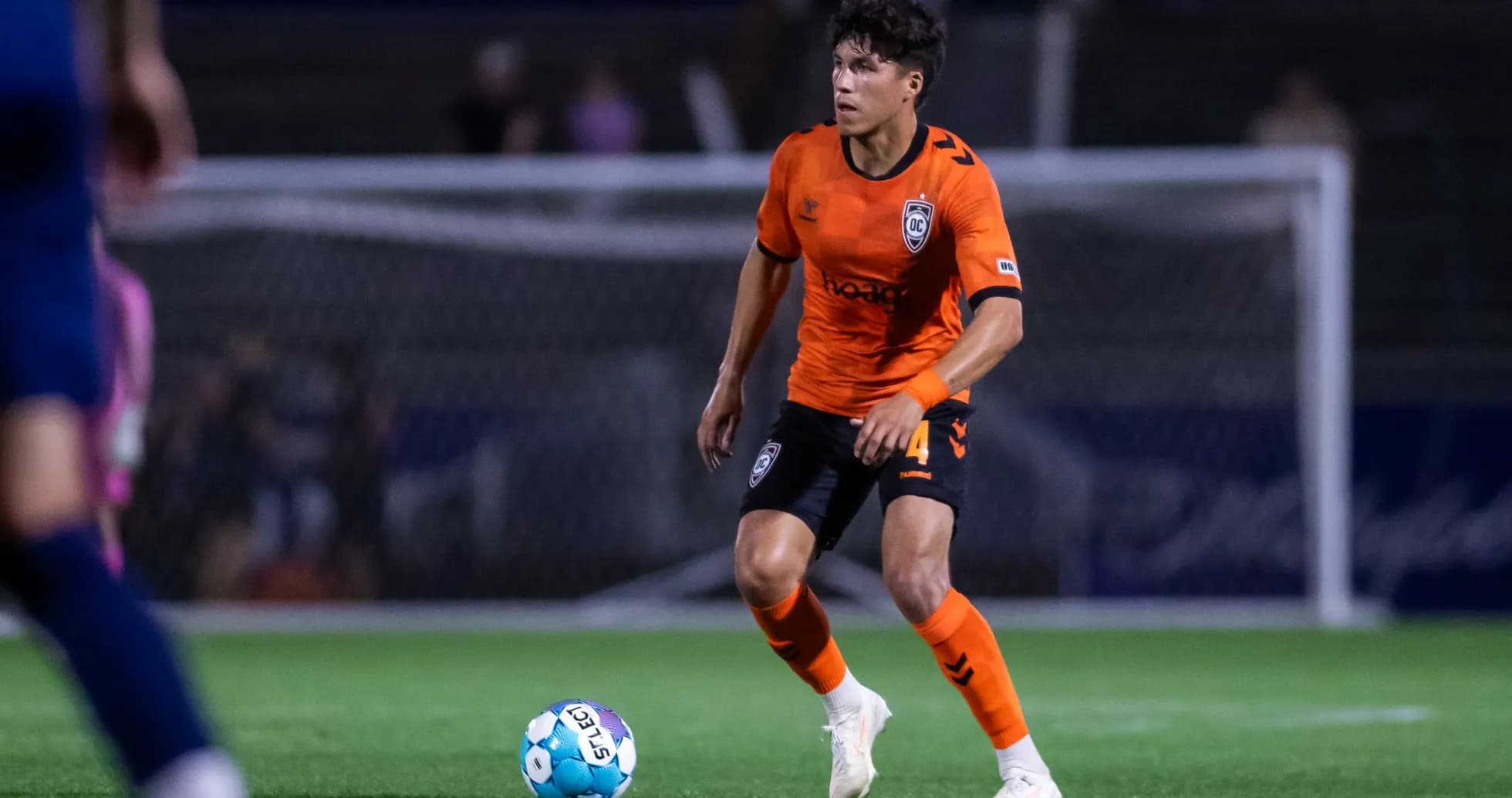
Under the desert lights at Rio Grande Credit Union Field at Isotopes Park, New Mexico United and Orange County SC played out a 1–1 draw that felt less like a routine group-stage fixture and more like a meeting of two sides trying to define their 2026 USL Championship identities.
I. The Big Picture – contrasting trajectories, shared point
Following this result, the table tells a nuanced story. New Mexico sit 9th in USL 1 on 15 points, their overall goal difference at -1 after scoring 12 and conceding 13 in total. Orange County, meanwhile, remain one of the early pacesetters: 2nd with 20 points, overall goal difference of 4 from 15 goals for and 11 against.
The draw fits each team’s seasonal DNA. New Mexico’s campaign has been streaky – their overall form line of LLWWLDWLWDD hints at volatility, but also a growing resilience. At home, they have been significantly stronger: 6 matches played, 3 wins, 2 draws, 1 defeat, with 10 goals for and 7 against. Orange County have built their position on consistency and defensive structure. Across 12 matches they have 5 wins, 5 draws, and only 2 losses, with a balanced split between home and away: on their travels, 6 played, 2 wins, 3 draws, 1 defeat, 8 goals scored and 7 conceded.
The 1–1 scoreline at half-time and full-time underlines both the pre-match expectation and the tactical equilibrium: a home side that averages 1.7 goals at home against an away team conceding only 1.2 on their travels, meeting somewhere in the middle.
II. Tactical Voids and Discipline – managing the edges of the contest
With no official absentees listed, both Dennis Sanchez and Danny Stone appeared to have near-full squads to shape their plans. That allowed New Mexico to lean into a more technical, possession-leaning spine, while Orange County could field their preferred blend of structure and transition threat.
Discipline was always going to be a quiet but crucial subplot. Heading into this game, New Mexico’s yellow-card pattern showed a tendency to accumulate cautions as matches wore on: 22.86% of their yellows between 61–75 minutes and 20.00% between 76–90, with another 14.29% in the 91–105 band. Orange County were even more tilted to late-game risk: 28.57% of their yellows from 61–75 and a hefty 38.10% from 76–90, plus their only red card of the season also arriving in that 76–90 window at 100.00% of their reds.
This match, a tight group-stage affair, therefore sat on a disciplinary fault line in the final quarter-hour. Both benches knew that pressing too high or defending too aggressively late on could tilt the balance through a single booking or dismissal. The absence of red cards on the day suggests each side managed that risk better than their seasonal patterns might have predicted.
III. Key Matchups – Hunter vs Shield, and the battle for control
Hunter vs Shield: New Mexico attack vs Orange County back line
Without explicit top-scorer data, the “hunter” for New Mexico is collective rather than individual. The front unit of G. Hurst, N. Reid-Stephen and Z. Bailey, supported by the technical guile of G. Zelalem, has powered that strong home attacking average of 1.7 goals per game. Hurst, leading the line with shirt 10, is the natural focal point, tasked with occupying centre-backs and creating space for runners like Reid-Stephen and Bailey.
Their challenge was to break down an Orange County defence that, on their travels, allows only 1.2 goals per match and has already produced 2 away clean sheets. The central pairing of T. Brewitt and G. Tubbs, screened by the work rate of midfielders like N. Benalcazar and O. Sylla, formed the “shield” that Stone relies upon. Over 12 matches, Orange County have conceded just 11 goals in total, an overall average of 0.9 per game – elite territory in a league that often rewards chaos.
In the 1–1 outcome, that duel finished level. New Mexico created enough to justify their strong home numbers but not enough to overwhelm a back line that has rarely been breached more than once per outing.
Engine Room: Zelalem vs Kelly and Hegardt
The most intriguing chessboard was the midfield. For New Mexico, Zelalem’s inclusion as a starter signalled an intent to control tempo and find vertical passes through the lines. Around him, players like O. Jabang and D. Harris provided the legs and defensive cover, while full-backs N. Hamalainen and C. Gloster offered width.
Orange County countered with a trio built on balance. S. Kelly, wearing 27, is the natural enforcer, tasked with breaking up play and protecting the back four. Alongside him, C. Hegardt (10) offered creative angles and progression, with Sylla and L. MacKinnon connecting midfield to the front line and wide channels.
The 1–1 score and relatively even flow suggest neither engine room fully imposed its will. New Mexico found enough pockets between the lines to score once and threaten, but Orange County’s structure prevented them from turning home dominance into a second or third goal. Conversely, Orange County’s midfield transitions were effective enough to carve out their equaliser but not to turn the match into an away statement win.
IV. Statistical Prognosis – what the numbers say about these squads
From a predictive lens, this draw feels like a point that fits both teams’ statistical arcs.
- New Mexico United
- Overall goals for: 12, goals against: 13, goal difference -1.
- At home, they score 10 and concede 7 in 6 matches, with averages of 1.7 scored and 1.2 conceded.
- They have 3 clean sheets in total and have failed to score 4 times overall, but only once at home.
This paints a picture of a side whose home xG profile is likely positive: they generate chances and usually find at least one goal, but defensive lapses keep opponents in the game. The 1–1 here is exactly in line with that pattern.
- Orange County SC
- Overall goals for: 15, goals against: 11, goal difference 4.
- On their travels: 8 scored, 7 conceded in 6 matches, with away averages of 1.3 for and 1.2 against.
- They boast 5 clean sheets overall and have failed to score just twice, both at home.
Their numbers suggest a team with a slightly above-average xG in attack and a notably strong defensive xG against, especially overall. Away from home, they tend to keep matches tight, leaning on structure and moments rather than volume of chances.
Put together, the statistical prognosis for a fixture like this – a strong but imperfect home attack versus a compact, promotion-chasing away side – is a marginally low-scoring draw or narrow win either way. The 1–1 final is therefore a logical outcome in xG terms: New Mexico likely shaded territory and shot volume, Orange County matched them in chance quality and defensive solidity.
Narratively, the point feels more valuable for New Mexico’s confidence than for the table itself. For Orange County, it is another data point reinforcing their identity: hard to beat, structurally sound, and always in the match. For both squads, this night in Albuquerque looked less like an endpoint and more like a blueprint for how their seasons will be fought – on fine margins, in tight spaces, and in the details between the lines.
Related News
San Antonio's Tactical Edge Secures 2–1 Victory Over Colorado Springs

Charleston Battery Dominates Loudoun United 4–1 in Statement Win

Miami FC vs Orange County SC: USL Championship Clash Highlights
Colorado Springs vs San Antonio: USL Championship Group Stage Preview

Charleston Battery vs Loudoun United: Match Preview

Miami FC vs Orange County SC Match Preview