
New York City II Edges Chicago Fire II in MLS Next Pro Clash
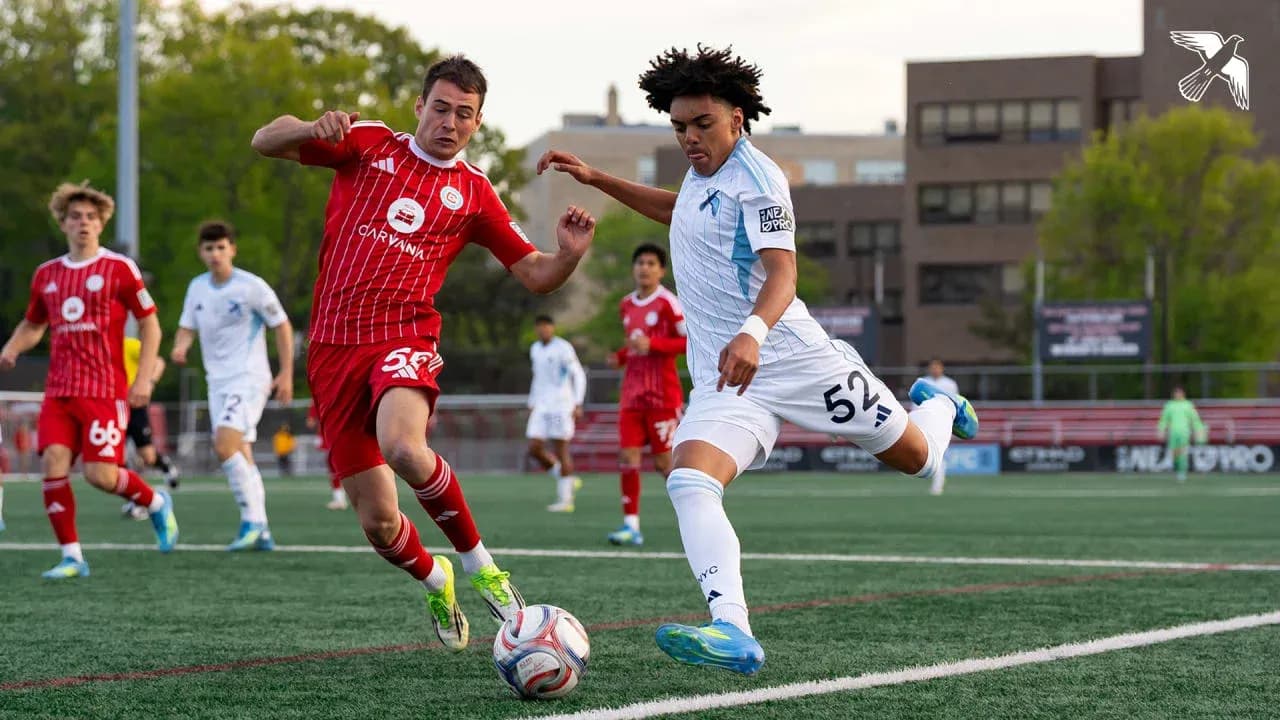
Under the New York lights at Belson Stadium, this MLS Next Pro group-stage fixture felt less like a developmental exercise and more like a small referendum on identity. New York City II, volatile but dangerous at home, edged Chicago Fire II 2–1, a result that sharpened the contrast between the sides’ emerging profiles.
Heading into this game, New York City II were a paradox: sixth in the Northeast Division with 9 points, a negative goal difference of -5 overall (6 scored and 11 conceded in league play), yet formidable at home. In total this campaign they had played 7 league matches, winning 3 and losing 4, and crucially all 3 wins had come at Belson Stadium. At home they averaged 1.5 goals for and 2.0 against, a chaotic balance that promised drama rather than control.
Chicago Fire II arrived as a more balanced, if equally flawed, proposition. Sixth in the Central Division with 10 points and an overall goal difference of -4 (7 scored, 11 conceded overall in the standings snapshot; 10 scored and 12 conceded in the broader season stats), they had split their 8 matches evenly between victory and defeat. On their travels they were unpredictable but capable: 2 wins and 2 losses away, scoring 3 and conceding 5 in the standings data, with an away average of 1.3 goals for and 1.3 against in the season statistics. This was a side used to knife-edge margins, and the 2–1 scoreline here simply extended that theme.
The match itself followed the script of New York’s season: front-foot at home, fragile at the back, but just ruthless enough. A 1–0 half-time lead reflected their comfort in familiar surroundings, before the contest tightened into a 2–1 final, the hosts leaning on their home streak—now 3 wins from 4 league fixtures at Belson—to tilt a finely balanced clash.
Tactically, Matt Pilkington’s selection underlined the club’s developmental priorities but also hinted at a spine. In goal, M. Learned anchored a youthful XI. Ahead of him, a defensive unit built around K. Acito, J. Suchecki and K. Smith had a clear mandate: tidy up a record that, in total this campaign, had seen New York concede 12 goals across 7 league games, with no clean sheets either at home or away. The numbers say this back line bends and often breaks; on this night, it just bent enough.
The real identity of this team lies further forward. J. Shore and M. Carrizo offered the connective tissue between defence and attack, with K. Pierre and H. Hvatum adding legs and verticality. Up front, S. Reid and A. Farnos gave New York a mobile, pressing edge. The home side’s season-long average of 1.0 goals for per match overall doesn’t scream firepower, but at Belson they have been more incisive, with 6 home goals in league play and a highest home win of 2–1. This 2–1 scoreline fit that established pattern almost perfectly.
On the bench, Pilkington had tools to alter the rhythm: B. Klein and C. Flax to refresh the wide zones, S. Musu and C. Danquah to add running and physicality, and J. Arroyave or D. Randazzo to stabilize the middle phases. E. Samb and P. Molinari rounded out a bench that looked built to manage game states rather than transform them with a single star turn.
Chicago Fire II’s lineup, by contrast, spoke of a collective without a single dominant figure but with a clear work ethic. J. Nemo in goal fronted a back line including D. Nigg, C. Cupps, J. Sandmeyer and H. Berg—players charged with steadying a defence that, in total this campaign, had conceded 12 goals across 8 league matches. On their travels they had allowed 5, an away average of 1.3 goals against, suggesting a unit that is rarely overwhelmed but often exposed by small lapses.
In midfield, C. Nagle, O. Pineda and D. Villanueva formed the engine room, tasked with disrupting New York’s rhythm and feeding a front line of R. Turdean, D. Hyte and D. Boltz. Chicago’s 1.3 goals for per match overall, both home and away, reflects a side that grinds rather than overwhelms. Their biggest away win, 2–1, mirrors the narrow margins they live by; here, they found themselves on the wrong side of that same score.
Depth-wise, Chicago’s bench was shorter but pointed: O. Pratt and M. Clark as fresh legs in midfield or wide areas, O. Gonzalez offering experience, V. Glyut and M. Napoe providing energy, and E. Chavez as an additional option to stretch the game late. It was a group built less for wholesale tactical shifts and more for incremental adjustments.
Discipline and game management added another layer to this story. Heading into this game, New York’s yellow-card profile was spiky: a clear late-game surge with 35.71% of their cautions arriving between 76–90 minutes, and a further 14.29% in the 91–105 window. That pattern speaks of a team that defends leads—or chases deficits—with a certain desperation. Their single red card this season had also arrived in the 76–90 range, underlining the volatility of their closing phases.
Chicago, meanwhile, spread their cautions more evenly. Their yellow cards clustered between 31–90 minutes, with 20.00% in each of the 31–45, 46–60, 61–75 and 76–90 ranges, and 10.00% in both 16–30 and 91–105. It is the profile of a side that competes consistently rather than losing control in spikes. Notably, Chicago had been perfect from the spot this season, scoring 1 of 1 penalties; New York had yet to take one.
From a “Hunter vs Shield” perspective, this was a clash between New York’s home attacking edge and Chicago’s away resilience. At home, New York’s 1.5 goals for and 2.0 against per match created a wide-open canvas. Chicago’s away averages of 1.3 for and 1.3 against suggested tighter margins. The 2–1 final leaned toward New York’s more expansive script.
In the “Engine Room” duel, the balance of power likely tilted toward the hosts. Shore, Carrizo and Pierre operate in a system that accepts risk in exchange for verticality. Nagle, Pineda and Villanueva, by contrast, are part of a Chicago side that has failed to draw a single league game this season—8 played, 4 wins, 4 losses—indicating a midfield that either imposes itself or gets overrun, with little in between.
Statistically, the prognosis for both teams moving forward is clear. New York City II remain a high-variance home side: 3 wins from 4 at Belson, no clean sheets overall, and an overall goals-against average of 1.7 that will continue to invite chaos. Their inability to keep clean sheets—0 in total this campaign—means they must continue to lean on the attacking contributions of Reid, Farnos and the supporting cast.
Chicago Fire II, despite the defeat, still project as a mid-table wildcard. With 4 wins and 4 losses from 8, 10 goals for and 12 against overall, and 2 clean sheets split evenly between home and away, they have a more balanced statistical profile. Their away averages of 1.3 scored and 1.3 conceded hint at a team that will remain competitive in most environments, but their lack of draws leaves them vulnerable to nights like this, where fine margins go against them.
Following this result, the narrative is sharpened rather than rewritten. New York City II reaffirmed Belson Stadium as a difficult stop on the MLS Next Pro map, doubling down on a home identity built on front-foot football and nerve-jangling endings. Chicago Fire II left with no points but with their broader story intact: a side that will continue to live on the edge, where every away trip feels like it could swing either way, and where the next 2–1—one way or the other—never feels far away.
Related News

MLS Winners and Losers: Cavan Sullivan’s USMNT Rise, St. Louis City SC’s Smart Moves, and Chicago Fire’s Hugo Cuypers Gap

MLS Winners and Losers: Portland Timbers' Historic Hat-Trick, Josh Sargent Shines, and Cavan Sullivan's Rising Star
Tacoma Defiance Injury List: Players Out and Return Dates vs Colorado Rapids II

Carolina Core injury list: Players out, potential return dates
Tacoma Defiance vs Colorado Rapids II Predicted Lineups and Team News
Orlando City II vs Huntsville City Predicted Lineups and Team News