
New York City II Upsets New York RB II in Thrilling 3–2 Derby
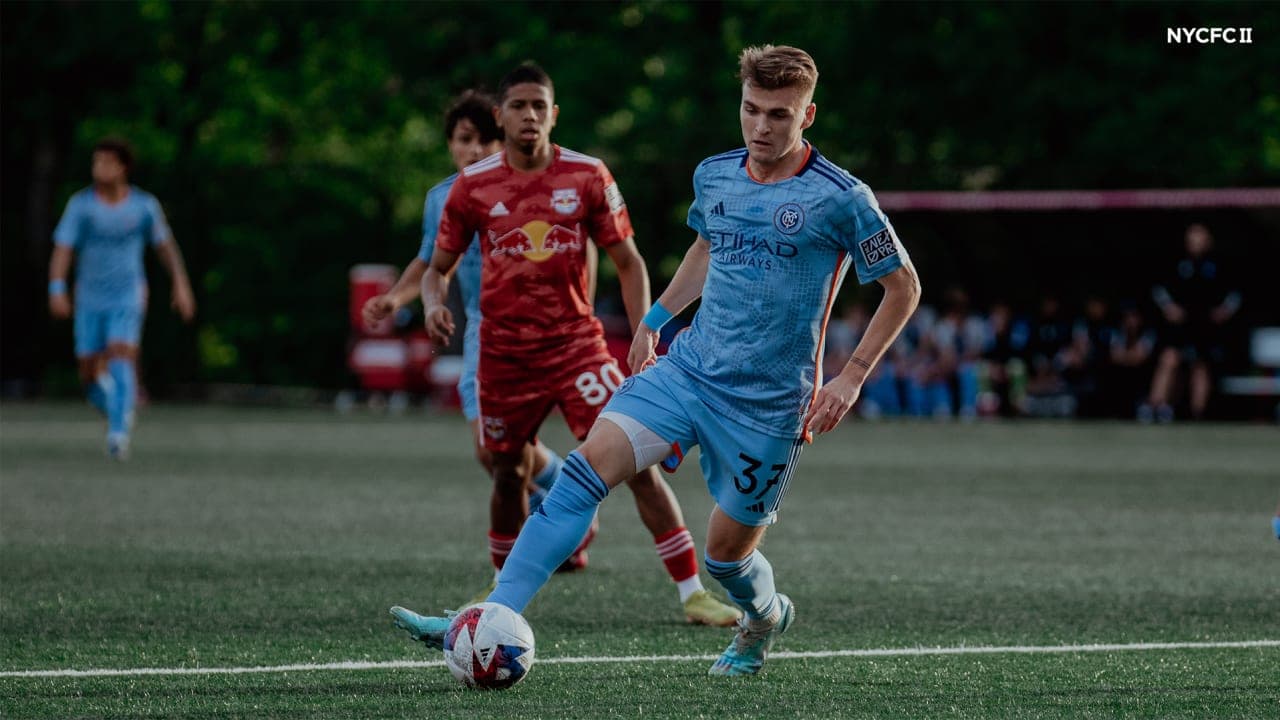
Under the lights at MSU Soccer Park, the latest chapter of the New York derby in MLS Next Pro ended with New York City II edging New York RB II 3–2, a result that bent the narrative of the season without quite breaking the home side’s authority. Following this result, the league table still paints RB II as a powerhouse: 23 points from 10 matches, a goal difference of 12 in total (24 scored, 12 conceded) and a place at the summit of the Northeast Division, with their Eastern Conference rank listed as 2nd. City II, by contrast, remain a volatile presence: 12 points from 9 games, a total goal difference of -5 (11 for, 16 against before this fixture in the standings snapshot), and a 12th-place tag in the Eastern Conference that belies their capacity to ambush on the road.
The seasonal DNA of these sides framed the contest long before the first whistle. RB II came in as a ruthless front‑foot team: in total this campaign they had averaged 2.4 goals for per game, rising to a ferocious 2.8 at home. Their defensive numbers were solid if not watertight, with 1.4 goals against in total and 1.5 at home. City II, on their travels, were the archetypal high‑variance spoiler: only 1.2 away goals for on average, but 1.8 away goals against, with no clean sheets anywhere and three total matches failed to score. The expectation was that RB II’s attack would eventually overwhelm, but the finished scoreline told of a visiting side willing to lean into chaos and win the marginal moments.
I. The Big Picture: Structure and Intent
The lineups, stripped of formal formations in the data, still reveal the skeleton of each plan. For City II, coach Matt Pilkington trusted a youthful, mobile spine. M. Learned, wearing 31, anchored them from the back, supported by a defensive cohort including A. Campos, J. Loiola, K. Acito and K. Smith. Ahead of them, the likes of C. Flax and J. Suchecki provided connective tissue between lines, while the front trio of D. Duque, D. Kerr and C. Danquah gave City II vertical threat and pressing energy.
RB II, at home and top of the division, set out with an XI built for aggression. A. Stokes and C. Faello formed part of a back line tasked with holding a high starting position, while A. Sanchez and J. Masanka Bungi were key to the first pass out. In the middle and wide channels, C. Harper, D. Gjengaar and S. Kone carried the responsibility to drive the tempo and attack the half‑spaces. Up front, the likes of A. Rojas, N. Worth and M. Jimenez were selected to turn the side’s impressive attacking averages into another multi‑goal night.
II. Tactical Voids and Discipline
There were no explicit absentees listed in the data, which meant both squads could lean on depth from the bench. City II’s substitutes’ bench featured attacking and midfield options such as B. Klein, D. McDermott and G. de Souza, alongside the athletic profile of E. Samb. RB II’s bench was notably deep: from A. Causey and M. Morigi to P. Sokoloff, B. Rodriguez and B. Boulanger, there was ample capacity to adjust the game state with fresh legs and different profiles.
Season‑long disciplinary patterns shaped how both teams had to manage the late phases. RB II’s yellow card distribution reveals a clear late‑game spike: 40.00% of their cautions arrive between 76–90', with another 20.00% between 61–75'. Add in the fact that their only red card in total has come in the 61–75' window, and you get a picture of a side that can become stretched and emotional as matches tighten. City II, meanwhile, share a similar tendency to live on the edge: 33.33% of their yellows arrive in the 16–30' window, another 33.33% between 76–90', and their only red card in total has also landed late, in the 76–90' range. This derby, with its 3–2 scoreline, fit that profile of high‑intensity, card‑prone football, especially as legs tired and space opened.
III. Key Matchups: Hunter vs Shield, Engine Room
The “Hunter vs Shield” battle was always going to be RB II’s attack against City II’s fragile defensive record. Heading into this game, RB II at home had scored 17 in 6, conceding 9 in that same span according to the team statistics snapshot. City II, on their travels, had scored 6 and conceded 9 in 5 away fixtures. The raw math made it likely RB II would find multiple goals, and they did, hitting two. But the shield cracked more than expected: conceding three at home against a side with only 1.2 away goals per game in total suggests that City II were able to target transitional spaces and exploit moments when RB II’s back line stepped too high or the press broke.
The “Engine Room” duel was more subtle. With no explicit positional data, we infer roles from shirt numbers and squad composition. For City II, players like C. Flax and J. Suchecki were crucial as ball‑progressors, tasked with breaking RB II’s first line and finding the runs of Duque and Kerr. On the other side, RB II’s midfield cluster — including D. Gjengaar, S. Kone and D. Cadigan — had to balance their side’s attacking ambition with rest‑defence structure. The fact that RB II, who had failed to keep a clean sheet in total more often than not (only 1 in total this campaign), again conceded multiple times hints that the engine room tilted too far towards attack and left the centre‑backs exposed in transition.
IV. Statistical Prognosis and What It Tells Us
From a statistical lens, this 3–2 away win is an outlier that still fits within both teams’ broader arcs. RB II’s attacking output stayed near their season trend: 2 goals at home against an opponent conceding 1.8 away per match in total is well within expectation. Defensively, however, shipping three at home to a City II side that had managed only 1.3 goals in total per game is a warning sign. It suggests that the underlying xG battle may have been closer than the pre‑match numbers implied, with City II creating higher‑quality chances than their averages would predict, likely via quick counters and exploiting RB II’s late‑game disciplinary looseness.
City II, for their part, confirmed two truths at once: they remain incapable of keeping clean sheets (0 in total this campaign), but they can manufacture high‑impact attacking moments even when the statistical deck is stacked against them. Their biggest away win in total before this, a 2–3 scoreline, foreshadowed exactly this kind of high‑scoring heist.
Looking forward, the prognosis is nuanced. RB II’s season‑long metrics — 7 wins from 10, no draws, a strong positive goal difference and a penalty record of 1 taken, 1 scored with 0 missed — still describe a side built for knockout‑style football, capable of outscoring problems. But if this were a 1/8 final rather than a group‑stage clash, conceding three at home would be a red flag for any xG model trying to project their ceiling.
City II, with 4 wins and 5 losses in total and no draws, will continue to be the Eastern Conference’s wild card. Their away profile remains risky, but this 3–2 at MSU Soccer Park shows that when their front line of Duque, Kerr and Danquah connects with the midfield’s vertical passing, they can tilt even the most hostile venue into a track meet — and in that chaos, their numbers suggest they are more dangerous than their rank implies.
Related News

MLS Winners and Losers: Cavan Sullivan’s USMNT Rise, St. Louis City SC’s Smart Moves, and Chicago Fire’s Hugo Cuypers Gap

MLS Winners and Losers: Portland Timbers' Historic Hat-Trick, Josh Sargent Shines, and Cavan Sullivan's Rising Star
Tacoma Defiance Injury List: Players Out and Return Dates vs Colorado Rapids II
Carolina Core injury list: Players out, potential return dates
Tacoma Defiance vs Colorado Rapids II Predicted Lineups and Team News
Orlando City II vs Huntsville City Predicted Lineups and Team News