
Newcastle United's Strategic Transition After Eddie Howe
Newcastle United had been quietly bracing for life after Eddie Howe for the best part of nine months.
Sporting director Ross Wilson has revealed that, while Howe had initially planned to lead the club into this season, the emotional and physical toll of almost five years in charge eventually caught up with him. By July, the head coach decided he needed a break – and that Newcastle needed clarity.
He walked away. The club, though, insist they did not stumble.
Planning for the post-Howe era
From the outside, Howe’s exit felt abrupt, arriving in the middle of a summer already defined by upheaval and big-name departures. Inside the club, Wilson says the scenario had been mapped out for months.
"We always knew where we were going to go," he explained, stressing that Howe’s departure was neither "chaotic" nor "painful". The contingency work had been running in the background, with a clear brief on what the next head coach should look like and how he should play.
Matthias Jaissle was never the only name on the list. But he was always on it.
Wilson, appointed in October, said he had been "planning for a managerial change for eight or nine of those months" as part of his remit. The logic was simple: Howe is, in Wilson’s words, "an exceptionally talented coach". Talented coaches attract opportunities. Newcastle did not want to be caught cold when that moment arrived.
So they built a profile. Aggressive, front-foot football. High pressing. A coach comfortable improving younger players, not just relying on finished products. Someone who would respect the foundations Howe had laid, not rip them up.
Jaissle, with his track record at Red Bull Salzburg and his commitment to developing emerging talent, kept ticking boxes.
Why Jaissle fit the brief
Newcastle held talks with several candidates, but Wilson says Jaissle emerged as their first choice to replace what he called a "legend of the club" in Howe.
The German arrived from Al-Ahli in the Saudi Pro League with a reputation for intensity and youth development – a neat match for Newcastle’s recruitment focus on players aged 24 and under.
Wilson recalled his first meeting with Jaissle and the reaction from chief executive David Hopkinson afterwards. Hopkinson told him he sounded "really excited about this one". Wilson didn’t deny it. "I remember saying 'you're probably right. I think this is it'."
Early signs have backed up that instinct. Jaissle is unbeaten in his first four games in charge in all competitions. The football already carries his stamp: energetic, structured, and demanding.
But it is not yet fully his team.
Only three of the club’s eight summer signings – Lukas Hornicek, Amar Dedic and Nico Gonzalez – started the 2-2 draw with Bournemouth. The game served as a gentle reality check. This is not an instant reboot. This is, as Jaissle has repeatedly called it, a "transition phase".
New players need time. So does a new manager, even one handpicked to fit the club’s long-term plan.
Ambition, compliance and the financial tightrope
Newcastle’s hierarchy are clear about the destination, if not the exact route. Hopkinson has set out the ambition to "consistently and credibly compete" for the game’s top honours over the long term.
To get there, they must first navigate the numbers.
After breaching UEFA financial regulations, Newcastle entered into a settlement with European football’s governing body. Hopkinson has underlined the need for the club to stay firmly within the rules if they are to grow at the pace ownership demands.
That has shaped both the transfer market and the business plan. The club want to increase revenues by 50% between now and 2030, leaning heavily on new sponsorship deals. But they accept that player trading will remain central to how they operate and reinvest.
"We want to have players here who are on a journey with us," Wilson said. The journey, though, will not always end on Tyneside. "Equally, if some of those players' journeys go at rapid speed, they might go somewhere else but, of course, that's normal. That's part of football."
Guimaraes shock and a window of compromises
The summer window underlined that reality in brutal fashion.
Newcastle had prepared for the exits of Anthony Gordon and Sandro Tonali, who left for Barcelona and Tottenham Hotspur respectively. Those moves were baked into their planning.
Bruno Guimaraes was not.
Losing their talisman to Arsenal forced a rethink and left a hole that could not simply be patched over. On top of that, key targets Victor Munoz and Johan Manzambi slipped away to Liverpool and Aston Villa, adding another layer of frustration to an already fraught window.
Wilson, though, insists the broader strategy stayed intact. Aside from Guimaraes’ departure, he claimed "everything else that happened during the window was part of the plan".
That did not mean every incoming player topped their shortlist. It never does.
"That does not mean that every single player [who signed] was the number one name on our list, but that is never the case in any transfer window," Wilson said. "Clearly we were disappointed a couple of times but, again, that's normal.
"No club goes into the window and reaches the end getting every target they set out to get. If they say they did, it is a lie."
No hard targets – but expectations are clear
Inside the dressing room and the boardroom, there is no fixed league-position demand hanging over Jaissle’s head. Newcastle have modelled a range of financial outcomes depending on where they finish this season, but Wilson says the German has not been given a specific target to hit.
The message is more nuanced. Build on Howe’s work. Embed the new style. Develop the young core. Keep the club on track with UEFA’s rules while nudging it closer to the elite.
Jaissle’s unbeaten start has bought him time and credit. The real test will come when the transition bites harder, the fixtures pile up, and the financial constraints collide with the expectations of a fanbase that has tasted Champions League nights and wants more.
Newcastle insist they have their plan. The question now is whether the carefully plotted post-Howe era can survive the chaos that every season inevitably brings.
Related News
Mohamed Ihattaren's Resurgence in Dutch Football
Liverpool's Gamble on Bradley Barcola: A Regret Over Salah Replacement
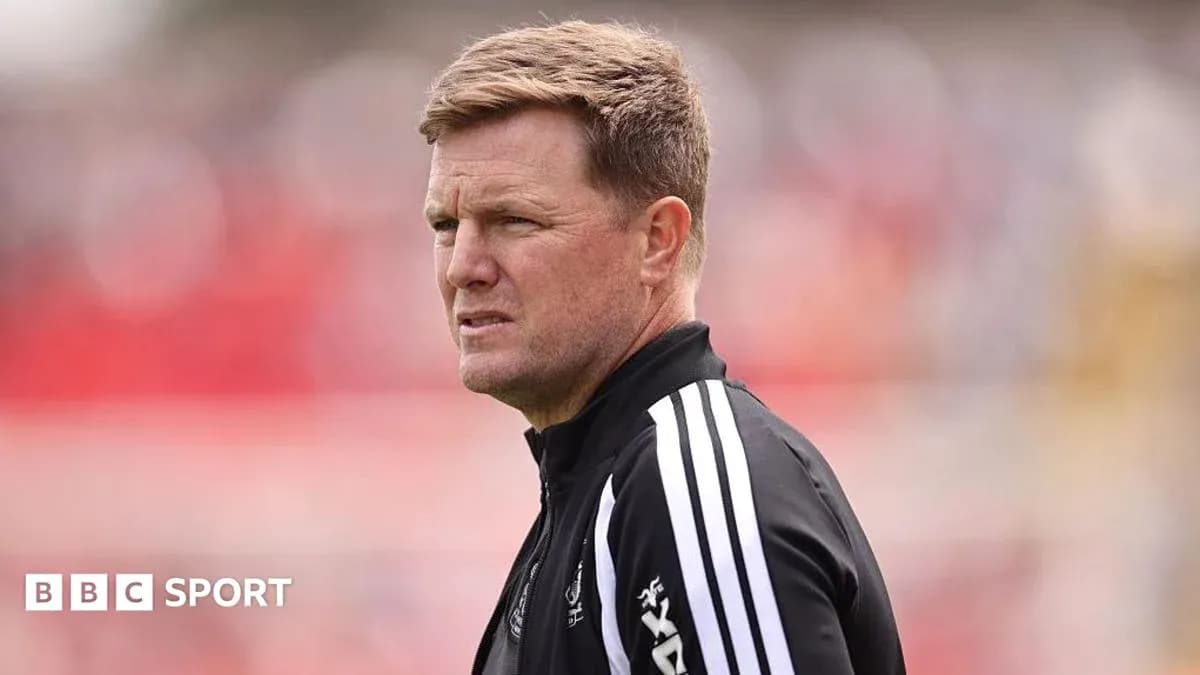
Newcastle United's Strategic Transition After Eddie Howe
Jadon Sancho Weighs Premier League Return Amid Dortmund Interest
Unai Emery's Aston Villa: Navigating Early Season Challenges
Lucca Brughmans on Liverpool Move: Living in a Dream