
Nottingham Forest vs Tottenham: Tactical Analysis of Premier League Clash
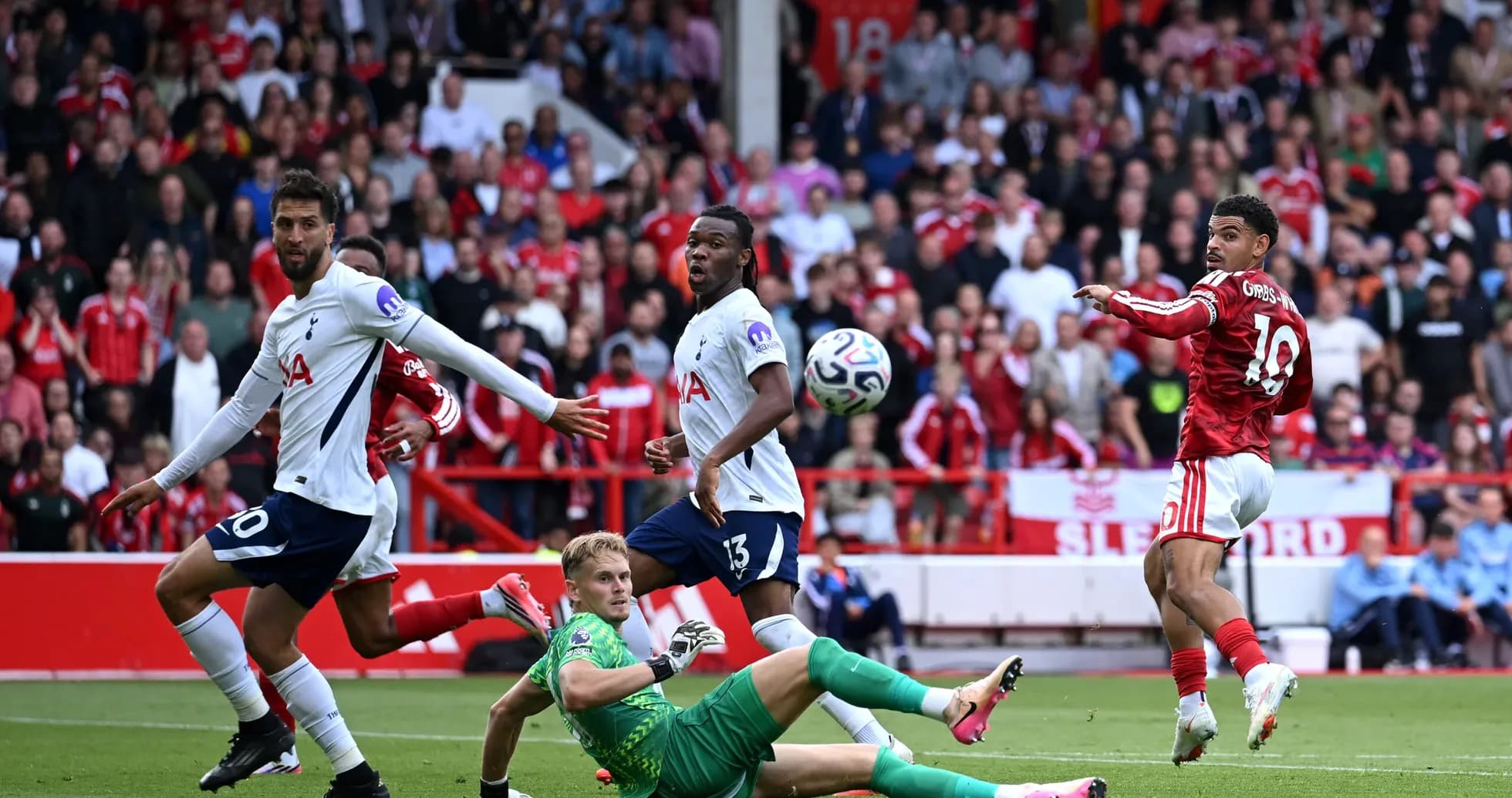
The City Ground under grey September skies, the Premier League’s third round, and two sides already feeling the weight of the table. Nottingham Forest, 16th with 2 points from 3 matches, hosted an out‑of‑sorts Tottenham sitting 18th with just 1 point and a goal difference of -5. The 0-0 final scoreline told one story; the squads and their tactical shapes hinted at a deeper one.
I. The Big Picture – Shapes, context, and early-season DNA
Forest arrived with a clear identity. All three league games so far have come in a 3-4-2-1, and Oliver Glasner doubled down on that structure again. The numbers behind it are stark: overall this campaign Forest have scored 2 goals and conceded 3 across 3 matches, giving them a goal difference of -1 (2 scored minus 3 conceded). At home they have yet to score in 2 league games, while conceding just 1. On their travels, they have been more expansive, scoring 2 and conceding 2 in a single away outing.
Tottenham, under Roberto De Zerbi, are equally wedded to their shape: three league matches, three uses of 4-2-3-1. But the attacking fluency associated with that system has not arrived. Overall this season they have yet to score in the league – 0 goals for, 5 against – leaving them on a goal difference of -5 (0 minus 5). At home they have lost their only match 0-2; away they have taken a single point from 2 games, conceding 3 without reply.
Against that backdrop, this fixture felt less like a glamour tie and more like a stress test of each side’s emerging identity: Forest’s compact, wing-back driven structure versus a Tottenham side trying to build a new possession framework without any cutting edge.
II. Tactical Voids – Absences, discipline, and where the gaps lie
The team sheets underlined how both coaches were forced to improvise around key absences.
Forest were again without N. Savona, missing with a knee injury. While he is not a headline name, his absence matters in a squad that leans heavily on work rate and rotation in midfield. Glasner’s answer was continuity: M. Sels behind a back three of Jair, Nikola Milenković, and Murillo; a hard-running midfield line of O. Aina, X. Schlager, J. McAtee, and N. Williams; with D. Ndoye and M. Gibbs-White floating behind lone forward L. Delap.
Discipline has been a quiet but important theme for Forest. Overall this season they have shown a pronounced tendency to collect yellows in the 46-60 minute window, where 50.00% of their league bookings have arrived. O. Aina embodies that edge: 2 yellow cards in 3 appearances, with 7 tackles and 35 duels contested. He plays on the fine line between aggression and risk, and in a game where Tottenham’s wide players look to isolate full-backs and wing-backs, his timing in the challenge is pivotal.
Tottenham’s tactical voids were far more dramatic. D. Kulusevski, J. Maddison, W. Odobert and X. Simons all missed out, three of them with knee injuries and Maddison with a knock. That is effectively an entire creative department removed from De Zerbi’s blueprint. In their place, the visitors leaned on a spine of A. Kinský in goal, a back four of Pedro Porro, J. van Hecke, Micky van de Ven and D. Udogie, a double pivot of R. Bentancur and Sandro Tonali, with Sávio, Conor Gallagher, M. Tel and Omar Marmoush tasked with generating something – anything – in the final third.
Disciplinary trends for Spurs are more evenly spread but still telling: yellow cards have been distributed evenly across 0-15, 31-45, 46-60 and 76-90 minutes, each interval accounting for 25.00% of their bookings. It suggests a side that struggles to control phases of the game, forced into reactive fouling at the start, middle and end of halves.
III. Key Matchups – Hunter vs Shield, Engine Room battles
The most intriguing duel at the City Ground revolved around M. Gibbs-White. In a Forest side that has scored only 2 league goals overall, he has already produced 1 goal and 1 assist, with 7 shots (2 on target), 81 completed passes at 82% accuracy and 8 dribbles attempted, 4 successful. He is the creative hinge in Glasner’s 3-4-2-1, drifting between the lines and linking with L. Delap.
His primary shields were van de Ven and J. van Hecke, protected by Bentancur and Tonali. Tottenham’s defensive record – 5 goals conceded overall, 2 at home and 3 away – does not scream solidity, but the structure here is clear: a high defensive line anchored by van de Ven’s pace, with Bentancur and Tonali screening central pockets. If Gibbs-White could drag one of the pivots out and combine with Ndoye and McAtee, the back four would be exposed. If Spurs kept their distances tight, Forest would again be forced into wide, lower‑value attacks.
In midfield, the “engine room” clash pitted Schlager and McAtee against Bentancur and Tonali. Forest’s central pair needed to control transitions, particularly when possession turned over and Sávio or Tel could spring into space. Tottenham’s double pivot, meanwhile, had to progress the ball without the natural passing lanes that Maddison and Kulusevski usually provide.
Out wide, the duel between O. Aina and D. Udogie offered a fascinating mirror. Aina, Forest’s top card magnet, loves to step high and contest duels; Udogie, already booked once this season and involved in 14 duels with 7 won, is similarly aggressive. Their overlapping and underlapping runs could either stretch the game or descend into a running foul count.
IV. Statistical Prognosis – What the numbers say about these squads
Heading into this game, Forest’s overall attacking numbers were modest but not hopeless: 0.7 goals per match overall, with a stark split between home (0.0) and away (2.0). Defensively they were relatively stable at home, conceding 0.5 goals per match at the City Ground, but more open away (2.0). They had kept 1 clean sheet overall and failed to score in 2 matches, both at home. From the spot, they had taken 1 penalty overall this season and scored it, with no misses.
Tottenham’s profile was more extreme. Overall they averaged 0.0 goals for per match, both home and away, and 1.7 goals against per game overall (2.0 at home, 1.5 on their travels). They had managed 1 clean sheet away from home but had failed to score in all 3 league fixtures. With no penalties taken or missed, there was no lifeline from the spot to mask their open-play struggles.
On that evidence, a low‑scoring, attritional contest was always the likeliest narrative. Forest’s compact 3-4-2-1, anchored by Milenković and Murillo in front of Sels, is built to suffocate a blunt attack like Tottenham’s. Spurs’ 4-2-3-1, stripped of its primary creators, was unlikely to suddenly overturn an overall record of 0 goals in 3 matches.
Following the 0-0, the table barely shifted in tone: Forest remain a side whose defensive structure is ahead of their home attacking output, while Tottenham look like a possession project still searching for end product. The squads on display – and the numbers behind them – suggest that until De Zerbi recovers his missing attackers, it will be Forest’s kind of game more often than Tottenham’s: tight margins, few chances, and every duel in midfield magnified.
Related News

Manchester City vs Coventry: A Tale of Two Teams
Chelsea vs Hull City Stats: Head-to-head Record Before September 2026 Match

Liverpool vs Fulham Stats: Head-to-head Record Before Match

Troy Deeney's Premier League Team of the Week: Isak, Konsa, Mitchell, Barnes Shine
Ipswich vs Liverpool: Tactical Insights from the 2–0 Defeat
Arsenal vs Chelsea Predicted Lineups: Team News and Tactical Analysis