
Oakland Roots and Birmingham Legion Battle to 1–1 Draw
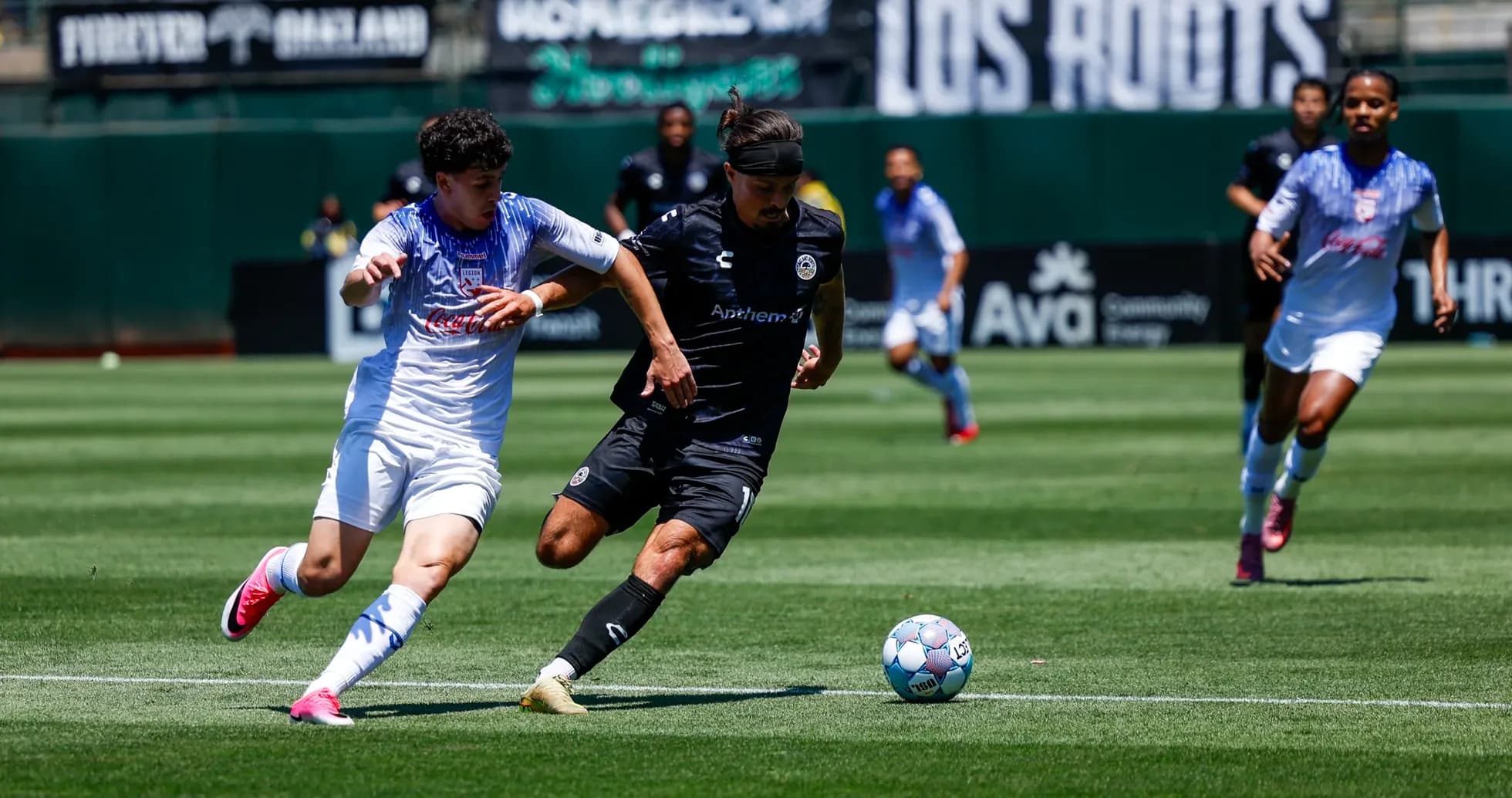
Under the lights at Laney College Football Stadium, Oakland Roots and Birmingham Legion played out a 1–1 draw that felt less like a quiet group-stage formality and more like an early stress test for two sides built in very different images. Following this result, Oakland remain the more stable of the pair in the USL Championship’s USL 1 group, sitting 4th with 18 points and a goal difference of 2, while Birmingham hover in 10th on 12 points and a goal difference of -2. The table positions tell one story; the squads and their tactical DNA tell another.
I. The Big Picture – Two Identities Colliding
Oakland’s season profile is clear: a team that lives in tight margins and leans on structure. Overall they have played 13 league matches, winning 4, drawing 6 and losing 3, with 19 goals scored and 17 conceded. The numbers are compact: an overall goals-for average of 1.5 and goals-against average of 1.3. At home they are slightly more conservative going forward and more secure at the back, averaging 1.3 goals scored and 1.0 conceded at Laney.
Birmingham, by contrast, are more volatile. Across 12 league games they have 2 wins, 6 draws and 4 defeats, with 13 goals scored and 15 conceded. Their overall attacking output is lower at 1.1 goals per game, but on their travels they open up: 1.6 goals scored away, at the cost of 1.8 conceded. That away profile framed their visit to Oakland perfectly – a side that can hurt you, but will give you chances.
II. Tactical Voids and Discipline – Where the Edges Fray
With no listed absentees, both coaches had access to their full squads. That meant Ryan Martin could lean into a balanced, flexible Oakland XI, while Jay Heaps could double down on Birmingham’s counter-punching core.
Oakland’s disciplinary profile hints at a team that often has to suffer without losing complete control. Overall yellow-card data shows a pronounced spike between 61–75 minutes, when 27.27% of their cautions arrive, and another heavy band from 76–90 minutes at 22.73%. Add 18.18% between 46–60 and you see a side that becomes increasingly combative after half-time. Red cards are rare but telling: 50.00% between 46–60 and 50.00% between 91–105, underlining that their aggression can tip over just as matches become stretched.
Birmingham’s card map is even more revealing. They are a late-game flashpoint team: 30.30% of their yellows arrive from 76–90 minutes, the single biggest cluster in their distribution, and their only red card this season has also come in that 76–90 window (100.00% of their reds). Earlier, they are already on the edge, with 18.18% of yellows between 31–45 minutes and 15.15% from 61–75. This is a squad that lives on the disciplinary line when games tighten.
III. Key Matchups – Hunter vs Shield, and the Engine Room
Without official top-scorer and assist data, the “Hunter vs Shield” duel becomes more structural than individual: Oakland’s home attack versus Birmingham’s away defence.
On their travels, Birmingham concede 9 goals in 5 matches, an average of 1.8 per game. That defence walked into a venue where Oakland score 10 goals in 8 home fixtures, averaging 1.3. The raw numbers suggest that if Oakland maintain their usual home attacking rhythm, Birmingham’s back line is likely to bend. The 1–1 full-time score fits that pattern: Oakland generated enough to find a way through once, but not enough to completely crack a back line that, for all its fragility, is used to absorbing pressure.
The reverse angle is equally intriguing: Birmingham’s away attack (8 goals in 5, 1.6 per game) against Oakland’s home shield (8 conceded in 8, 1.0 per game). That clash framed the visitors’ first-half edge. Birmingham are accustomed to being more adventurous away than at home, and Oakland’s habit of keeping games tight meant the visitors’ best route was to strike early and then lean on their transitional game. The half-time scoreline of 0–1 to Birmingham reflected that balance – the hunter finding a gap in a normally reliable shield.
In the engine room, Oakland’s selection points to a technical, possession-oriented midfield. B. Byaruhanga and T. McCabe provide the central platform, with T. Lepley and F. Valot offering the connective tissue between lines. W. Prentice and P. Wilson give Ryan Martin direct running and penalty-box presence. It is a group built to control rhythm rather than chase chaos.
Birmingham’s spine is more combative. S. McIllhatton and S. Antwi bring legs and bite in central zones, while S. Saucedo and P. Vassell operate as the creative and vertical outlets around them. With R. Williams offering mobility up front and the back line anchored by P. Kavita and B. Washington, Heaps has a template made for rapid transitions: win it, play forward early, and attack the spaces behind Oakland’s advancing full-backs.
IV. Statistical Prognosis – A Draw That Fits the Numbers
Following this result, the broader season metrics suggest the 1–1 scoreline was almost the median outcome. Oakland’s overall goal difference of 2 (19 scored, 17 conceded) and Birmingham’s -2 (13 scored, 15 conceded) both point toward narrow margins rather than blowouts.
Oakland’s home profile – 3 wins, 3 draws, 2 defeats with 10 scored and 8 conceded – is that of a side that rarely runs away from opponents but also rarely collapses. Birmingham’s away record – 1 win, 2 draws, 2 defeats, 8 scored and 9 conceded – is almost perfectly symmetrical: they create enough danger to score, but their defensive openness means they almost always give something back.
If we translate those numbers into an xG-style prognosis, the pre-match expectation would tilt toward a low-to-mid scoring game, with Oakland slightly favoured on control and Birmingham carrying a real threat in transitions. One goal each aligns neatly with those underlying patterns: Oakland’s structure and home security preventing a second Birmingham strike, Birmingham’s away attacking edge ensuring they did not leave Laney empty-handed.
In narrative terms, the match confirmed what the season has whispered so far. Oakland Roots are a playoff-chasing side defined by control, discipline on the edge, and a balanced squad where the collective is the star. Birmingham Legion are a dangerous, volatile visitor: capable of striking first, but still searching for the defensive solidity to turn those punches into consistent wins.
Related News

San Antonio's Tactical Edge Secures 2–1 Victory Over Colorado Springs

Charleston Battery Dominates Loudoun United 4–1 in Statement Win

Miami FC vs Orange County SC: USL Championship Clash Highlights

Colorado Springs vs San Antonio: USL Championship Group Stage Preview

Charleston Battery vs Loudoun United: Match Preview

Miami FC vs Orange County SC Match Preview