
Olympiakos Piraeus vs NEC Nijmegen: Tactical Analysis of a Goalless Draw
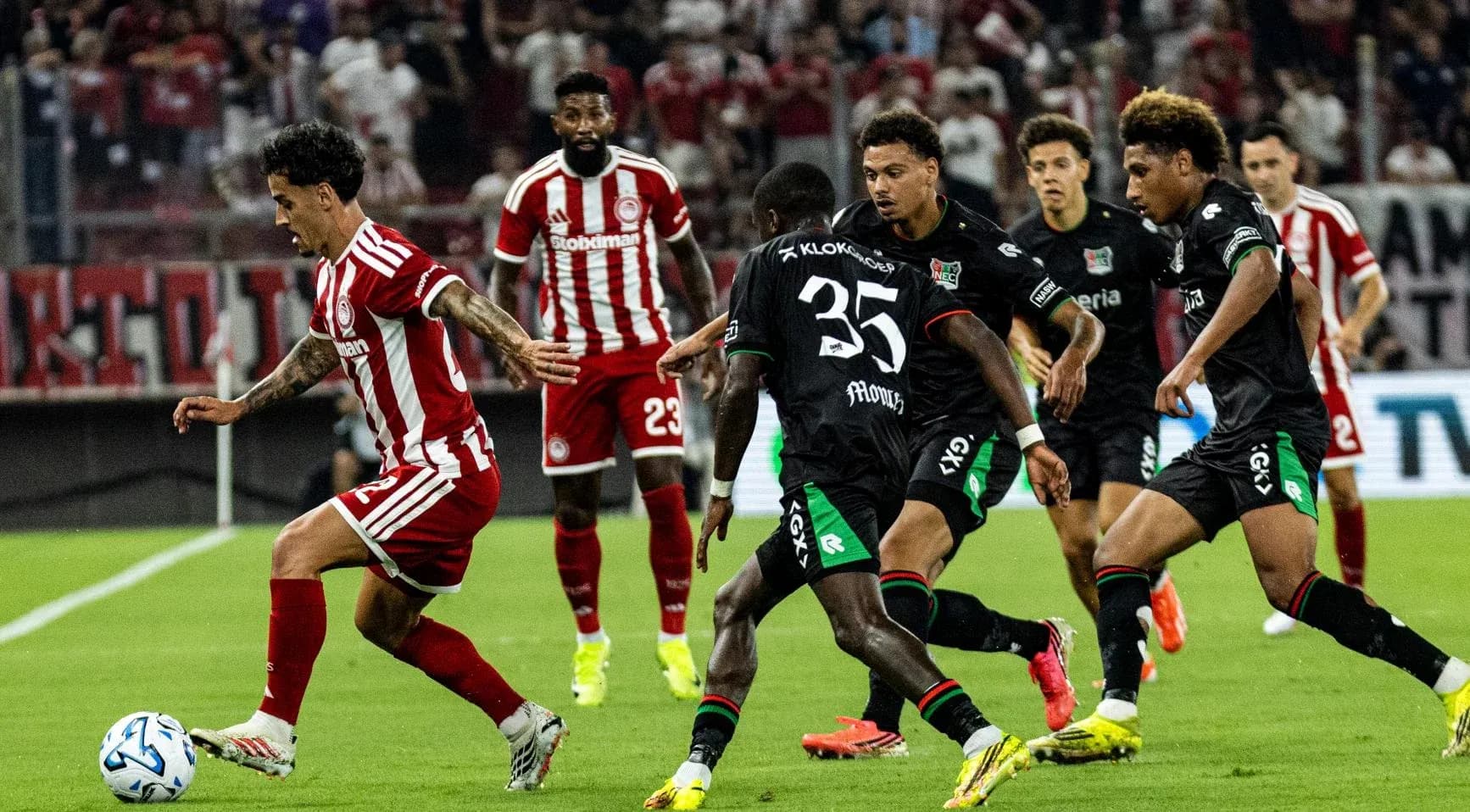
Olympiakos Piraeus and NEC Nijmegen produced a goalless but tactically layered 0-0 in the 3rd Qualifying Round of the UEFA Champions League at Georgios Karaiskakis Stadium, a match defined more by structure and risk management than by penalty-box chaos. Olympiakos had a territorial and possession edge (54% to 46%) and a slight advantage in shots on goal (5 to 4), but NEC’s back three and compact midfield box successfully funneled most danger into controllable zones. Both sides finished with identical half-time and full-time scores of 0-0, underlining how each coaching staff ultimately prioritized control over over-commitment in transition.
Olympiakos Setup
Olympiakos set up in a 4-2-3-1 under Luis Mendilibar Jose, with B. Popovic (Olympiakos Piraeus) behind a back four of M. Saliakas, P. Retsos, D. Carmo and B. Onyemaechi. The double pivot of Dani García and C. Mouzakitis was tasked with both first-phase build-up and counter-pressing, while Rodinei and Chiquinho flanked J. Roca behind lone striker A. El Kaabi. The structure was clearly designed to create wide overloads and then access the half-spaces, but NEC’s 3-4-2-1 block repeatedly forced Olympiakos to recycle rather than penetrate.
NEC Nijmegen Tactics
Dick Schreuder’s NEC Nijmegen used G. Crettaz (NEC Nijmegen) as the base of a 3-4-2-1 with T. Storm, P. Sandler and D. Fonville as the back three, screened by a four-man line of S. Ouaissa, J. Monteiro, D. Nejasmic and C. Bischoff. Ahead of them, N. Lebreton and B. Linssen supported central striker T. Chery. The key tactical theme from NEC was vertical compactness: the front three dropped intelligently to cut passing lanes into Olympiakos’s No. 10 zone, while the wing-backs narrowed to prevent Rodinei and J. Roca from receiving on the half-turn between lines. This shape allowed NEC to concede possession but still generate 13 total shots to Olympiakos’s 12, highlighting their capacity to break and shoot quickly once the first line was bypassed.
Yellow Cards and Defensive Behaviour
The early yellow card for David Carmo at 11' for “Foul” shaped Olympiakos’s defensive behaviour. With one of the centre-backs booked so early, the home line became more conservative in duels, especially in wide channels where NEC looked to isolate with diagonal switches. That caution may have contributed to NEC’s slightly higher total shots and a greater number of blocked efforts (4 to Olympiakos’s 2), as Olympiakos often chose to defend in a deeper block around the box rather than stepping out aggressively.
Tactical Recalibration
Mendilibar’s substitution pattern reveals a clear tactical recalibration around the break. At 46', G. Martins (IN) came on for J. Roca (OUT), a move that shifted the creative responsibility more centrally and hinted at a desire for more vertical passing from the No. 10 space rather than wide ball circulation. On 56', Jota Silva (IN) came on for Chiquinho (OUT), and L. Pirola (IN) came on for D. Carmo (OUT), the latter likely a combination of card management and a tweak to the build-up profile on the left side. Pirola’s introduction provided a fresh left-footed angle, aiming to accelerate progression through that channel.
Back Line Reshaping
The reshaping of the back line continued at 57' when P. Maffeo (IN) came on for M. Saliakas (OUT), and at 64' Z. Smajlovic (IN) replaced P. Retsos (OUT). By mid-second half, Olympiakos had effectively rotated three of their four defenders, indicating both a response to NEC’s counter-attacking threat and an attempt to inject energy and overlapping runs from full-back positions. Despite this, NEC’s block held, helped by their higher passing efficiency: 348 total passes with 254 accurate (73%) compared to Olympiakos’s 394 passes, 264 accurate (67%). NEC used fewer passes but circulated the ball more cleanly, which suited their counter-punching model.
Midfield Dynamics
In midfield, Dani García’s yellow card at 67' for “Foul” further constrained Olympiakos’s ability to break NEC’s rhythm with aggressive challenges. With both an early-booked centre-back already withdrawn and the holding midfielder now on a caution, the home side’s central zone became more about screening than tackling, allowing NEC to step out in phases and register 7 shots inside the box to Olympiakos’s 5. That inside-box advantage underscores how NEC’s 3-4-2-1 was able to produce quality arrival positions despite less of the ball.
NEC Substitutions
NEC’s substitution wave at 70' and 74' was equally instructive. At 70', E. Mor (IN) came on for S. Ouaissa (OUT), injecting dribbling and one-versus-one threat on the flank, while B. Pereira (IN) replaced T. Storm (OUT), freshening the right side of the back line. Four minutes later, D. Tadic (IN) came on for B. Linssen (OUT) and I. Hansen-Aaroen (IN) for P. Sandler (OUT). These changes effectively rebalanced NEC’s structure towards more technical quality between the lines (Tadic, Hansen-Aaroen, Mor) while maintaining the three-at-the-back framework. It was a calculated risk to chase transitions without losing numerical security behind the ball.
Closing Stages
In the closing stages, W. T. Willumsson’s yellow card at 90+1' for “Foul” came shortly after he had entered the pitch as a substitute at 90', when W. T. Willumsson (IN) came on for J. Monteiro (OUT). His late booking reflected NEC’s commitment to disrupting any final Olympiakos surges, even at the cost of discipline. Overall card count finished Olympiakos Piraeus: 2, NEC Nijmegen: 1, Total: 3, with all cautions linked to “Foul” rather than dissent or “Time wasting”, reinforcing the match’s physical but largely controlled nature.
Goalkeeping Performance
Between the posts, B. Popovic (Olympiakos Piraeus) made 4 saves, while G. Crettaz (NEC Nijmegen) registered 5 saves. The marginally higher save count for Crettaz aligns with Olympiakos’s slightly superior shots on goal, but NEC’s defensive unit ensured many of those efforts came from less optimal positions, as reflected by Olympiakos’s 5 shots inside the box versus NEC’s 7. Conversely, NEC’s 4 blocked shots to Olympiakos’s 2 show how often the Dutch side’s efforts were closed down before truly testing Popovic.
Statistical Balance
Statistically, the contest reads as finely balanced. Olympiakos led in possession (54%), corners (5 to 2) and marginally in shots on goal (5 to 4), consistent with a home side dictating territory. NEC, however, matched and slightly exceeded them in total shots (13 to 12), shots inside the box (7 to 5) and passing accuracy (73% to 67%), indicators of a counter-attacking plan executed with composure. Fouls were higher on NEC’s side (16 to 11), a natural consequence of repeated defensive interventions against a side trying to sustain pressure.
With expected goals and goals prevented data absent, the clearest verdict lies in the structural metrics: Olympiakos created more sustained pressure zones but struggled to convert positional dominance into clear chances against a disciplined 3-4-2-1. NEC, meanwhile, showed that with a compact block, efficient passing and well-timed substitutions, a visiting side can neutralize a traditionally strong home atmosphere and emerge with a 0-0 that feels less like survival and more like a controlled first leg in a qualifying tie.
Related News
Luis Díaz Confident Bayern Munich Can Win Champions League
AFC Champions League Matchday One: Insights and Team Strategies
Vincent Kompany’s Bayern Munich Future Not Tied Solely to Champions League Success
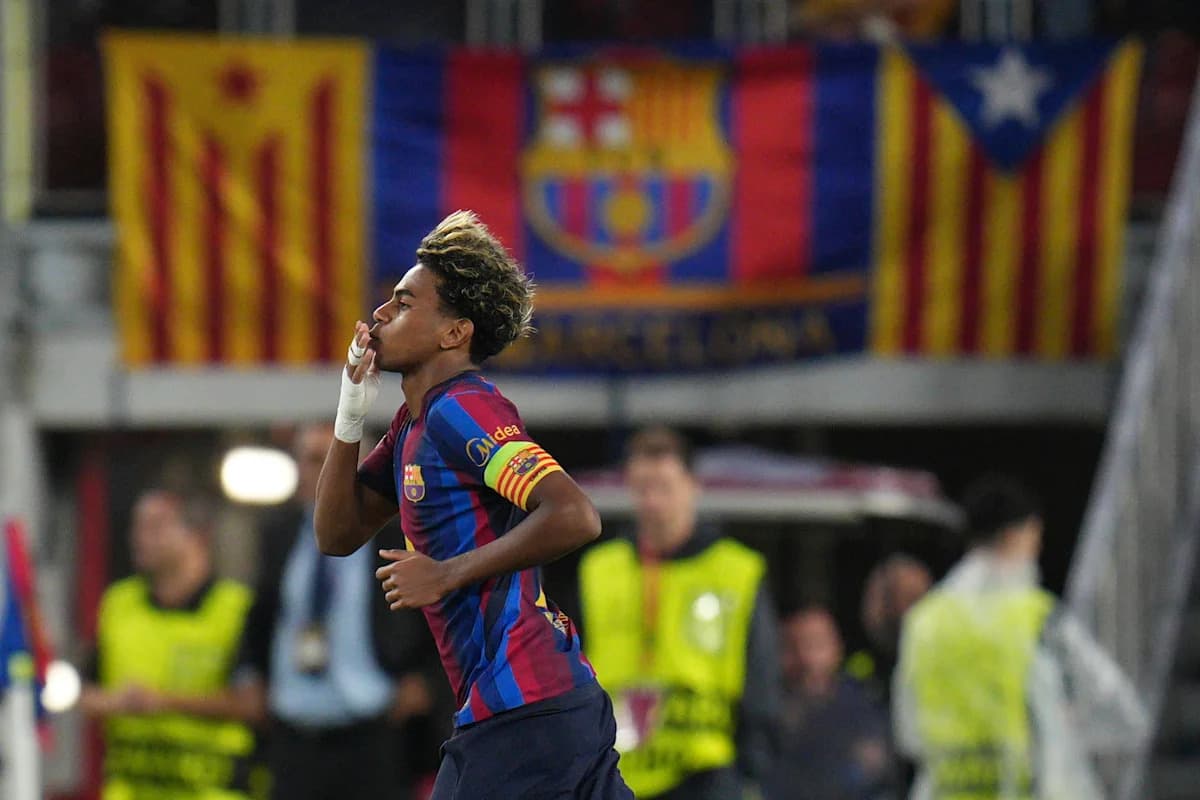
Barcelona’s Camp Nou to Host 2029 Champions League Final, Munich Confirmed for 2028
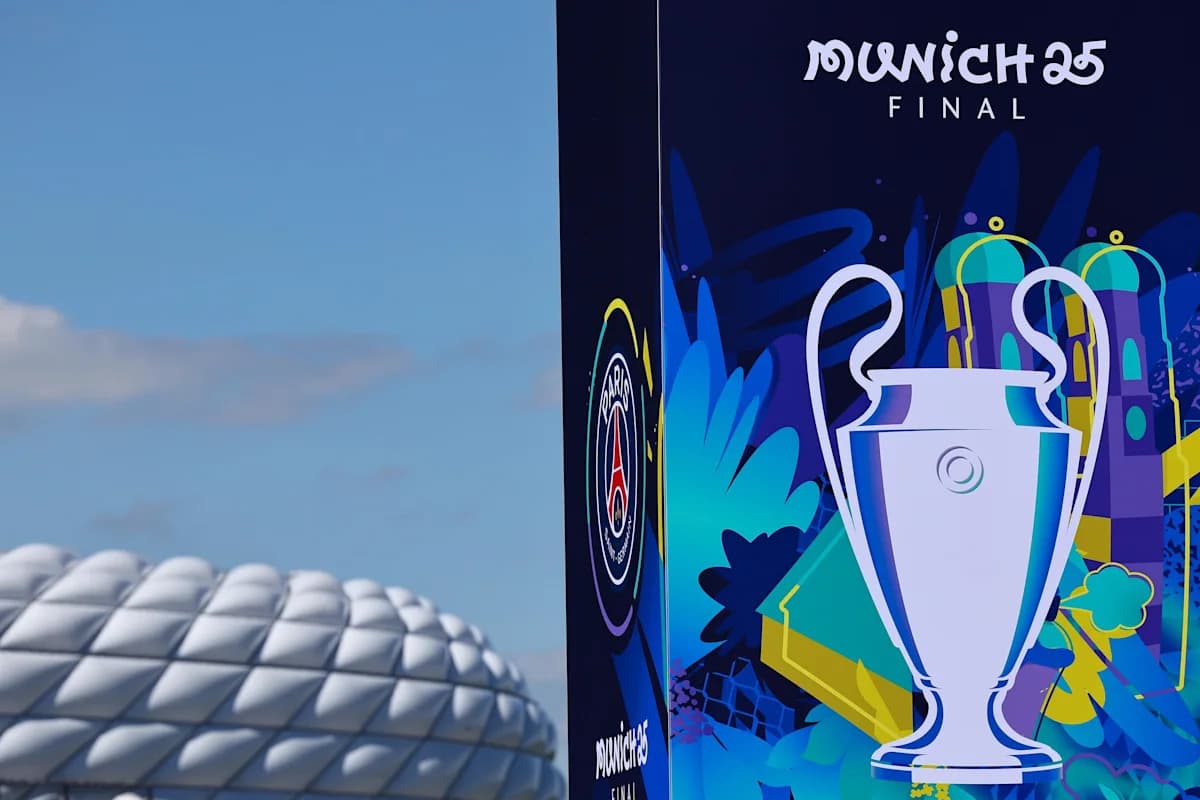
Bayern Munich's Allianz Arena Set to Host 2028 Champions League Final
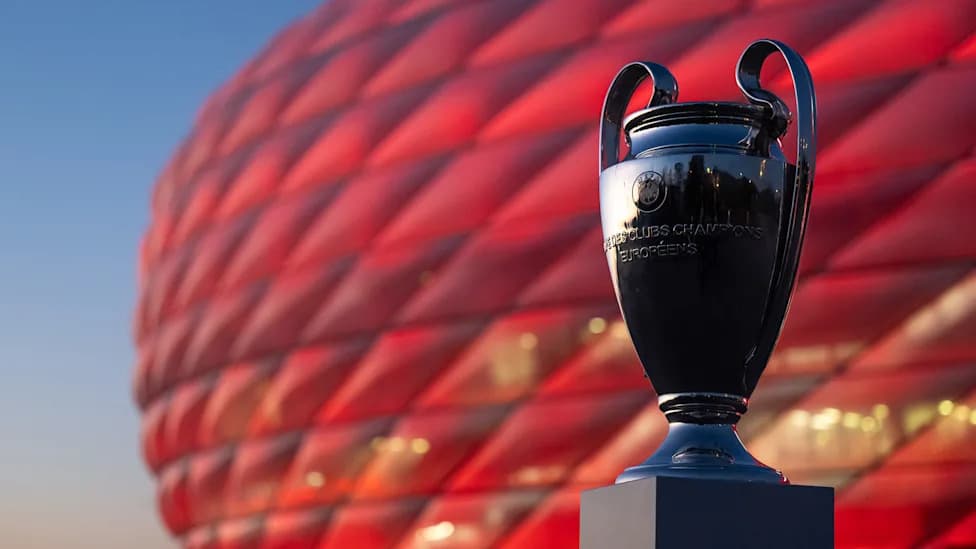
Allianz Arena to Host 2028 Champions League Final for Third Time