
Pacific FC vs Cavalry FC: A Clash of Contrasting Realities
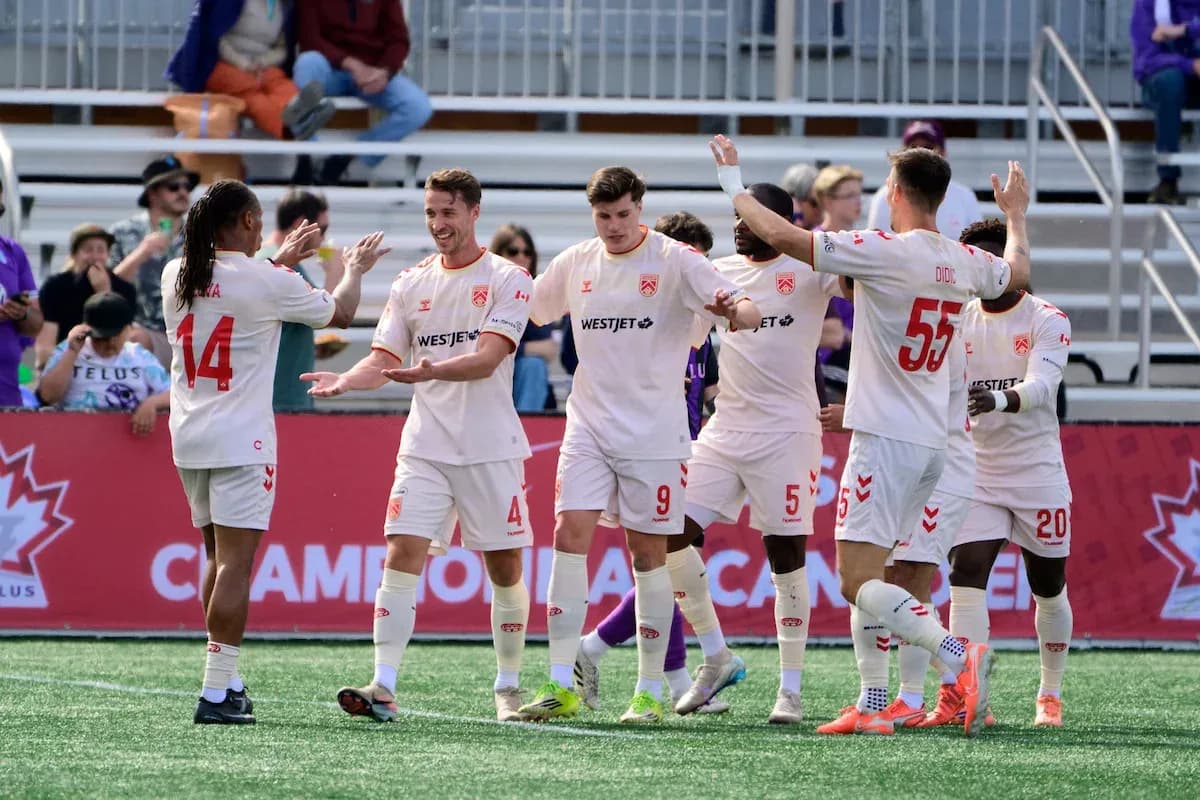
Starlight Stadium has rarely staged a starker contrast of realities than Pacific FC versus Cavalry FC in this Canadian Premier League Group Stage clash. The table tells its own story: Pacific sit 8th with 10 points, one win and a goal difference of -18 from 21 matches, while Cavalry arrive as ruthless leaders, 1st with 49 points and a goal difference of 29 over the same number of games. This finished 0–1 on the night, but the deeper narrative is about a struggling side trying to reinvent itself against the league’s most complete machine.
I. The Big Picture: Styles Colliding
Heading into this game, Pacific’s season-long profile was clear: fragile at the back, blunt in key moments. Overall they had scored 25 and conceded 43 in 21 matches, averaging 1.2 goals for and 2.0 against per game. At home, that defensive vulnerability was even more exposed: 13 scored, 21 conceded across 11 fixtures, with only 1 home win and 0 home clean sheets.
Cavalry, by contrast, travelled west as a side with elite balance. Overall they had 41 goals for and only 12 against; their goal difference of 29 is the statistical signature of a champion in waiting. On their travels they had been almost as dominant as at home: 18 goals scored and just 6 conceded across 11 away matches, with 7 wins and 5 away clean sheets.
The formations on the night framed the contest neatly. Pacific lined up in a 4-4-2 under T. Dunfield, a departure from their more common 4-2-3-1 this season, signalling a desire to be more direct and aggressive. Cavalry, under Tommy Wheeldon Jr., stayed true to their identity with a 4-2-3-1 that has underpinned much of their success.
II. Tactical Voids and Disciplinary Shadows
Pacific’s season has been marred not only by results but by discipline. Their yellow-card distribution shows a tendency to lose control late: 17.07% of their yellows come between 46–60 minutes, another 17.07% between 76–90, and a striking 24.39% between 91–105. Red cards are even more telling: 66.67% of their reds arrive in the 76–90 window, with another 16.67% in 31–45 and 16.67% in 91–105. This is a side that too often unravels when the game stretches.
Those numbers are not abstract; they live in the profiles of individuals. Midfielder R. Juhmi, who started here, has already collected 6 yellows in 16 league appearances. Full-back C. Greco-Taylor has 5 yellows from 18 games, his aggressive front-foot defending both a weapon and a risk. Pacific’s red-card ledger is heavy: J. Heard has been sent off twice, while J. Quintana and creative hub M. Bustos have each seen red once. Even J. Belluz, though not involved here, carries 4 yellows and 2 yellow-red dismissals. That cumulative record shapes how Pacific must manage emotional moments against the league’s best.
Cavalry are not innocent, but they are controlled. Their yellows are spread more evenly, with a peak of 23.40% between 46–60 minutes, suggesting a side that knows when to foul to break rhythm rather than out of panic. E. Kobza and H. Paton are the enforcers-in-chief: both sit on 7 yellows, with Kobza also recording a yellow-red. Yet Cavalry’s red-card profile is minimal: a single dismissal in the 31–45 window across the campaign. They flirt with the line; they rarely cross it.
No absences are listed, so both managers had their key figures available. That made the tactical void less about missing personnel and more about structural gaps: Pacific’s lack of home clean sheets and Cavalry’s habit of suffocating games away from home.
III. Key Matchups: Hunter vs Shield, Engine vs Engine
The “Hunter vs Shield” duel centred on Pacific’s most reliable scorers and Cavalry’s defensive wall.
For Pacific, the goal threat is oddly distributed. Centre-back D. Konincks, who started at the heart of the defence, has 3 goals and 1 assist in the league, plus 5 successful blocks and 19 interceptions. He is not just a stopper; he is a set-piece weapon. Up front, A. Díaz began on the bench but loomed as the late-game finisher: 5 goals and 3 penalties scored from 3 taken, with 12 shots and 7 on target. His 6.86 average rating and knack for decisive moments mark him as Pacific’s sharpest edge.
Cavalry’s shield is formidable. Central defender D. Klomp, a starter here, has 4 goals and 1 assist of his own, but his defensive numbers define him: 5 blocked shots, 12 interceptions, 42 duels won from 70, and a passing accuracy of 90% across 660 passes. Alongside him, full-back A. Pearlman offers 26 tackles, 2 blocks, 4 interceptions and 2 assists, while also sitting on 5 yellows—proof of how often he lives in the collision zones.
In midfield, the “Engine Room” battle was about craft versus control. Pacific’s creative axis runs through M. Bustos and Y. Toualy. Bustos, starting on the right side of the four, brings 2 goals, 16 key passes and 19 successful dribbles; he is also a red-card risk but remains their primary line-breaking passer. Toualy, on the left, is the league’s leading assist provider with 5, supported by 11 key passes and 20 successful dribbles from 35 attempts. Between them, they supply the ammunition for Pacific’s forwards.
Opposite them, Cavalry’s central duo of Kobza and S. Camargo formed the shield and springboard. Kobza’s 13 tackles, 5 blocks and 8 interceptions underpin his role as the destroyer, while Camargo, though less statistically highlighted here, is the metronome that links defence to the trio behind the striker. Ahead of them, T. Warschewski is both creator and scorer: 4 goals, 3 assists, 29 key passes and 28 shots (15 on target). He is Cavalry’s “hunter-playmaker”, constantly drifting into pockets behind Pacific’s double pivot.
IV. Structural Patterns and Statistical Prognosis
Heading into this game, the macro patterns were unforgiving for Pacific. Overall they had kept just 1 clean sheet all season (away), and none at home. They had failed to score in 6 of 21 matches, split evenly between home and away. Cavalry, on the other hand, had 9 clean sheets overall—5 on their travels—and had failed to score only 3 times away from home.
Offensively, Pacific’s average of 1.2 goals per game at home ran straight into a Cavalry defence conceding just 0.5 goals per game away. Defensively, Pacific’s 1.9 goals conceded per home match faced a Cavalry attack averaging 1.6 goals on their travels. The arithmetic of the season pointed to a narrow but controlled away win, with Cavalry likely to manage the tempo and trust their structure.
Penalties offered no hidden edge: both sides had taken 3 and scored all 3, with no misses recorded. That meant any advantage would come from open play and set pieces rather than the spot.
The tactical intersection was clear. If Pacific could funnel possession to Bustos and Toualy in advanced zones, and draw fouls in the final third, Konincks and Díaz could threaten from dead balls. But every Pacific surge risked Cavalry’s transition threat, especially through Warschewski drifting between the lines and wide runners like N. Edwards and C. Elva exploiting the spaces left by adventurous full-backs K. Chung and Greco-Taylor.
In the end, the 0–1 scoreline reflected the season-long logic. Cavalry’s defensive solidity, anchored by Klomp and Pearlman and screened by Kobza, was built to absorb a side that lacks efficiency in the final third. Pacific’s late-game disciplinary history suggested that if they were chasing, the game would tilt further towards Cavalry’s control.
From a squad-analysis lens, this fixture underscored a simple truth: Pacific have talented individuals—Bustos, Toualy, Konincks, Díaz—but lack the collective defensive platform and emotional control that Cavalry have honed. Until that balance shifts, nights like this at Starlight Stadium will continue to feel like uphill battles against the league’s most complete squad.
Related News
York United's Tactical Boldness Defeats Vancouver FC 3-1
Atlético Ottawa vs Supra du Quebec: Head-to-Head Stats and History

Pacific FC vs Vancouver FC: Head-to-Head Stats and Insights
Forge Dominates Atlético Ottawa in 3-0 Victory
Cavalry FC vs Forge: Head-to-Head Stats and Historical Context
Pacific FC vs Cavalry FC Predicted Lineups and Team News