
Pacific FC vs Vancouver FC: A Clash of Contrasting Fortunes
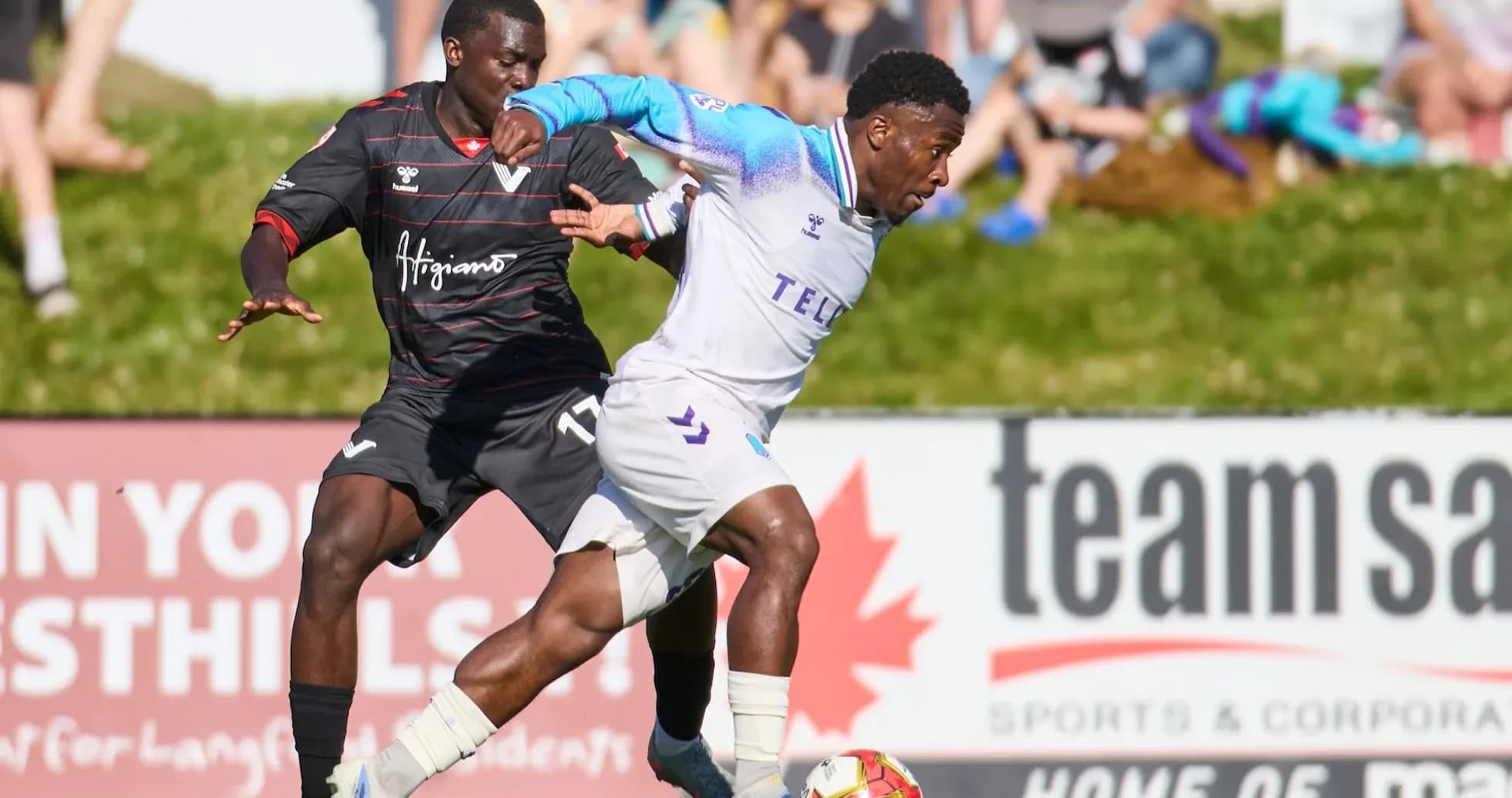
Under the Langford lights at Westhills Stadium, this all-B.C. clash between Pacific FC and Vancouver FC arrives with the feel of two clubs moving in opposite emotional directions, even if the table still tells a harsher truth for the hosts.
Pacific sit 8th in the Canadian Premier League, with 11 points from 22 matches and a goal difference of -18, the product of 26 goals scored and 44 conceded overall. Vancouver, by contrast, occupy 4th with 31 points from 23 games and a goal difference of 2 (31 for, 29 against). The numbers frame this as a meeting between a side trying to salvage pride from a punishing campaign and a visitor still clinging to the upper half despite stuttering recent form.
Tactical Setup
Terry Dunfield sends Pacific out in a 4-4-2, a shape that leans into direct running and wide creativity. S. Melvin anchors the back line in goal, protected by a young but combative defence: K. Chung on the right, the centre-back pairing of J. Quintana and D. Konincks, and C. Greco-Taylor on the left. In front of them, a midfield four of M. Bustos, R. Juhmi, T. Gomulka and Y. Toualy is tasked with stitching together a team that, at home, has managed just 1 win from 12 league fixtures.
The numbers sketch a side that is more dangerous than their league position suggests. At home, Pacific average 1.2 goals scored and 1.8 conceded. Overall, their attacking rhythm is remarkably even: 26 goals total, with the most productive windows coming just after half-time. Between 46-60 minutes, they score 24.14% of their goals, and another 20.69% arrive in the 31-45 range. Yet their fatal flaw is clear: late-game collapses. A staggering 39.02% of their goals conceded arrive in the 76-90 minute window, and another 29.27% between 46-60. This is a team that can play, but not always for 90 minutes.
Vancouver’s profile is more balanced, and it shows in their league standing. On their travels they average 1.2 goals scored and 1.5 conceded, almost mirroring Pacific’s home output but with a sturdier spine. M. Nash lines his side up in a 4-2-3-1: C. Irving in goal, a back four of M. Doner, M. Campagna, Thomas Geoffrey Field and K. Proctor, with Benjamin Lee and L. Toomey sitting as the double pivot. Ahead of them, a fluid band of three – T. Bah, M. Polisi and M. Amissi – supports lone forward T. Campbell.
Discipline and Game Management
The tactical voids in this contest are less about absences and more about discipline and game management. Pacific’s season-long card data reveals a side that tends to fray as matches wear on. For yellow cards, 16.67% come in the 76-90 range and an even higher 26.19% between 91-105, while red cards spike brutally late: 66.67% of their dismissals arrive in the 76-90 window, with another 16.67% between 91-105. The personnel reflect that edge. J. Heard, on the Pacific bench, has collected 2 red cards this season; Quintana has 1; and creative fulcrum Bustos has also seen red once. Greco-Taylor, a starter here, carries 5 yellows. This is a back line and wide unit that walks a disciplinary tightrope, especially as fatigue sets in.
Vancouver are not immune to bookings – their yellows also peak late, with 23.68% between 76-90 minutes and 21.05% between 46-60 – but crucially, they have no red cards recorded this season. The contrast is stark: where Pacific often lose control, Vancouver bend without quite breaking.
Key Matchups
The “Hunter vs Shield” matchup is layered rather than singular. For Pacific, the purest predator is A. Díaz, waiting on the bench with 5 goals and 3 successful penalties from 3 attempts. If Dunfield turns to him, his penalty record and eye for goal could tilt a tight game. From the start, though, the creative burden falls heavily on Toualy and Bustos. Toualy, who leads the league in assists with 5 and has added 2 goals, is the primary conduit between midfield and attack, his 36 dribble attempts and 20 successes hinting at a winger who can unbalance Vancouver’s full-backs. Bustos, with 2 goals, 1 assist and 18 key passes, offers guile between the lines and from set pieces.
Standing in their way is a Vancouver defence that, overall, concedes 1.3 goals per game and has kept 3 clean sheets. Campagna’s aerial presence and Field’s positioning will be tested by the dual threat of R. Kratt and A. Daniels, whose movement will look to drag Vancouver’s back four into uncomfortable spaces, especially if Toualy and Bustos can isolate Doner and Proctor in wide 1v1s.
In the opposite direction, Vancouver’s attacking “hunter” is spread across a trio. Campbell, starting up front and with 4 league goals, offers penalty-box presence and a willingness to run channels. Bah, from the right, blends end product and relentless duelling: 3 goals, 1 assist, 23 dribble attempts with 12 successes, and a league-leading physical output in wide areas. Add in L. Mousset from the bench – 3 goals and 1 assist in limited minutes – and Nash has multiple ways to stress a Pacific defence that concedes 2.0 goals per game overall and has just 1 clean sheet all season.
Engine Room Battle
The “Engine Room” battle could define the night. For Pacific, Juhmi and Gomulka will try to bring order to a chaotic campaign. Juhmi, with 459 passes at 86% accuracy and 20 tackles, is a quiet metronome who also brings bite – his 6 yellow cards underline how often he operates on the edge. Opposite him, Vancouver lean on Polisi and Benjamin Lee. Polisi, ever-present with 20 starts, has 456 passes at 85% accuracy, 18 tackles and 6 yellow cards of his own. He is both shield and distributor, and his duel with Toualy in the half-spaces will be a key hinge point.
Statistically, the prognosis leans slightly toward Vancouver’s structure over Pacific’s volatility. Vancouver’s away record – 3 wins, 2 draws, 7 defeats – is imperfect, but it is underpinned by a consistent scoring rate and a defence that, while not watertight, bends less dramatically than Pacific’s. Pacific’s home numbers, by contrast, speak of narrow margins and late heartbreak: 14 goals scored and 22 conceded at Westhills, with a disproportionate share of those concessions arriving in the final quarter-hour.
If expected goals broadly track these season-long patterns, the likeliest script is a tight match that opens up after half-time. Pacific’s tendency to surge between 46-60 minutes could see them strike first, driven by Toualy and Bustos. Yet Vancouver’s superior game management, their late yellow-card tolerance without red-card meltdowns, and their capacity to score on their travels suggest they are well placed to exploit Pacific’s 76-90-minute frailty.
In narrative terms, this feels like a contest between Pacific’s desperate, high-variance push to rewrite a brutal season and Vancouver’s steadier, more pragmatic pursuit of points. Unless Pacific can finally marry their mid-game attacking surges with disciplined late-game defending, the numbers hint that Vancouver will emerge from Westhills with at least a share of the spoils – and perhaps, if Bah and Campbell find their moments, something more.
Related News
Cavalry FC vs Supra du Quebec Prediction: Key Stats and Betting Tips

Atlético Ottawa Upset by Supra du Quebec in Canadian Premier League Clash
Vancouver FC vs York United: Predicted Lineups and Team News
Vancouver FC vs Forge Stats: Head-to-head Record Before Match

Cavalry FC vs Forge FC: A Tactical Arm-Wrestle Ends in Draw
HFX Wanderers FC vs Atlético Ottawa: Head-to-Head Stats and Past Meetings