
Pacific FC vs Vancouver FC: Diverging Tactical Paths
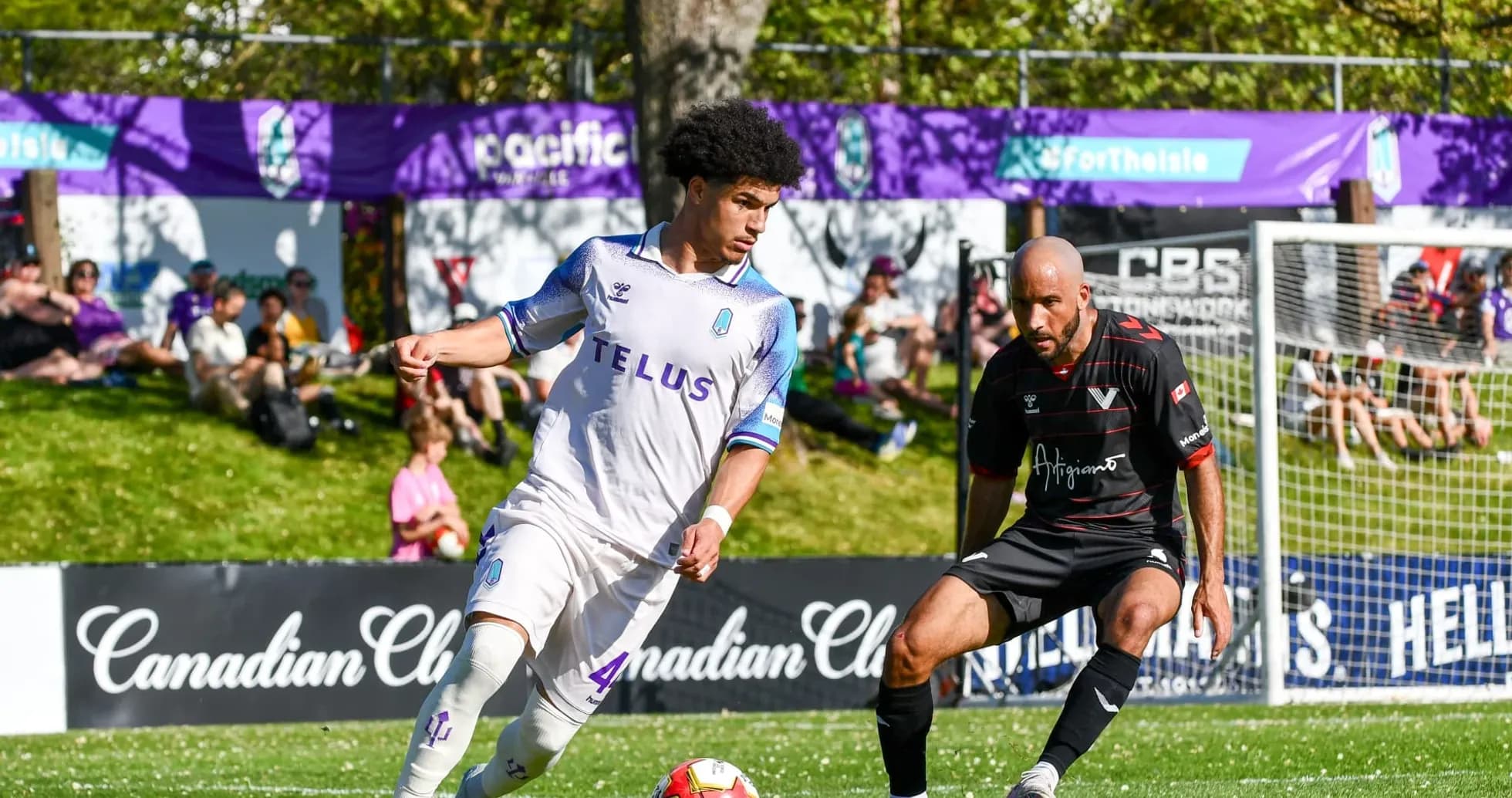
Under the Starlight Stadium floodlights, Pacific FC’s early‑season anxieties hardened into something more structural. A 3–1 home defeat to Vancouver FC did not just close another chapter in the Canadian Premier League group stage; it underlined two clubs moving on diverging tactical paths.
Following this result, Pacific sit 8th with 1 point from 5 matches, their overall goal difference at -5 after scoring 6 and conceding 11. At home they have played 4, lost 4, scoring 4 and conceding 9. Vancouver, by contrast, climb to 6th on 4 points, with an overall goal difference of -1 from 4 goals for and 5 against, and a growing sense that their away structure can carry them.
I. The Big Picture – Identities Taking Shape
Pacific’s seasonal DNA is already stark. Overall they average 1.2 goals for and 2.2 goals against per match, but that split is revealing: at home they score 1.0 and concede 2.3 on average. There is attacking promise, but every step forward is met with a heavier one backward. No wins in total, no clean sheets anywhere, and a single overall draw on their travels paints a side that is constantly chasing games.
Vancouver’s profile is more pragmatic. Overall they score 0.8 and concede 1.0 per match, with an away average of 1.3 goals for and 1.0 against. They have also yet to keep a clean sheet, but their defensive baseline is firmer, and they have learned to survive on thin margins. Their biggest away win, a 1–3, foreshadowed exactly the pattern we saw at Starlight: disciplined shape, selective punches.
Both sides came out of familiar blueprints. Pacific’s season has leaned on a 4‑2‑3‑1 in their statistical record, and the lineup here fit that logic: S. Melvin behind a back line of K. Chung, J. Belluz, D. Konincks and C. Greco‑Taylor; a double pivot featuring T. Gomulka and the combative R. Juhmi; creativity and running from R. Kratt and M. Bustos around the central influence of A. Daniels, all servicing A. Díaz up top.
Vancouver’s season has referenced a 4‑3‑3, and again the pieces matched: C. Irving in goal; a back four of P. Gee, M. Doner, M. Campagna and T. Field; M. Polisi anchoring midfield with E. Fotsing and A. Traore as shuttlers; a fluid attacking trident of N. Mezquida, M. Amissi and T. Campbell.
II. Tactical Voids and Discipline
Pacific’s season‑long disciplinary profile hinted at a team that unravels as games stretch. Their yellow cards cluster heavily in the 61–75 minute range (30.77%) and spike again from 91–105 minutes (38.46%), with red cards split between 76–90 and 91–105 minutes. Even without minute‑by‑minute data for this match, the pattern is clear: late‑game emotional control is a structural weakness.
In personnel terms, the absence of J. Heard from the lineup removed a high‑risk, high‑cost presence. He has already seen a red card this season, and his aggression, while useful in pressing, has too often tipped into self‑destruction. Yet his missing bite left the double pivot thinner in duels, placing more responsibility on Juhmi to foul smart rather than often.
Vancouver’s disciplinary anchor is, paradoxically, one of the league’s most card‑prone players. M. Polisi leads the yellow‑card charts with 3, but his profile is that of a controlled enforcer: 60 passes at 90% accuracy, 3 tackles, 1 block and 1 interception across the season. His side’s yellow cards are more evenly spread, with notable clusters from 61–75 (22.22%), 76–90 (22.22%) and 91–105 (22.22%), but no reds at all. They can live on the edge without falling over it.
III. Key Matchups – Hunter vs Shield, Engine Room vs Enforcer
The “Hunter vs Shield” narrative for Pacific begins unusually at the back. D. Konincks is both one of their top scorers and top assist providers with 1 goal and 1 assist, operating from defence. Across 5 appearances he has completed 134 passes at 89% accuracy, won 11 of 17 duels, and crucially blocked 1 shot. He is the defender who steps into midfield, breaks lines and turns set‑pieces into weapons.
Against Vancouver’s overall defensive record of 5 goals conceded in 5 matches, and an away average of 1.0 goal against, Konincks’ ability to disrupt from deep was vital. His partnership with the towering J. Belluz, who has 81 passes at 72% accuracy and 2 interceptions this season, should in theory provide both build‑up and aerial insurance. But Pacific’s home concessions – 9 in 4 – suggest that the line is too often left exposed by an over‑committed midfield.
Up front, A. Díaz remains a key but under‑served hunter. He has 1 goal from 5 appearances, 2 shots with 1 on target, and 37 passes at 75% accuracy. More telling is his usage: 4 times he has been withdrawn, underlining how often Pacific’s attacking plan is re‑written mid‑game. The introduction of B. Juach from the bench – 1 goal from just 27 minutes, 1 shot, 1 on target, plus 1 key pass – offers a chaotic, high‑impact alternative when the structure stalls.
For Vancouver, the “Shield” is collective rather than individual. Their back four has allowed only 3 away goals in 3 matches, and while no single defender features in the league’s top statistical lists, the unit in front of Irving is protected by Polisi’s positional sense. With 3 tackles, 1 block and 1 interception across limited minutes, he screens the central zones where Díaz prefers to operate, forcing Pacific’s attacks into wider, less efficient routes.
The “Engine Room” battle is defined by Polisi versus Pacific’s rotating midfield trio of Gomulka, Juhmi and the absent‑on‑this‑day Baldisimo. Juhmi, with 52 passes at 78% accuracy and 2 tackles, is still learning the balance between bite and composure, already collecting 2 yellow cards. Baldisimo, when available, brings a calmer presence: 85 passes at 94% accuracy, 3 tackles, 2 blocks and 3 interceptions. Without him, Pacific’s midfield lacks a true metronome, making it easier for Vancouver to dictate tempo through Polisi’s 90% passing and ability to win 6 of 10 duels.
IV. Statistical Prognosis – Where This Leaves Both Sides
Following this result, the underlying numbers frame two contrasting trajectories.
Pacific’s overall attack is not broken – 6 goals in 5 matches at 1.2 per game, with an away average of 2.0 suggesting they can hurt teams when the game is more open. But at home they are stuck at 1.0 goal for and 2.3 against, with 0 clean sheets and 1 overall failure to score. The defensive leak, not the finishing, is the primary structural issue. Any xG model would likely show them giving up higher‑quality chances than they create, especially once they begin chasing deficits.
Vancouver, meanwhile, are trending toward efficiency. With 4 goals in 5 matches and an away average of 1.3 goals for against just 1.0 conceded, they are built for tight games. Their lack of penalties taken or missed keeps their attacking output reliant on open play and set‑pieces, but their defensive solidity gives them margin for low‑scoring xG profiles: they do not need to generate a flood of chances if they can keep the game in their preferred rhythm.
From a tactical lens, this 3–1 away win will likely reinforce Vancouver’s commitment to a compact 4‑3‑3 with Polisi as the pivot and Mezquida, Amissi and Campbell rotating roles ahead of him. For Pacific, the challenge is more existential: how to keep Konincks’ progressive qualities and Díaz’s penalty‑box presence while adding enough midfield control – perhaps via more minutes for Baldisimo and a clearer role for Bustos – to prevent their back line from being repeatedly exposed.
The story of this fixture, then, is not just a local derby decided in 90 minutes. It is a snapshot of a Pacific side whose emotional and structural volatility keeps dragging them under, and a Vancouver outfit quietly discovering that, on their travels, restraint and order can be the most dangerous weapons of all.
Related News
Vancouver FC vs Forge Prediction: Key Stats and Betting Tips
HFX Wanderers FC vs Atlético Ottawa Prediction: Key Stats and Betting Tips
Cavalry FC vs Supra du Quebec: Canadian Premier League Clash
Cavalry FC vs Supra du Quebec Prediction: Key Stats and Betting Tips

Atlético Ottawa Upset by Supra du Quebec in Canadian Premier League Clash
Vancouver FC vs York United: Predicted Lineups and Team News