
Lazio vs Inter: Serie A Round 36 Match Analysis
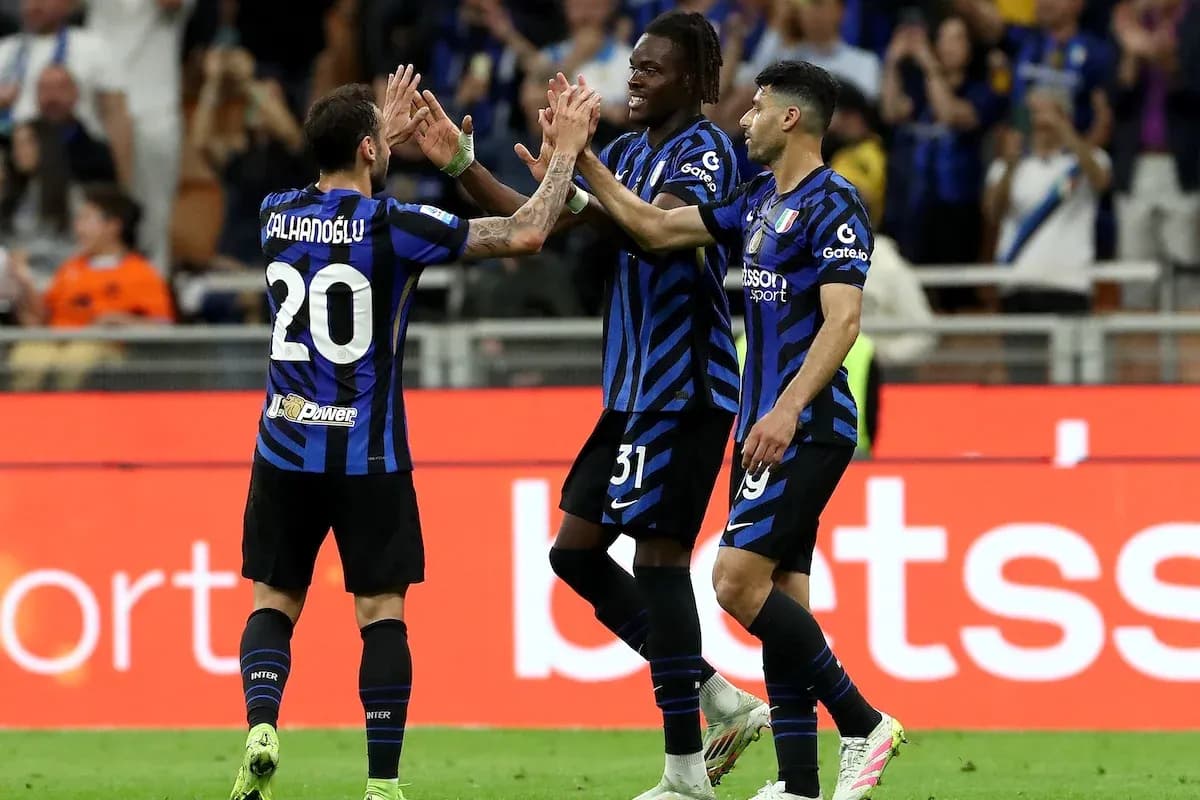
The evening at Stadio Olimpico ended with the scoreboard telling a brutal truth: Lazio 0, Inter 3. Following this result, the numbers and the narrative of these two seasons converged into a single, stark picture – the league leaders playing like champions, the eighth‑placed hosts exposed when forced to chase.
I. The Big Picture – Season DNA laid bare
This was Round 36 of Serie A, and both teams arrived with clearly defined identities. Lazio, eighth with 51 points and a goal difference of +2 (39 goals for, 37 against overall), have lived on a knife‑edge all campaign. At home they have been competitive rather than dominant: 7 wins, 6 draws, 5 defeats, scoring 25 and conceding 24. Their season‑long profile is of a side that rarely blows teams away – just 1.4 goals for at home on average, 1.3 against – and instead tries to manage games, lean on structure, and accept narrow margins.
Inter, by contrast, came in as a machine. Top of the table on 85 points, their overall goal difference of +54 (85 scored, 31 conceded) is the statistical equivalent of a title‑winning roar. On their travels, they have been ruthless: 13 wins, 2 draws, 3 defeats, with 36 goals scored and only 16 conceded, averaging 2.0 away goals for and 0.9 against. Over 36 games they have hit 2.4 goals per match overall and conceded just 0.9, underpinned by 18 clean sheets in total and a mere 2 league games all season in which they failed to score.
The final 3‑0 at the Olimpico felt less like an anomaly and more like a crystallisation of those trends: Lazio’s thin margins shattered by an Inter side that knows exactly how to tilt a game early and never let it back.
II. Tactical Voids – Absences that shaped the contest
The team sheets told their own story before a ball was kicked. Lazio were without D. Cataldi (groin injury), I. Provedel (shoulder injury), and M. Zaccagni (foot injury). The absence of Provedel handed the gloves to E. Motta; losing the first‑choice goalkeeper against the league’s most potent attack was always going to be a structural stress test. Without Cataldi’s metronomic presence and Zaccagni’s one‑v‑one threat, Maurizio Sarri still kept faith with his season’s primary shape, a 4‑3‑3, but the personnel carried a different profile: F. Dele‑Bashiru and N. Rovella in midfield, with T. Basic completing the trio, and a front line of M. Cancellieri, T. Noslin, and Pedro.
Inter had their own notable void: H. Çalhanoğlu missing through a calf injury. His season has been outstanding – 9 league goals, 4 assists, and 4 penalties scored with 1 missed – a deep‑lying director whose absence usually forces a rebalancing of tempo and progression. Yet Cristian Chivu’s 3‑5‑2 remained intact, with H. Mkhitaryan and N. Barella taking on more creative responsibility and P. Sucic offering vertical running and link play.
Disciplinary trends also framed the risk profile. Lazio are one of Serie A’s most combustible sides late in games: 27.40% of their yellow cards come between 76‑90 minutes, and a striking 62.50% of their reds are shown in that same window. Inter, too, lean into the edge of the contest late, with 30.65% of their yellow cards arriving from 76‑90 minutes. This was always likely to be a match where the emotional temperature would spike as legs tired and spaces opened.
III. Key Matchups – Hunter vs Shield, Engine Room vs Engine Room
Hunter vs Shield
Inter’s attacking axis arrived in Rome with the league’s most devastating numbers. Lautaro Martínez has 17 goals and 6 assists in Serie A, taking 66 shots with 37 on target, and winning 109 of 234 duels. Alongside him, M. Thuram has 13 goals and 6 assists, with 29 shots on target from 56 attempts and 129 duels won out of 258. This is a front two that combines penalty‑box precision with relentless physical engagement.
Facing them was a Lazio back line anchored by A. Romagnoli and Mario Gila, both among Serie A’s most card‑prone defenders. Romagnoli’s season shows 6 yellows and 1 red, but also 23 tackles, 19 successful blocks, and 31 interceptions – a defender who steps in aggressively. Gila’s numbers underline a similar profile: 44 tackles, 16 blocked shots, 23 interceptions, 127 duels won from 188, but again capped by a red card. Their partnership is brave and proactive, but against Inter’s front two, that aggression can easily be manipulated.
Inter’s season‑long shield is formidable: only 31 goals conceded overall, with 16 on their travels, and 10 away clean sheets. The back three of Y. Bisseck, F. Acerbi, and A. Bastoni in front of J. Martinez is designed to smother crosses and win aerial duels, forcing opponents into low‑percentage central shots. Lazio’s home attack, averaging 1.4 goals per game, ran into a structure that is built to deny rhythm and punish turnovers.
Engine Room – Creativity vs Control
Without Çalhanoğlu, Inter’s creative burden shifted toward Barella and Mkhitaryan. Barella’s season – 3 goals, 8 assists, 72 key passes and 52 tackles – paints him as the archetypal two‑way midfielder. He sets pressing triggers, breaks lines with passing and carrying, and has the engine to sustain Inter’s mid‑block and counterpress. Mkhitaryan’s positioning between the lines gave Lautaro and Thuram constant support, ensuring Inter always had a free man in transition.
Lazio’s response in the middle came through Rovella’s distribution and Dele‑Bashiru’s forward surges. But structurally, Sarri’s 4‑3‑3 was often stretched: the full‑backs, A. Marusic and L. Pellegrini, needed to step high to provide width, leaving Romagnoli and Gila exposed to direct balls into Thuram and Lautaro. Once Inter went 2‑0 up by half‑time, the game state played perfectly into their hands: they could sit on their defensive averages (0.9 goals conceded per game overall) and attack in carefully chosen waves.
IV. Statistical Prognosis – xG logic, scoreboard reality
Even without raw xG numbers, the season data offers a strong probabilistic frame. Inter’s attack, averaging 2.4 goals per game overall and 2.0 away, facing a Lazio defence that concedes 1.3 at home and has already suffered a biggest home defeat of 0‑3, made a multi‑goal away win a plausible outcome. Inter’s 18 clean sheets and Lazio’s 16 matches overall in which they failed to score (including 6 at home) further tilted the odds toward a result where the visitors both score freely and protect their own box.
The 3‑0 scoreline thus feels almost mathematically on script. Inter’s attacking peaks, driven by the Lautaro‑Thuram tandem and supported by Barella and Mkhitaryan, collided with a Lazio side missing its starting goalkeeper and key offensive outlet in Zaccagni. Once the league leaders established control, their defensive solidity – 10 away clean sheets, only 16 away goals conceded – made a Lazio comeback statistically unlikely.
Following this result, Lazio remain the embodiment of a side living within fine margins, while Inter continue to move like champions: tactically clear, emotionally controlled, and relentlessly efficient at turning their season‑long numbers into nights like this at the Olimpico.
Related News

David Alaba Poised for Surprising Move to Udinese in Serie A
Milan Dominates Lecce: Tactical Analysis of a 3-0 Victory
Juventus Defeats Atalanta 2-0: Tactical Insights and Key Matchups
Frosinone's Tactical Mastery Shines in 2–0 Victory Over Como

Fiorentina and Napoli Share Points in Serie A Clash
AS Roma vs Inter: Tactical Insights from Serie A Clash