
Fiorentina vs Genoa: Tactical Analysis of Goalless Draw
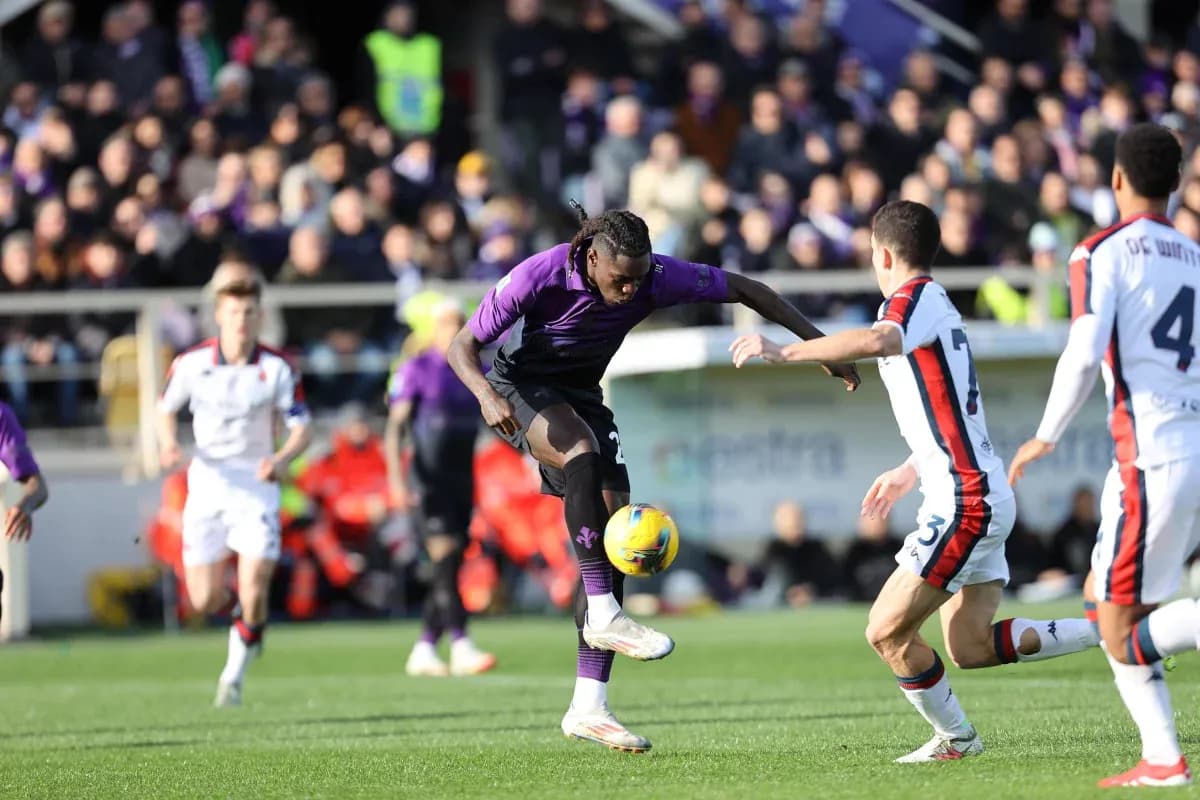
Fiorentina and Genoa played out a 0-0 stalemate at Stadio Artemio Franchi, but the underlying structure of the game was clear: Fiorentina, under Paolo Vanoli, tried to control territory and rhythm through a 4-3-3 possession framework, while Daniele De Rossi’s Genoa in a 3-4-2-1 prioritised compactness, vertical transitions, and selective pressing. The statistical profile – 57% possession and 13 shots for Fiorentina against Genoa’s 43% and 9 shots – reflects a home side that had more of the ball and volume, but not enough incision to convert a marginal xG advantage (0.97 vs 0.58) into goals.
With no cards or goals in the events log, the match’s story is written almost entirely in structure and adjustments. The first half, by inference from the final stats, was likely where Fiorentina established their passing rhythm: 417 total passes, 353 accurate (85%), versus Genoa’s 316/255 (81%). Fiorentina’s 4-3-3, with D. de Gea behind a back four of Dodo, M. Pongracic, L. Ranieri, and R. Gosens, aimed to build from deep and stretch Genoa’s 3-4-2-1 horizontally. The three-man midfield of R. Mandragora, N. Fagioli, and C. Ndour (before later changes) provided the positional triangles needed to circulate through the thirds.
Genoa’s 3-4-2-1 – J. Bijlow in goal, a back three of A. Marcandalli, L. Ostigard, and N. Zatterstrom, wing-backs M. E. Ellertsson and A. Martin, with Amorim and M. Frendrup central – was designed to compress the middle and protect the half-spaces, conceding some width and possession but limiting high-value chances. The shot profile underlines this: Fiorentina had 13 total shots but only 1 on target, with 5 blocked, suggesting Genoa’s block and last-line positioning were well-drilled. Fiorentina’s 9 shots inside the box point to territorial dominance, but the low on-target count and sub-1 xG show that Genoa forced poor angles and rushed finishes.
Substitution Patterns
The substitution pattern from 58’ onwards reveals both coaches’ tactical intentions in the final third of the match.
At 58’, Genoa made the first move: “L. Colombo (OUT), C. Ekuban (IN)”. De Rossi replaced centre-forward L. Colombo with the more mobile C. Ekuban, signalling a desire to add depth-running and transitional threat rather than a pure penalty-box reference. In a game where Genoa had only 9 shots but 3 on target, this change likely aimed to exploit Fiorentina’s higher line as the hosts pushed for a winner.
At 61’, Vanoli responded: “R. Braschi (OUT), R. Piccoli (IN)”. In Fiorentina’s 4-3-3, this swap in the forward line was about refreshing the pressing and penalty-area presence. R. Piccoli offers a more traditional target profile than R. Braschi, which fits with Fiorentina’s volume of crosses and blocked shots; the idea was to convert territorial pressure into more threatening box occupation.
The 71’ double change for Genoa was structurally significant: “J. Ekhator (OUT), R. Malinovskyi (IN)” and “A. Martin (OUT), W. L. Ouedraogo (IN)”. Removing J. Ekhator from one of the advanced forward roles for R. Malinovskyi added a long-range shooting and set-piece specialist between the lines, consistent with Genoa’s 3 shots from outside the box. Swapping A. Martin for W. L. Ouedraogo at wing-back refreshed the flank defensively and physically, maintaining intensity against Fiorentina’s wide forwards, particularly M. Solomon and F. Parisi.
Vanoli’s midfield recalibration came at 72’ and 73’: “R. Mandragora (OUT), M. Brescianini (IN)” and “C. Ndour (OUT), G. Fabbian (IN)”. By changing two-thirds of his midfield, Vanoli sought more verticality and late box runs. With Genoa dropping deeper, Fiorentina needed midfielders who could break lines with forward runs and more aggressive passing rather than just circulation. That they still finished with only 1 shot on target suggests Genoa’s central block and back three remained structurally sound, even under fresher, more dynamic midfield pressure.
The 82’ double substitution further underlined Genoa’s defensive management of the closing phase: “A. Marcandalli (OUT), M. Doucoure (IN)” and “Amorim (OUT), P. Masini (IN)”. Replacing a centre-back and a central midfielder simultaneously is about preserving compactness and concentration in a low-block scenario. M. Doucoure and P. Masini came in to maintain physicality and freshness in the spine, ensuring Genoa could continue to block shots (only 1 Fiorentina effort on target despite 13 attempts) and contest second balls as Fiorentina pushed numbers forward.
Fiorentina’s final change at 86’ was another attacking tweak: “F. Parisi (OUT), A. Gudmundsson (IN)”. With Parisi listed as a forward in this match, bringing on A. Gudmundsson in the same line clearly signalled an all-in attacking posture. By then, Fiorentina had already accumulated 4 corners to Genoa’s 3 and 9 shots inside the area; this move was about adding another creative and potentially more elusive profile between the lines to break a tiring Genoa block.
In goal, D. de Gea made 3 saves against Genoa’s 3 shots on target, matching his xG-against profile (Genoa’s xG at 0.58 and goals prevented at 0). His interventions were efficient rather than spectacular, consistent with Genoa’s limited but relatively clean looks. At the other end, J. Bijlow did not register a single save; Fiorentina’s lone shot on goal did not translate into sustained on-target pressure, despite their 57% possession and higher shot volume. Both goalkeepers’ goals prevented metrics are listed as 0, aligning with the goalless outcome and the modest xG totals.
Statistically, Fiorentina’s 417 passes (353 accurate, 85%) versus Genoa’s 316 (255 accurate, 81%) confirm a home side more comfortable in structured build-up. Genoa accepted less of the ball but produced a comparable quality of chances per shot (0.58 xG from 9 attempts vs Fiorentina’s 0.97 from 13). The foul count – 13 for Fiorentina, 14 for Genoa – and the absence of any recorded cards indicate a physically competitive but controlled contest, with neither side tipping into indiscipline.
The overall form picture from this single match: Fiorentina’s possession game and passing accuracy were strong, but their attacking efficiency and shot selection underwhelmed. Genoa’s defensive index was solid: low shot volume conceded on target, high block count, and good compactness, while still generating enough xG to suggest they could have stolen the match with sharper finishing.
Related News

David Alaba Poised for Surprising Move to Udinese in Serie A
Milan Dominates Lecce: Tactical Analysis of a 3-0 Victory

Juventus Defeats Atalanta 2-0: Tactical Insights and Key Matchups
Frosinone's Tactical Mastery Shines in 2–0 Victory Over Como

Fiorentina and Napoli Share Points in Serie A Clash
AS Roma vs Inter: Tactical Insights from Serie A Clash