
Manchester City Dominates Brentford 3-0 at Etihad Stadium
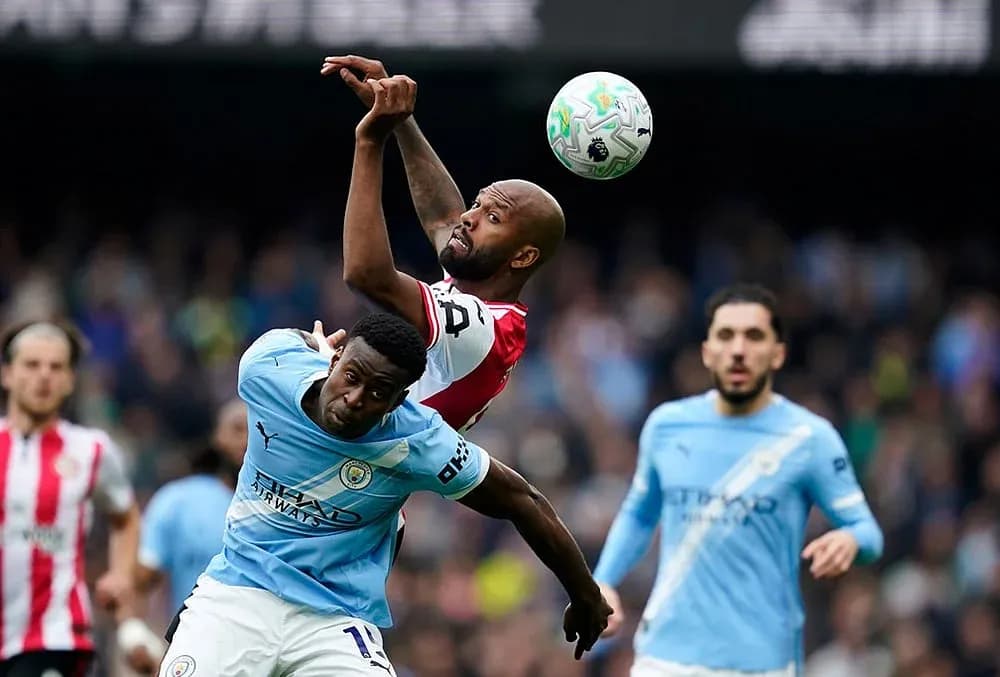
The Etihad Stadium under late‑season floodlights has seen its share of statement performances, but this 3‑0 dismantling of Brentford felt like Manchester City reasserting their seasonal identity at precisely the right moment. Following this result in the Premier League’s Regular Season - 36 round, the numbers behind both clubs’ campaigns frame the narrative: City, second in the table on 74 points before kick-off, had already built a formidable overall goal difference of 40 from 72 goals scored and 32 conceded. Brentford, eighth on 51 points, arrived with a far slimmer overall cushion of 3, having scored 52 and conceded 49.
City’s season-long profile was always likely to bend this fixture their way. At home they had played 17 league matches heading into this game, winning 13, drawing 3 and losing just 1. The Etihad has been a machine: 41 home goals scored at an average of 2.4 per match, with only 12 conceded at 0.7 per game and 8 clean sheets. On their travels, Brentford’s numbers told a more fragile story: 18 away matches, with 6 wins, 2 draws and 10 defeats, scoring 21 (1.2 per away game) but leaking 30 (1.7 per away game). In pure structural terms, this was an elite home side meeting a mid-table traveller with a soft underbelly.
The tactical voids on the teamsheet only sharpened those trends. Pep Guardiola was without J. Gvardiol, sidelined by a broken leg, and Rodri, out with a groin injury. For a coach who builds everything on rest defence and midfield control, losing his first-choice left‑sided defender and his tempo‑setting pivot would normally force a structural rethink. Instead, Guardiola leaned into the depth at his disposal: Gianluigi Donnarumma in goal, a back line of Matheus Nunes, Marc Guéhi, Nathan Aké and Nico O’Reilly, and a midfield constructed around Tijjani Reijnders and Bernardo Silva, with Antoine Semenyo, Rayan Cherki and Jérémy Doku supporting Erling Haaland.
On the other side, Keith Andrews’ Brentford were stripped of F. Carvalho and A. Milambo through knee injuries and R. Henry with a muscle issue. Those absences were particularly painful in a match where Brentford needed athleticism and clarity in transition. Without their full complement of ball‑progressors and defensive balance, they leaned on Caoimhin Kelleher behind a back four of Michael Kayode, Kristoffer Ajer, Nathan Collins and Keane Lewis-Potter, with Yehor Yarmoliuk, Mathias Jensen, Aaron Hickey and Mikkel Damsgaard trying to knit a midfield shield behind Kevin Schade and Igor Thiago.
Discipline and temperament were always going to be subplots. Across the season, City’s yellow-card distribution shows a side that tends to become combative as games mature: 20.31% of their yellows have come between 46-60 minutes, another 18.75% between 61-75, and again 20.31% between 76-90. Brentford’s curve is even more volatile late on: 23.08% of their yellows in the 61-75 window and a league-high 27.69% between 76-90, with a red card already shown this season in the 31-45 range. Overlay that with the Etihad context, and you get a clear picture: as City squeeze and circulate, Brentford’s defensive structure tends to fray under sustained pressure.
Nowhere was the “Hunter vs Shield” dynamic clearer than in the duel between Erling Haaland and Brentford’s defensive record. Haaland entered as the league’s top scorer with 26 goals and 8 assists in 34 appearances, built on 101 shots (58 on target) and a rating of 7.32. Crucially, he is not just a finisher: 24 key passes and a penalty profile of 3 scored and 1 missed show a striker comfortable as both focal point and auxiliary creator. Against an away defence conceding 1.7 goals per match, the probability landscape was brutally simple. Haaland’s movement between Ajer and Collins, combined with City’s 2.4 home goals per game, made sustained resistance unlikely.
If Haaland was the spear, Rayan Cherki and Doku were the artisans shaping the blade. Cherki, second in the league for assists with 11, has produced 59 key passes and 1,227 total passes at an 86% accuracy rate. His profile screams “engine room playmaker”: high volume, high precision, and an ability to find pockets between lines. Doku, with 5 goals and 5 assists, has attempted 141 dribbles, succeeding with 80. His relentless one‑v‑one threat stretches defensive blocks, creating the half‑spaces Cherki thrives in. In a match where Brentford’s midfield had to choose between stepping out to Cherki or doubling Doku, the visitors were perpetually pulled apart.
Brentford’s own “Hunter” was Igor Thiago, the league’s second‑top scorer with 22 goals and 1 assist, from 65 shots (43 on target). His duels profile – 499 contested, 195 won – and 36 tackles with 6 blocked shots underline a centre‑forward who is as much battering ram as finisher. Eight penalties scored with 1 missed show he can shoulder high‑pressure moments, even if the perfect record is already gone. Yet he was facing a City side that, overall, concedes just 0.9 goals per match and has kept 15 clean sheets. Without Rodri, the defensive shield shifted, but Marc Guéhi and Nathan Aké formed a compact axis in front of Donnarumma, narrowing the channels Thiago normally exploits.
The “Engine Room” battle tilted decisively sky blue. Bernardo Silva, one of the league’s most industrious midfielders, has 2 goals and 4 assists this season, but his real value lies in control and disruption: 48 tackles, 6 blocked shots and 19 interceptions, plus 2,029 passes at 90% accuracy. His 10 yellow cards speak to a player who will foul to protect structure when necessary. Opposite him, Mathias Jensen and Yarmoliuk needed to both screen and spring counters. In practice, City’s possession dominance and positional rotations forced them into reactive, lateral work rather than progressive passing.
Statistically, the prognosis for a match like this always leaned towards a City win with a healthy xG margin: an elite attack averaging 2.1 goals overall and 2.4 at home, against an away defence allowing 1.7 per game, and a Brentford attack that, while dangerous at 1.4 goals overall and 1.2 away, was running into one of the league’s most efficient defensive units. The 3‑0 scoreline at full time simply crystallised what the underlying numbers had been whispering all season: at the Etihad, with Haaland hunting, Cherki and Doku carving and Bernardo patrolling, City’s squad architecture is built to turn statistical advantage into emphatic reality.
Related News

Premier League Managers Facing Potential Sackings During International Break

Arsenal's Myles Lewis-Skelly Names Unexpected Tottenham Rival as Toughest Premier League Opponent

Three Premier League Players Shining Early This Season

Premier League Early Season Reactions: Man City’s Strength, Arsenal’s Flaws, United’s Struggles

Premier League Returns October 10 After Extended September-October International Break

Fulham and Manchester United Share Points in 1-1 Draw