
Pedri's Role in Spain's World Cup Journey
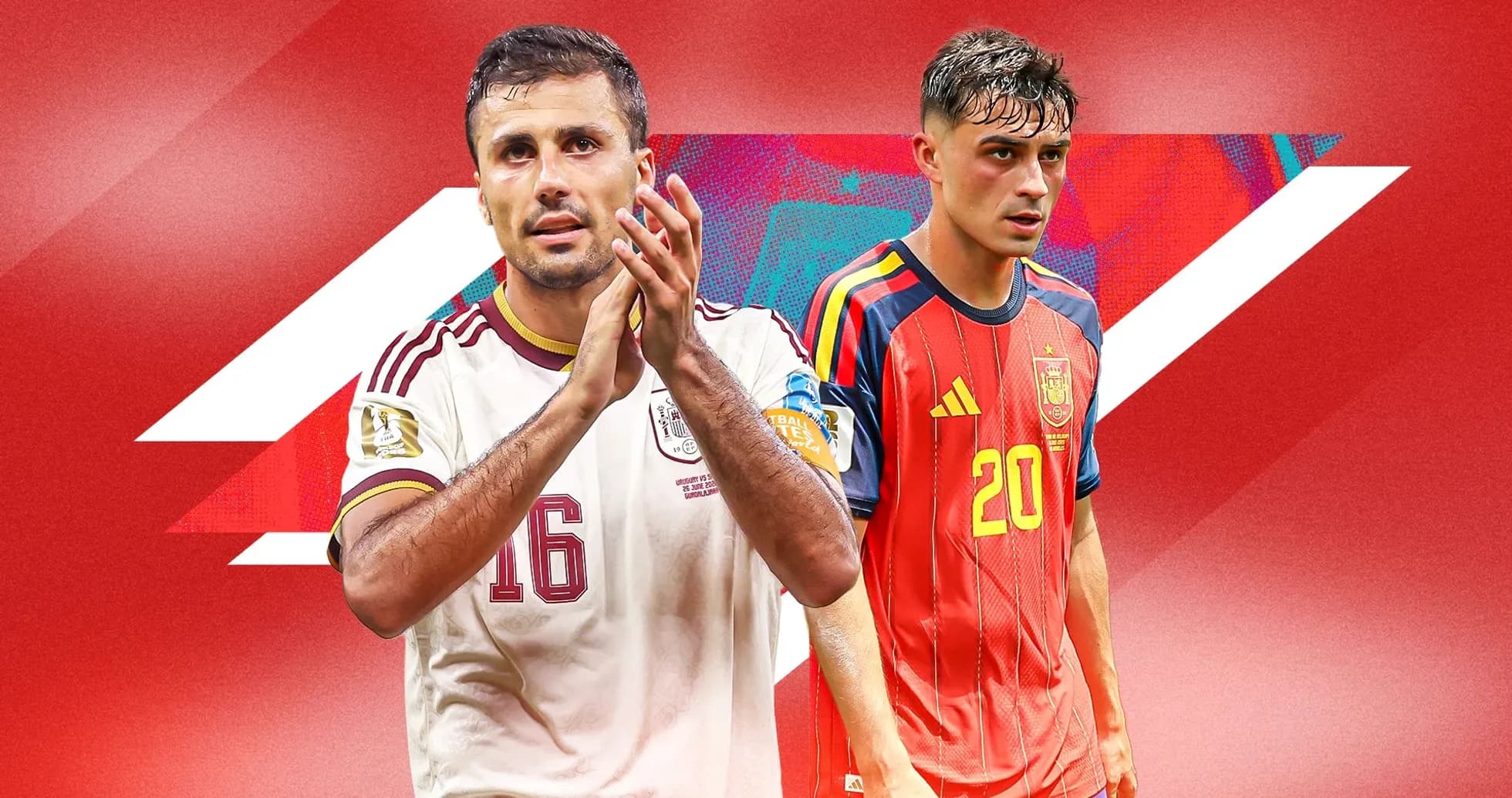
Rodri has spent this World Cup reminding everyone why his name sits on the Ballon d'Or. Pedri, the other half of Spain’s supposed dream midfield, has spent it under the microscope.
Two years ago in Germany, the idea of Rodri and Pedri running international football felt inevitable. The control, the calm, the angles. A pairing to build an era around. In North America, only half of that equation has caught fire.
Pedri’s tournament started with numbers that usually silence critics. Against Cape Verde, he created five chances, more than anyone else on the pitch. On paper, that’s influence. Back home, it was framed as failure. Spain didn’t score, didn’t win, and the standard for the Las Palmas prodigy has been set so absurdly high that productivity without a headline moment suddenly felt like not enough.
Cape Verde’s subsequent form has softened the view of that opening draw, but not the scrutiny on Pedri. The deeper the World Cup has gone, the louder the question: where is the end product?
The comparison has been inevitable and, for many, irresistible. Jude Bellingham and Pedri are very different players, operating in different roles, under different demands. It has not stopped Real Madrid fans from enjoying the contrast. Their man is deciding games, scoring, assisting, dragging England through tight moments. Barcelona’s chief creator, by contrast, has been neat, tidy, occasionally elegant – but rarely decisive.
It’s a crude way to frame two young stars, yet football’s bottom line is unforgiving. Bellingham is affecting scorelines. Pedri is not.
That is why Luis de la Fuente’s decision to drop Pedri still jolted the system. Five consecutive World Cup starts in 2026, nine in a row dating back to Qatar, and suddenly he’s on the bench. The Spain coach, though, has not hidden behind platitudes. This is not about punishing a star. It is about the depth of a squad that might be the most talent-heavy midfield group in the tournament.
De la Fuente even argued that if anyone had a right to feel aggrieved, it was Mikel Merino. The Arsenal midfielder had come off the bench to score a late winner against Portugal, only to be left out again. His response? Another decisive goal, this time in the 2-1 victory over Belgium. No sulking, no drama, just impact.
“It’s unfair that Mikel doesn’t play from the start, but it would also be unfair if someone else were left out,” De la Fuente said. Only 11 can begin, and he has repeated that every player understands their role. The message is clear: status does not guarantee minutes. Output does.
Inside the camp, there has been no sign that Pedri has railed against the decision. Unai Simon went out of his way after the Belgium game to stress that the midfielder had accepted it. The goalkeeper pointed to his own position group as an example: David Raya and Joan Garcia, both good enough to start, both watching him from the bench. Everyone wants to play. Everyone wants the World Cup more.
The question now is not about attitude. It is about function. What, exactly, is Pedri’s role against France?
His cameo against Belgium did little to strengthen his case for a recall. Spain had a late breakaway to kill the game, and Pedri, usually so precise in transition, mis-hit the key pass. It was an oddly loose moment from a player whose game is built on clean execution. At the same time, Fabian Ruiz had already made a powerful argument of his own, scoring Spain’s opener in Los Angeles and offering a blend of control and threat that De la Fuente clearly trusts. Simon called the Paris Saint-Germain midfielder “an immense talent” and pointedly noted that he has “won two Champions Leagues in a row”.
Pedri, of course, remains a rare footballer. When he is on song, he presses like a holding midfielder and passes like a No.10. He wins the ball, then immediately looks to accelerate play with one touch, one angle, one disguise. Yet this World Cup has not yet delivered that version of him, and De la Fuente has hinted at why.
To the coach, there are effectively two Pedris: the Barcelona version and the Spain version. “Pedri is a class player, one of the best in the world, if not the best,” he said, before adding that Fabian belongs in the same bracket. The key line, though, came next: Pedri cannot play for Spain as he does for Barça. The structures differ, the personnel differ, and the presence of Rodri changes everything.
With Rodri anchoring, Spain’s midfield puzzle becomes more complex. Pedri, De la Fuente insists, can operate as a 6, 8 or 10, but the final decision is “very elaborate, very analysed, very tailored to the opponent”. Against France, that calculation grows even sharper.
Spain could, in theory, flood the middle. Rodri, Fabian and Pedri started together against Cape Verde, and there is a strong argument for repeating that trio. Midfield is the one area where La Roja can claim a clear edge over Didier Deschamps’ side. If Spain are to blunt a devastating French front four, keeping the ball away from them for long stretches might be their best – perhaps only – form of protection. Three technicians, three press-resistant passers, one plan: suffocate the game.
But that choice would almost certainly cost Dani Olmo his place. The No.10 has seized his opportunity in the knockout rounds, knitting moves, finding pockets, giving Spain a vertical edge between the lines. His final ball still frustrates at times, yet his work without it and his constant movement have been vital in unlocking deep blocks.
De la Fuente has made no secret of how he sees Pedri at his most dangerous. For him, the midfielder is a “special talent” who should operate closer to the opposition box, where his feints, flicks and one-touch combinations can do the most damage. He has also praised Pedri’s ability to “set a very good tone” even when he is not at peak form, a nod to the tempo and calm he brings.
Still, the coach’s recent comments hint at a different plan: using Pedri as the man who punishes tired legs. After Belgium, he suggested that Pedri could “benefit from Fabian’s work”, a line that sounded less like flattery and more like a tactical blueprint. Let Fabian run, press and stretch the game early. Then, when spaces appear and defenders’ legs grow heavy, release Pedri into the gaps.
That, in many ways, captures this Spain. Talent is not hoarded for reputation’s sake; it is deployed for maximum effect. The squad’s collective ego sits low, and that selflessness has become their sharpest weapon.
De la Fuente knows what stands in front of them. He has called France “extraordinary” and “exceptional”, but he has said the same of his own group. To beat Deschamps’ side, he insists, Spain must field fresh, energetic players and reach “the best version” of themselves.
The lingering issue is whether that best version includes the Barcelona Pedri – the one who dictates games and decides them – or whether, for now, Spain must settle for something different from their No.20 on the biggest stage of all.
Related News
India's Record Chase of 406 Against West Indies Highlighted by Gill's 223 and Rohit's Century

Alex Pereira Hints at Major UFC Bout: 'Big Challenge' Ahead
Three Hall of Famers, Ten Fights, 109 Rounds: The Forgotten Rivalry That Shaped Lightweight Boxing's Golden Era
Khamzat Chimaev and Colby Covington Set for RAF Abu Dhabi Title Clash in November
Thomas Tuchel Confident Harry Kane Will Join 100-Goal Club for England Soon
Cristiano Ronaldo Vows to Reveal Truth After Leaving Portugal Squad Amid Conflict