
Pep Guardiola's Revolutionary Impact on the Premier League
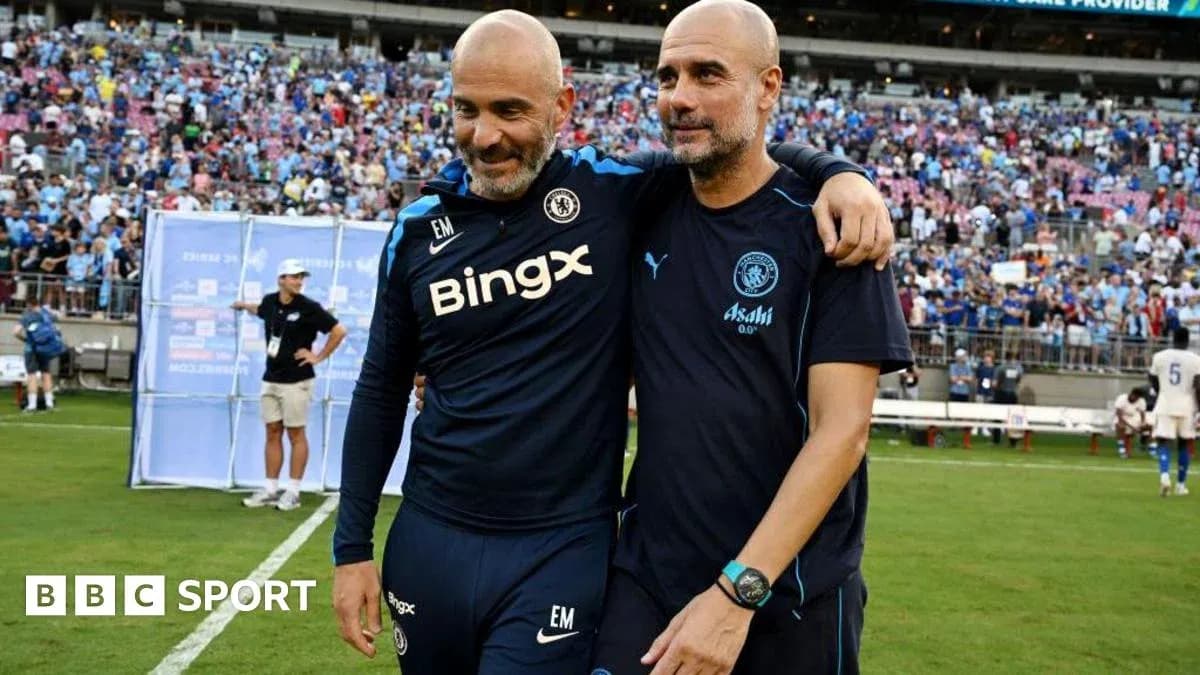
When the history of the Premier League is written, Pep Guardiola will not just sit in the chapter on Manchester City. He will be threaded through the entire book.
Ask managers up and down the division who shaped their ideas and his name comes back, again and again. Not just because he won. Because he changed what winning looked like in England.
This is how.
From shot-stopper to playmaker – and back again
One of Guardiola’s first acts at City set the tone. Joe Hart, a title-winning, terrace-favourite goalkeeper, was out. Claudio Bravo, then Ederson, were in.
He wanted a goalkeeper who could pass like a midfielder. In a league built on big saves and bigger clearances, it felt radical. Reckless, even. Every misplaced pass from Bravo was treated like a manifesto gone wrong.
Fast forward a decade and the revolution is complete. The idea that an elite side could thrive with a keeper who cannot play out is now the controversial stance.
Manchester United moved from David de Gea to Andre Onana. Arsenal from Aaron Ramsdale to David Raya. Chelsea cycled from Edouard Mendy to Kepa Arrizabalaga to Robert Sanchez. Across the division, the old-school shot-stopper became an endangered species.
Then the league punched back.
High pressing from goal-kicks grew sharper, more aggressive. Teams hunted in man-to-man schemes, squeezing the first pass, then the second. The space Guardiola once exploited near his own box now opened further upfield.
And so City pivoted. Ederson, the embodiment of the passing goalkeeper, made way for Gianluigi Donnarumma, a more orthodox No 1 whose reputation rested on one-against-one dominance and penalty-box authority. His heroics in Paris Saint-Germain’s Champions League triumph persuaded Guardiola that a different kind of security was now worth more.
City did not abandon the build-up game entirely. Against the most ferocious presses, Bernardo Silva or Rodri would drop right onto Donnarumma’s toes, collecting the ball like five-a-side pivots and threading their way out through the middle. Risky, tight, almost playful. If it works for the champions, others will follow.
The logic was clear: in a league of tiny margins, the value of an elite pure goalkeeper had risen again. United took the hint, replacing Onana with Senne Lammens, a more traditional profile. A decade after Guardiola ripped up the goalkeeping rulebook, the Premier League found itself back where it started – only now by choice, not by habit.
The birth of the inverted full-back – and its many lives
City’s 100-point season in 2017-18 is often remembered for its relentlessness. The goals, the records, the swagger. The tactical breakthrough that underpinned it began with a problem.
Injuries stripped Guardiola of natural full-backs. No left-back, no obvious solution. So he raided his squad for left-footers with the right technical profile and found Oleksandr Zinchenko and Fabian Delph.
Neither was a classic defender. Both were comfortable in tight spaces, both liked to pass inside rather than charge down the line. Guardiola flipped the role. His left-back stepped into midfield alongside the holding player, locking down the centre of the pitch and freeing the winger to stay high and wide.
Suddenly City had an extra midfielder in the build-up, a safer central structure and cleaner routes into the final third. Opponents couldn’t get near them. The inverted full-back had arrived.
The idea didn’t stay in Manchester for long. When Mikel Arteta took Zinchenko to Arsenal, he rebuilt the left side of his team around that same movement. At their best, Arsenal looked like City in red – full-backs drifting infield, wingers stretching the pitch, midfielders dictating.
Ange Postecoglou, another Guardiola disciple, carried the concept to Tottenham. Pedro Porro and Destiny Udogie often stood inside rather than outside, forming a narrow line with the defensive midfielder as Spurs tried to dominate the first phase of play.
Guardiola kept evolving the role. When Zinchenko was injured in 2018-19, Aymeric Laporte, a left-footed centre-back, filled in at left-back. In the Treble season of 2022-23, Manuel Akanji and Nathan Ake operated nominally as full-backs, but really as auxiliary centre-backs. John Stones stepped from the back line into midfield, Ruben Dias held the fort, and City’s “back four” became a shape-shifting platform.
The message was unmistakable: full-backs no longer had to look like full-backs.
Newcastle took the cue. Dan Burn, at 6ft 7in, became an unlikely left-back, tucking inside to form a back three in possession, then shuffling wide to defend. The aesthetics jarred at first; the logic didn’t. Height, strength, aerial dominance – all deployed in a Guardiola-inspired structure.
At the other end of the spectrum, City experimented with attack-minded defenders. Joao Cancelo and now Nico O’Reilly drifted into central pockets higher up the pitch, arriving in the box, contributing goals and assists. Arteta used Jurrien Timber and Riccardo Calafiori in similar hybrid roles at Arsenal. At Chelsea, Malo Gusto and Marc Cucurella stepped into midfield lanes under Enzo Maresca, another Guardiola alumnus.
One injury crisis at City had turned into a league-wide reimagining of what a defender can be.
Possession as a weapon, not a statistic
Guardiola’s football has always been built on the ball. That conviction hardened long before he came to England.
During his Barcelona days, after a Champions League defeat to Inter Milan, he admitted privately that he had betrayed his own beliefs. With Zlatan Ibrahimovic up front, he had tilted towards quicker, more direct attacks and surrendered his usual control. He left that night with a vow: if he failed again, he would do so playing his football, not someone else’s.
City became the purest expression of that promise. With midfielders stepping into full-back zones and technically gifted players in every line, they strangled games through possession.
In 2017-18, they averaged 71.9% of the ball. Season after season, the figure never dipped below 60%. Six Premier League titles in seven years turned high-possession, positional football from an oddity into the league’s default setting.
Even the challengers moved closer to his blueprint. Arne Slot’s first season at Liverpool delivered a title built more on control than on the wild, heavy-metal intensity that defined Jurgen Klopp’s best years. Arsenal, under Arteta, married a superb defensive record with a clear desire to keep the ball and squeeze opponents.
Brighton built an entire club model on the same principle. Roberto De Zerbi and then Fabian Hürzeler demanded that their team impose themselves with the ball, no matter the opponent. The football could be risky. It was always deliberate.
Scott Parker, Vincent Kompany and Russell Martin tried to do the same with more modest squads. Their commitment to playing out, to building from the back and sticking to their patterns, often outstripped the quality at their disposal. Results suffered. The philosophy didn’t budge. That, too, is part of Guardiola’s imprint: coaches prepared to live or die by the ball.
Rewriting an English league shaped by Ferguson
Before Guardiola arrived, the Premier League’s identity was clear. High tempo. Direct attacks. Quick transitions. Sir Alex Ferguson’s Manchester United had set the standard, blending technical quality with ruthless speed.
Even now, under Michael Carrick, United have leaned back into those counter-attacking roots. They seek space, not sterile control.
Guardiola walked into that landscape and changed its weather. He did not erase intensity or directness, but he persuaded many of the league’s best sides that the surest route to the top lay through structure, control and repetition. His positional play reshaped training grounds and academies as much as it did matchdays.
Crucially, he did it without freezing his own ideas in time.
Principles that bend, not break
There is a lazy myth that Guardiola arrives, imposes a rigid style and waits for the league to fall into line. The reality in England has been far more nuanced.
Yes, he holds certain non-negotiables: brave use of the ball, compact distances between lines, technical quality in every position. Around those pillars, he has shown a remarkable willingness to adjust.
Injuries forced him to reinvent the full-back. The rise of high pressing altered his view of the goalkeeper. The profiles of his forwards – from false nines to orthodox strikers – changed the way City attacked without changing the core idea of control.
He has flipped between inverted and traditional wingers, between narrow and wide front lines, between centre-backs who step into midfield and those who stay home. Each tweak answered a question the league posed, or maximised a player he trusted.
That is where his true influence lies. Not just in the patterns others copy, but in the speed with which he abandons yesterday’s solution for tomorrow’s edge.
By the time rivals finally replicate what worked for Guardiola last season, they often find that he and Manchester City have already moved on.
Related News
Carlos Alcaraz Urges an End to Matches Ending in the Early Hours
Carlos Alcaraz Criticizes Late US Open Finish After 3:30 a.m. Match
Jannik Sinner Set for ATP 500 Return in Beijing with Novak Djokovic Also Competing
Meet Iva Jovic: The American Tennis Prospect Making Waves
Flavio Cobolli Shares Insights on Practice Session with Jannik Sinner Ahead of Comeback
Till vs Romero: Fight Details, Undercard, and Viewing Info for This Weekend