
Plazma Youth Sport Games: Celebrating 30 Years of Youth Sports in Split
On a raised platform above the Adriatic, 20 children sit in a circle, heads bowed over chessboards. They are not playing each other. They are playing Nigel Short.
The former world title challenger shuffles around the ring, one move at a time, trying not to trip over chairs or camera cables. The kids are sharp – the best young players from across the Balkans – but they have an unusual weapon on their side: celebrity back‑up. At one board, Ana Ivanovic leans in, offering a quiet suggestion. At another, Sean Dyche, tracksuit and tan, growls through a tactical idea. Nearby, Peter Thiel – rightwing tech billionaire and unlikely chess touchline presence – watches on.
Welcome to the Plazma Youth Sport Games in Split, where nothing is quite as you’d script it.
The “Davos of sport” on the Dalmatian coast
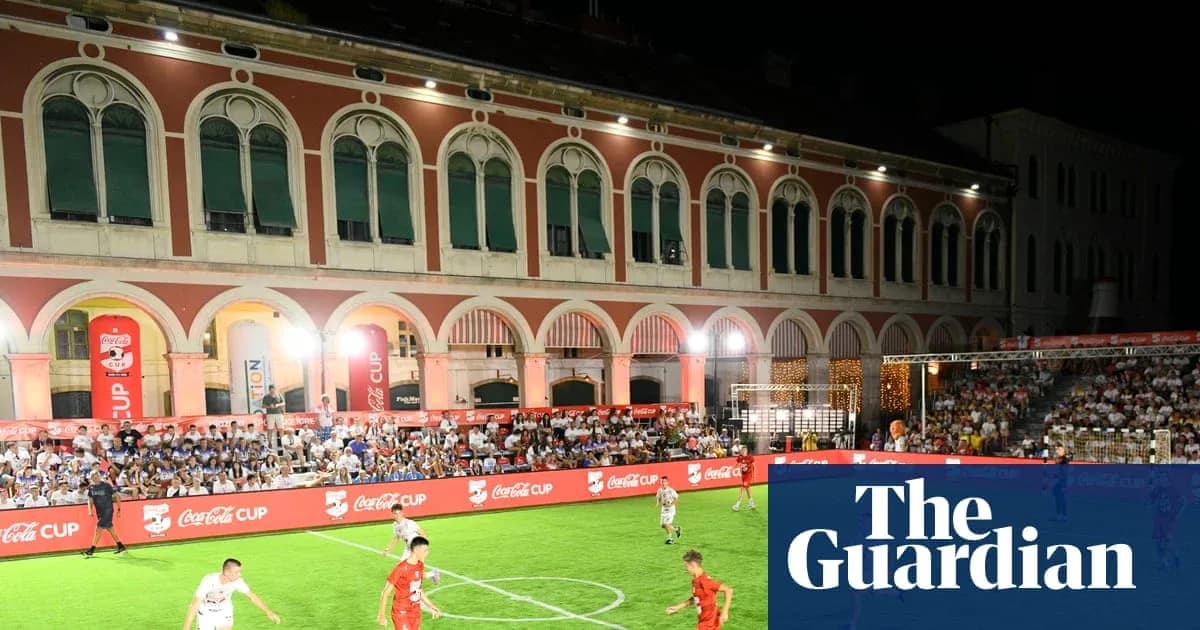
The YSG is blowing out 30 candles this year, and it has grown into something vast. Split, a city of just 160,000, hosts what organisers call the biggest amateur sports event for children in Europe. Just under half a million youngsters from Croatia, Bosnia and Herzegovina, Serbia, Slovenia and North Macedonia took part in qualifiers this year.
Ten sports make the final cut for the week in Split – from chess and 3v3 basketball to mini‑football – but medals are only part of the story. The Games are framed as both a competition and a “social project”, a place where kids are pushed towards teamwork, collaboration and, crucially, away from their phones.
The pitch has worked. Big names have flocked to it. Zlatan Ibrahimovic is an ambassador. So is Alastair Campbell. Visitors tend to arrive curious and leave converted.
Dyche is firmly in that camp. “A brilliant, brilliant initiative,” he calls it, the girls’ mini‑football final lodged firmly in his mind. “It was terrific, they were playing good football; getting properly stuck into each other, properly playing,” he says. “You could feel that they felt free and were being supported in that environment.”
Then he draws a line back home. Could something like this spring up in the UK? He doubts it. “It seems to me that every time you try and get an initiative off in England, there’s a million rules and regulations that make it difficult,” he says. “I know how hard it can be to get funding too and times are tough for people.”
Born from crisis, built for community
The Plazma Games themselves grew out of a tougher, darker time. Founder Zdravko Maric launched them in the aftermath of the breakup of Yugoslavia and the Bosnian war. His driving force was not lofty notions of reconciliation. It was drugs.
Croatia’s youth faced serious substance abuse problems. Sport, he believed, could drag them in a different direction.
“It’s a lifetime project and we live with it every day,” says his brother Slaven Maric, who has been involved since the start. “But when Zladko started it we didn’t have an idea that it would develop into this. It’s not about sport or the results, it’s about social life, it’s about being together. There were many issues with drug abuse [then], now it’s about bringing the kids to spend sometime together in real life.”
That last phrase – “real life” – has become a mantra. Getting children off screens is a central theme of the Games’ 2026 messaging. Esports companies have tried to latch on to the brand. They have been turned away.
Split: a small city with a giant sporting shadow
By choosing Split, the Maric family plugged into a sporting culture that already punched well above its weight.
This compact coastal city has produced Goran Ivanisevic and Bernard Vukas – the latter long considered Croatia’s greatest footballer before Luka Modric rewrote the script. Its roll call stretches across disciplines: Branko Cikatic, one of kickboxing’s greats; Toni Kukoc, three‑time NBA champion with the Chicago Bulls; Stipe Bozic, the mountaineer whose feats are etched into local folklore.
Walk the streets and you literally tread on the city’s pride. Split has its own Olympic “walk of fame”, a Hollywood‑style strip honouring its 73 medal winners. On the shoreline, locals play picigin, a frantic, acrobatic, hand‑only cousin of hackysack, in the shallows of the Adriatic. Sport is not a hobby here. It is a language.
So the Games and the city have fused quickly. The locals claim them as their own, and the locals include Slaven Bilic. The former Premier League defender and manager, another YSG ambassador, has known Zdravko Maric for more than three decades.
“I’m not objective because I’ve known Zdravko for more than 30 years but it’s great that at a time when there’s a lot of negativity in the world that this can exist,” Bilic says. “Especially in this part of the world that is supposed to be unstable.”
Billionaires, brands and a bigger map
The success brings an obvious question: what next?
Expansion, for one. North Macedonia joined for the first time this year. Ukrainian teams arrived as invited guests. Talks have already been held with six more countries about joining in future editions.
The commercial muscle is growing too. Coca‑Cola is on board as a partner, as are Topps and leading Croatian telecom firm Telemach. Behind the scenes, the money has become even more eye‑catching: there are now 11 billionaires associated with the Games, several of whom have put their own cash into its growth.
One of them is understood to be Peter Thiel, the PayPal and Palantir founder and mentor to US vice‑president JD Vance. In Split, he cut a curious figure, drifting along the riviera with a security detail, declining to answer when asked why he had chosen to invest.
Aleksander Ceferin, the Uefa president, takes a different tack. Uefa helps fund the YSG, and Ceferin sees them as proof that elite sport’s money can be channelled into something that looks and feels right.
“I think that top sport, and the money that you get with top competition, should be used for the development of sport and this is the development of sport,” he says in Split. The line lands with a hint of subtext, inviting comparisons with Gianni Infantino’s push to sell a stake in the World Cup to private investors.
A final whistle with star power
The week closed on Friday night with a flourish – the Games’ own version of Soccer Aid. On one side, a YSG select team. On the other, 11 all‑stars with a midfield that looked like a football historian’s fever dream: Claude Makélélé, Pavel Nedved and Ibrahimovic all pulling on their boots.
On paper, the contest looked lopsided. In the dugout, the locals had one card to play: Dyche, barking and gesturing, throwing himself into the role of coach as if a Premier League survival bid depended on it.
The result mattered less than the scene. Children sharing a pitch with legends. Coaches and executives mingling on the touchline. A region with a scarred recent history briefly united by something as simple as a ball.
Building bridges. Forming memories. Getting properly stuck in.
For an event that started as a fightback against drugs in a fractured country, it is quite a 30th birthday – and the sense around Split is that the real growth spurt may only just be beginning.
Related News
Roy Keane Critiques Manchester United's Defence Ahead of New Season
Understanding Gambling Risks and Responsibilities
Liverpool's Winger Hunt Continues as Arsenal and United Make Moves
Arsenal's Pursuit of Victor Osimhen: Balancing Ambition and Wages
Ian Wright Criticizes Arsenal's Treatment of Gabriel Martinelli
Athlone Town vs Galway United: FAI Women's Cup Semi-Final Showdown