
Portland Timbers II Edge Minnesota United II 2–1 in MLS Next Pro Clash
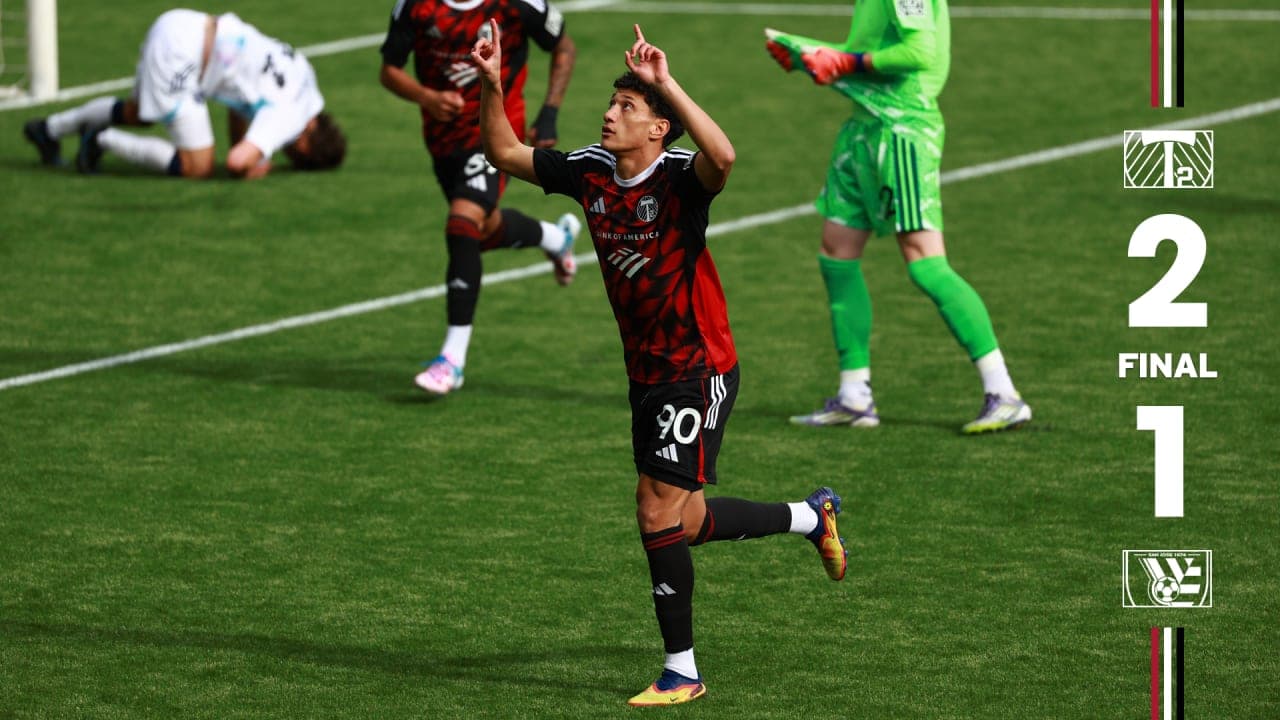
Providence Park under the lights has a way of sharpening storylines, and this Group Stage clash in MLS Next Pro delivered one with a clear edge. Portland Timbers II edged Minnesota United II 2–1, a result that did more than settle a single night’s argument; it underlined two very different identities taking shape across this 2026 campaign.
Heading into this game, the table already painted a tight picture. Portland Timbers II sat on 17 points from 9 matches, with a goal difference of 1 built from 13 goals for and 12 against overall. Minnesota United II arrived with 14 points from 10 fixtures, their own goal difference at -3, having scored 10 and conceded 13 in total. Both sides were embedded in the promotion race, both flagged in the standings as part of the MLS Next Pro Play Offs: 1/8-finals picture, but the paths they had taken to this point were contrasting.
Portland’s seasonal DNA is volatility with teeth. At home they had played 6, winning 3 and losing 3, scoring 9 and conceding 7 in the standings snapshot, while the broader statistical feed framed a more open version of the same story: 10 goals for and 10 against at home, an average of 1.7 scored and 1.7 conceded per match at Providence Park. On their travels they were marginally more controlled, with 4 goals for and 5 against in the standings and 4 scored, 5 conceded in the wider stats, averaging 1.3 for and 1.7 against away. Their overall average of 1.6 goals scored and 1.7 conceded total told of a side that embraces risk.
Minnesota United II, by contrast, were more polarized between home and away. At home they had played 3, winning 2 and losing 1, scoring 1 and conceding 2 in the standings, a low-scoring, compact profile echoed by their statistical averages of 0.7 goals for and 0.7 against at home. Away, the picture was wilder: 7 matches, 3 wins and 4 losses, with 9 goals scored and 11 conceded in the standings, and an average of 1.3 scored and 1.6 conceded on their travels. Overall, they sat at 1.1 goals scored and 1.3 conceded total, a touch more conservative than Portland but still vulnerable when stretched.
Into that context stepped Jack Cassidy’s Portland side, with a starting XI that looked built for vertical transitions rather than slow control. S. Joseph and D. Cervantes framed the spine, while C. Ondo, C. Ferguson and E. Izoita offered energy and ball-carrying lanes. The presence of B. Barjolo and V. Enriquez hinted at width and half-space occupation, while L. Fernandez-Kim and N. Lund suggested flexibility between back and midfield lines. Up front, C. Griffith – the league’s statistical focal point for Portland across top scorers, assists and cards – carried the dual burden of reference point and creator, even if his raw numbers in the league snapshot remained modest.
Minnesota’s XI, without a listed coach, carried its own clear structural notes. K. Rizvanovich anchored from the back, with P. Tarnue, A. Kabia, N. Dang and J. Farris likely forming the defensive shell. Ahead of them, M. Harwood and L. Pechota were tasked with linking to the more expressive trio of S. Vigilante, K. Michel and M. Caldeira, all working to service D. Randell. On the bench, the likes of A. Witte, T. Putt and J. Bernard offered fresh legs, but the core attacking responsibility sat with that starting unit.
Tactically, the voids in this contest were less about absentees – there were no formal missing-player listings – and more about discipline and game management. Portland’s yellow-card distribution across the season revealed a team that lives on the edge late in games: 31.82% of their yellows have come between 61–75 minutes, with another 18.18% between 76–90 and 9.09% stretching into 91–105. Minnesota, by comparison, spike in the 31–45 and 76–90 windows, each holding 27.78% of their yellows, with 22.22% between 61–75. In other words, both teams are at their most combustible just as matches tilt into decisive phases.
That disciplinary profile intersects sharply with their tactical rhythms. Portland’s willingness to attack at home – supported by that 1.7 goals-for average – demands aggressive pressing and quick counters. It is in those late-game surges, when legs are heavy and duels become desperate, that the card count climbs. Minnesota’s away profile, with 1.3 goals scored and 1.6 conceded on their travels, suggests a side that often finds itself chasing or being chased in open, stretched finales, again aligning with those late yellow spikes.
The key matchups in this fixture unfolded along two axes. The first, the “Hunter vs Shield,” pitted Portland’s attacking ensemble, led symbolically by Griffith, against a Minnesota defence that, away from home, concedes 1.6 goals per match and has already shipped 11 on their travels. Portland’s biggest home win of 2–1 and their capacity to hit 3 goals in a single home outing, as noted in their “biggest” stats, foreshadowed exactly the kind of scoreline that emerged.
The second axis, the “Engine Room,” set Portland’s midfield trio of Ondo, Ferguson and E. Izoita against Minnesota’s Harwood and Pechota. Portland’s season-long form line of WWLLWLWLW speaks of a team that either imposes its tempo or gets dragged into chaos; there is very little middle ground. Minnesota’s WLLWLWWWLL pattern is similarly streaky, but with a clearer divide between compact home control and more fragile away structures. In this match, Portland’s engine room found just enough vertical thrust to tilt the xG balance their way, repeatedly forcing Minnesota’s double pivot into recovery runs rather than proactive pressing.
From a statistical prognosis standpoint, a tight, chance-rich game was always likely. Portland’s total of 14 goals for and 15 against overall, paired with Minnesota’s 11 for and 13 against, framed a contest where both sides average more than a goal scored and more than a goal conceded per match. Neither team has a penalty miss on the season – Portland have converted 2 from 2, Minnesota 1 from 1 – so any spot-kick would have been a high-probability event rather than a coin flip.
Following this result, the numbers and the narrative align neatly. Portland’s attacking volatility at Providence Park once again delivered a multi-goal performance, while Minnesota’s away fragility resurfaced in a narrow defeat. The 2–1 scoreline fits the underlying metrics: two teams that rarely draw, that lean into risk, and that trust their forwards more than their defensive structures.
As the Group Stage grinds on toward the play-off cut, this night in Portland will be remembered less for a single moment and more for what it confirmed. Timbers II are a high-variance contender whose ceiling is shaped by their attacking courage and whose floor is defined by their defensive openness. Minnesota United II remain a dangerous, streaky side, particularly on their travels, but one whose promotion ambitions will hinge on tightening that away defensive line just enough to turn nights like this from narrow losses into hard-earned points.
Related News

MLS Winners and Losers: Cavan Sullivan’s USMNT Rise, St. Louis City SC’s Smart Moves, and Chicago Fire’s Hugo Cuypers Gap

MLS Winners and Losers: Portland Timbers' Historic Hat-Trick, Josh Sargent Shines, and Cavan Sullivan's Rising Star
Tacoma Defiance Injury List: Players Out and Return Dates vs Colorado Rapids II

Carolina Core injury list: Players out, potential return dates
Tacoma Defiance vs Colorado Rapids II Predicted Lineups and Team News

Orlando City II vs Huntsville City Predicted Lineups and Team News