
Premier League 2023-24 Predictions: Arsenal Leads the Charge
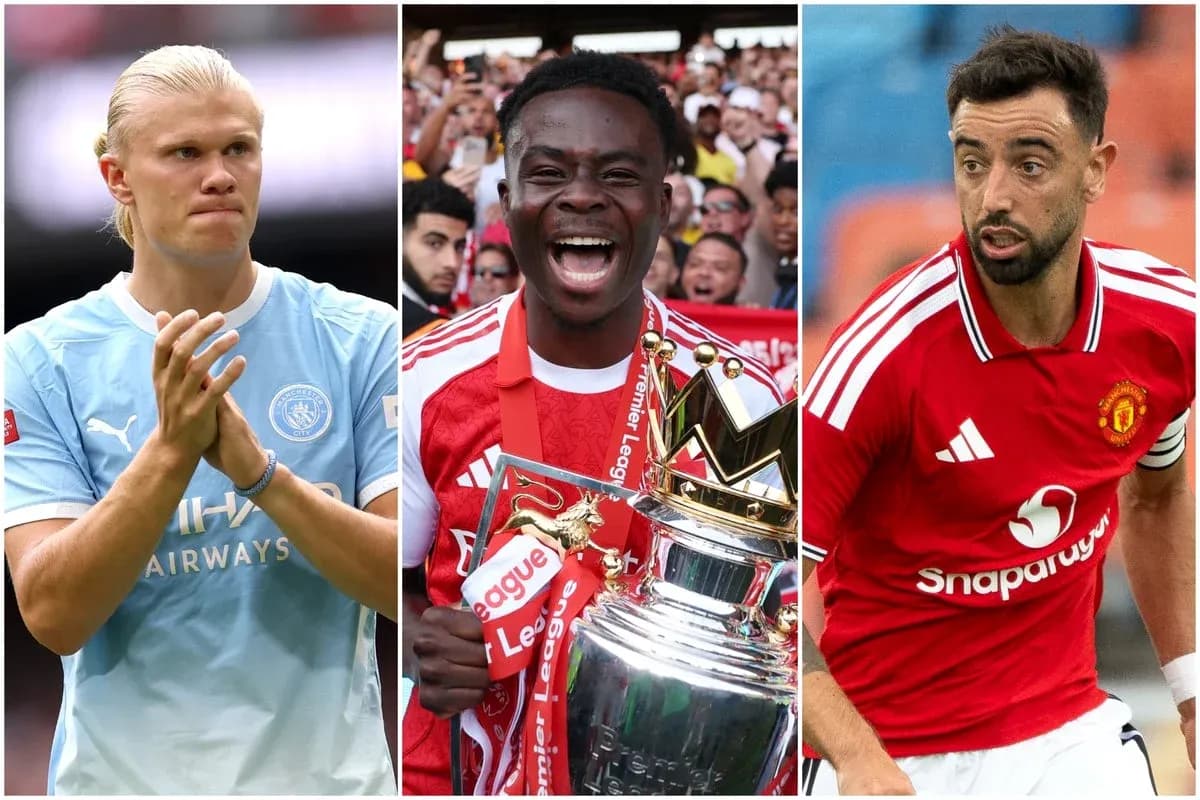
A decade of certainty has gone. What follows could be chaos.
The Premier League returns on Friday with Arsenal, at long last, walking out as defending champions. Pep Guardiola has gone, Manchester City are starting again, and Mikel Arteta suddenly finds himself the longest-serving manager in a division that has ripped itself up over the summer. Nine clubs have changed coach. Liverpool and Chelsea are in the hands of Andoni Iraola and Xabi Alonso. It feels volatile, unfamiliar, and wide open.
Coventry City, Ipswich Town and Hull City come up full of hope, replacing West Ham, Burnley and Wolves. Sunderland showed last season that a promoted club can leap straight into Europe. The bar is high. The margin for error is tiny.
Here is how this season might fall.
20. Hull City
Last season: Promoted via play-offs
Hull are back. Just don’t expect a soft landing.
Their promotion run was one of the strangest the Championship has ever seen. Opta’s numbers had Sergej Jakirovic’s side 23rd in the division for expected points. On paper, they should have been scrapping to stay out of League One. Instead, they surged into the play-offs and then beat Middlesbrough at Wembley after Southampton’s expulsion cleared a path.
You can only defy the data for so long. A busy summer of ins and outs has not shifted the sense that Hull are starting from a long way back. They are among the relegation favourites for a reason. Survival would be a shock; anything more would be a minor miracle.
19. Ipswich Town
Last season: Championship runners-up
Ipswich have been here recently enough to remember how quickly the Premier League can chew you up.
Relegated in 2024-25 with barely a whimper, they return with a different strategy. The days of simply hoovering up the Championship’s best have gone. The club-record signing of Emersonn from Toulouse and the arrival of Daizen Maeda from Celtic show a wider, bolder recruitment net.
Gary O’Neil, battle-scarred from Bournemouth and Wolves, inherits a demanding brief after Kieran McKenna stepped away, worn down by three promotions and a relegation in four breathless seasons. O’Neil must mould a new-look attack and restore belief at this level. The squad has quality, but the step up is brutal. The risk of another one-season stay is clear.
18. Coventry City
Last season: Championship winners
Coventry’s story has been drenched in emotion. Twenty-five years out of the Premier League, exile from their own stadium, a fanbase that has endured almost everything. Last season’s title win under Frank Lampard felt like catharsis.
Now comes the hard part.
The club have tried to follow Sunderland’s aggressive model in the market. Twice they have broken their transfer record, most notably on 20-year-old midfielder Caleb Yirenkyi for £26m. It signals ambition and a long-term plan. But the gulf between the Championship and the Premier League has rarely been wider.
Keeping Lampard might be their most important piece of business. After bruising spells at Chelsea and Everton, he has earned another crack at this level. If Coventry are to stay up, his management and Yirenkyi’s rapid adaptation must both hit the mark.
17. Fulham
Last season: 11th
The mood has turned anxious by the Thames.
Marco Silva’s departure after five superb years leaves a void at Fulham, and the appointment of Alvaro Arbeloa – fiery, untested in England, and fresh from a spiky caretaker spell at Real Madrid – has not yet calmed nerves. He has raided his old club for youth, bringing striker Gonzalo Garcia and midfielder Cesar Palacios, but both are projects rather than guarantees.
More worrying is who has gone. Player of the season Harry Wilson has left, as has Raul Jimenez. Experience and end product have walked out the door. The fixture list offers no time to settle: Chelsea, Liverpool and Manchester United arrive in the opening five games.
Arbeloa needs a fast start to prevent that early-season unease from becoming something darker.
16. Newcastle United
Last season: 12th
The mood on Tyneside has swung from euphoria to alarm in under two years.
Newcastle have gone from Carabao Cup winners and Champions League participants to a club stripped of its stars. Alexander Isak, Anthony Gordon, Bruno Guimaraes and Sandro Tonali have all gone. Eddie Howe, the architect of their resurgence, has departed too. The project has jolted off course.
Into the chaos steps Matthias Jaissle, best known for his work at Red Bull Salzburg and a successful stint with Asian champions Al-Ahli. Newcastle’s summer business leans heavily towards youth and potential. It might pay off in time. Right now, it looks like a gamble in a league that punishes inexperience.
Instead of looking up at the title, Newcastle could spend this season glancing nervously over their shoulders.
15. Brighton & Hove Albion
Last season: 8th
Brighton’s first taste of Europe in 2023-24 dragged them back into the pack. The Conference League brought glamour and fatigue, and the Seagulls slipped into mid-table.
They are back in that competition again, this time under Fabian Hürzeler. The opportunity is huge: Brighton are among the favourites to emulate Crystal Palace’s triumph and finally land a major trophy. But the cost to their league form could again be steep.
Record signing Luka Vuskovic is tasked with shoring up a defence that leaked too often. At the other end, Danny Welbeck’s move to Chelsea leaves a hole up front and ramps up the pressure on Kaoru Mitoma and Yankuba Minteh to deliver. Both are injured and won’t start the season.
Brighton’s style and structure will keep them competitive. The Thursday-Sunday grind might keep them from anything more.
14. Everton
Last season: 13th
Stability at Everton has been a rare commodity. David Moyes has brought it back.
His return has steadied a club that had lurched from crisis to crisis. Defensively, they look organised and stubborn again. Relegation should not be a serious concern. The problem lies at the other end.
Goals remain scarce. Beto and Thierno Barry have yet to convince as consistent scorers, and the attack often looks blunt. Retaining Iliman Ndiaye would be a significant boost, giving Moyes a creative spark in the final third, but even that may not be enough to push them into the top half.
Everton feel safe. They also feel stuck.
13. Crystal Palace
Last season: 15th
Crystal Palace are European champions. Read that again.
Last season’s uneasy truce between Oliver Glasner and the club hierarchy ended with the Conference League trophy in south London. Glasner has gone, but Palace have moved decisively to bring in Pierre Sage, the coach who turned Lens into Ligue 1 runners-up and French Cup winners.
Sage’s attacking, front-foot style should mesh well with the foundations Glasner left. Yet the churn in defence is hard to ignore. Marc Guehi and Maxence Lacroix have both departed over the past year, and Daniel Munoz could be next. Palace are used to losing stars, but ripping out a back line tests any coach.
If Sage can rebuild that structure quickly, mid-table security is within reach. If not, the reality after the European high could feel harsh.
12. Sunderland
Last season: 7th
Sunderland’s rise has been astonishing.
From League One to European qualifiers in a flash, Regis Le Bris has turned the Stadium of Light into one of the league’s loudest, most optimistic venues. Snatching a European place on the final day last season capped a remarkable first campaign back in the top flight.
Now they must handle the strain of Thursday nights and long trips. Recruitment has been modest so far: veteran right-back Thomas Meunier on a free and left-back Dayann Methalie for £25.6m. That is hardly a squad overhaul for a side facing extra games and extra demands.
Yet Sunderland have already made one huge win in this window. Captain Granit Xhaka rejected Chelsea to stay. His presence, experience and defiance of the old order keep the club’s momentum alive.
11. Nottingham Forest
Last season: 16th
Nottingham Forest finally ran out of managers last season. Four men took the job; none could settle it.
Now Oliver Glasner walks into what might be the league’s hottest seat. Fresh from two major trophies with Crystal Palace and once linked with Manchester United, his appointment is a coup and a statement of intent.
Forest have lost Elliot Anderson, but they still have Morgan Gibbs-White as the team’s heartbeat, the player who dragged them clear of danger late last season. Glasner is expected to install his preferred 3-4-3, a system that brought structure and cutting edge at Palace.
Without European distractions, there is room for Forest to surge upwards. The only caveat? Evangelos Marinakis’s ownership has never been short of drama. A smooth season would be the biggest surprise of all.
10. Brentford
Last season: 9th
Brentford have finally shaken off the tag of permanent relegation candidates.
Keith Andrews’s first season in charge was outstanding. The club punched above their weight again, flirting with European qualification and playing with a clear identity built on intensity, data-driven edges and set-piece mastery.
Igor Thiago’s 22 goals powered that run, but the summer’s headline arrival is Mamadou Sangare from Lens. The club-record signing should reshape the midfield and soften the blow of Jordan Henderson’s move to Chelsea.
Brentford know exactly who they are and what they want to be. In a league full of flux, that clarity is an advantage.
9. Leeds United
Last season: 14th
Leeds discovered themselves halfway through last season.
From 1 December 2025, Daniel Farke’s side played like European contenders; over that stretch, they would have finished 7th. It counts for nothing in the table, but it changes the mood around Elland Road.
The summer has been targeted rather than flashy. James Trafford arrives to solve the long-running issue in goal. Harry Wilson, signed on a free from Fulham, adds craft and set-piece quality in midfield. Towering centre-back Tarik Muharemovic strengthens a spine that already looks robust.
If Dominic Calvert-Lewin can build on last season’s 14-goal revival, Leeds have the tools to push into the top half – and perhaps beyond.
8. Tottenham Hotspur
Last season: 17th
Two seasons of finishing 17th. Survival on the final day. Tottenham were staring into the abyss.
The board’s response has been decisive: back Roberto De Zerbi, and back him heavily. Only Chelsea have outspent Spurs, with a £180m midfield rebuild headlined by Sandro Tonali and Mateus Fernandes. At the back, Marcos Senesi, Jan Paul van Hecke and Andy Robertson give De Zerbi a very different defensive platform.
Spurs are not done yet. More attacking options are on the agenda, and De Zerbi has been handed full control after dragging the club away from relegation. A full season under the Italian, without European football, is one of the most intriguing subplots of the campaign.
It cannot be as bad as last year. But injuries still stalk this squad, and no amount of spending guarantees that all of Tottenham’s problems vanish in one summer.
7. Bournemouth
Last season: 6th
Bournemouth’s first European qualification in their history was built on cohesion. The priority this summer was to keep it.
Losing Andoni Iraola hurts. His aggressive, high-energy style transformed the club. Yet the Cherries have managed to hold on to their core: Alex Scott, Rayan and Junior Kroupi all remain, even if Kroupi will miss the start of the season after a freak foot injury in training.
Marco Rose takes over with a clear brief: continue the high-pressing, high-intensity football that has become Bournemouth’s identity. A Jurgen Klopp disciple with experience at the top level, he looks a natural successor to Iraola.
With the squad largely intact and the Europa League to navigate, Bournemouth are equipped to stay in the top half – and maybe bloody a few more noses in Europe.
6. Aston Villa
Last season: 4th
Aston Villa are changing in front of our eyes, but one constant remains: Unai Emery.
The Europa League winners have lost key figures. Emi Martinez could yet join Morgan Rogers, Youri Tielemans and Lucas Digne in leaving. On paper, that is a significant chunk of last season’s spine. On the touchline, though, Villa still have their trump card.
Emery has begun to evolve his squad with the club-record £59.5m signing of Switzerland’s World Cup star Johan Manzambi and Japan international goalkeeper Zion Suzuki. Alejandro Garnacho arrives on loan, expected to inject directness and chaos in the final third.
Villa are back in the Champions League for the second time in three seasons. They need their new faces to settle instantly. But if any coach can knit them together quickly, it is Emery.
5. Liverpool
Last season: 5th
Anfield has a new voice.
Andoni Iraola brings his relentless, high-octane football to Liverpool, and the potential is obvious. A forward line featuring Alexander Isak and Florian Wirtz should terrify defences if both can finally click after uneven debut campaigns.
Yet the same old questions linger. Squad depth remains thin, especially in attack and at full-back. The midfield, exposed too often during Arne Slot’s final season, still looks short of numbers and variety.
Jeremy Jacquet, the £55m centre-back signed in January, impressed in a friendly against Como. The loan arrival of Ronald Araujo adds experience. Even so, Liverpool lean heavily on 35-year-old captain Virgil van Dijk staying fit and available.
Their expensive pursuit of Bradley Barcola drags on, while Hugo Ekitike remains sidelined for months. Iraola steps into the job with excitement swirling around him – and uncertainty everywhere he looks. Early goals from Isak and Wirtz would buy him time and belief.
4. Manchester United
Last season: 3rd
Michael Carrick has turned a rescue mission into a revolution.
United won 12 of his 18 league games after he replaced Ruben Amorim in January. No side collected more points in that period. The club responded with a two-year permanent deal. Now comes the real test.
Champions League football returns to Old Trafford and with it a heavier schedule. United played just 40 matches last season; this year, that number could approach 60. Rivals will have more footage and more time to work Carrick out. He will have less time on the training ground to stay ahead.
Bruno Fernandes remains the talisman, the player who can drag United beyond their structure. But depth is a concern. Casemiro’s departure left a hole in midfield that Andrey Santos and Youri Tielemans have been signed to plug. It feels like a good start, not a completed rebuild.
United should stay in the top four mix. A title push might still be a step too far.
3. Chelsea
Last season: 10th
Chelsea hit rock bottom last season. Then the chaos finally seemed to slow.
Liam Rosenior lasted just three months. The club endured their worst league run since 1912. Yet from that wreckage, the hierarchy have landed a coach many of Europe’s giants once wanted: Xabi Alonso.
Fresh from leading Bayer Leverkusen to the Bundesliga title, Alonso arrives with ideas, authority and time. Chelsea have no European football, giving him space on the training ground to impose his style in a way his predecessors never enjoyed.
On the pitch, the squad looks more balanced. Morgan Rogers is an expensive but high-quality addition, and pairing him with a fit-again Cole Palmer – desperate to respond after missing the World Cup – could be devastating. The surprise shift towards experience, with Jordan Henderson, 36, and Danny Welbeck, 35, joining, hints at lessons finally learned.
Chelsea remain volatile. But for once, the pieces look like they might actually fit.
2. Manchester City
Last season: 2nd
The Pep Guardiola era is over. The shadow remains.
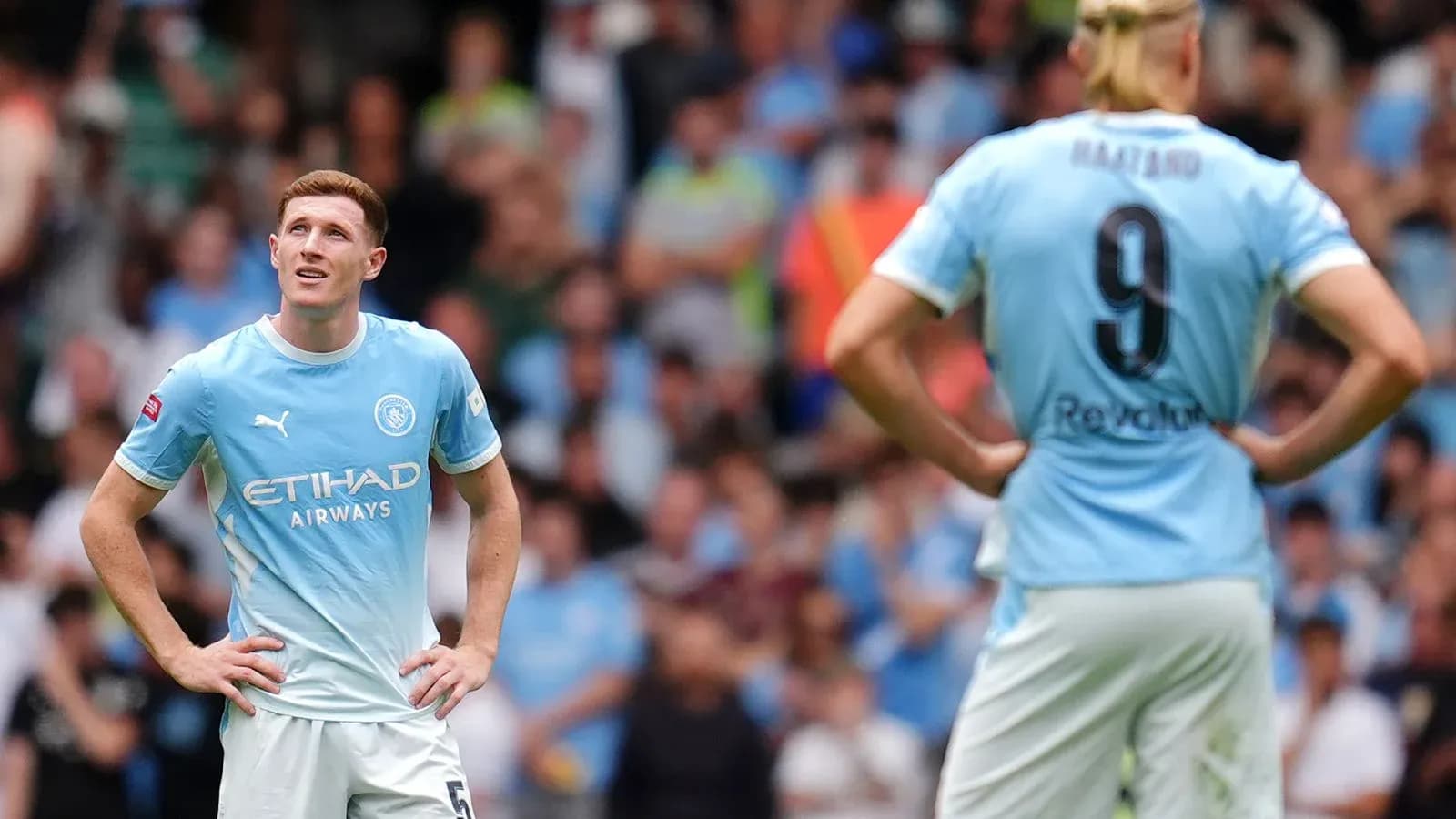
No club faces a bigger adjustment than Manchester City. Ten years of one man’s vision have shaped everything from recruitment to academy pathways. Now Enzo Maresca must oversee a midfield rebuild and a stylistic evolution, all while maintaining title expectations.
Rodri and Bernardo Silva have gone, ending an era in the centre of the pitch. Elliot Anderson arrives for £116m after a standout World Cup with England. Ayyoub Bouaddi, 18 and another World Cup breakout, may be asked to step straight into a role that once belonged to a Ballon d’Or winner.
City could yet return to Chelsea for Enzo Fernandez at £120m. They might need to. At present, the squad feels light in the area that defined their dominance.
Even so, Erling Haaland’s goals, plus last season’s additions of Antoine Semenyo and Marc Guehi, keep City firmly in the title picture. They will be close. But the shift away from Guardiola’s control is seismic.
1. Arsenal
Last season: 1st
Arsenal stand where they have not stood for 22 years: on the Premier League’s summit, looking down.
They do so with continuity on their side. While rivals rip up plans and start again, Mikel Arteta remains in place, the longest-serving manager in the division, backed by a squad that has grown together and now knows how to cross the line.
Guardiola’s departure from City removes the defining figure of the last decade. In his place is uncertainty. Arsenal, by contrast, bring familiarity, cohesion and a champion’s confidence into a season that feels like a reset for almost everyone else.
The Premier League has rarely looked so unpredictable. But in the turbulence, one truth stands out: right now, Arsenal look best equipped to rule it again.
Related News
Roma Approaches Rodrigo Mora After Positive Porto Negotiations
Liverpool's £52m Transfer Misfire: A Calamitous Window
Enzo Maresca's Challenge: Closing the Gap to Arsenal
Manchester City Consider Late Move for Enzo Fernandez
Scottish FA Withdraws Support for Gianni Infantino
Al-Hilal's Future Plans: Benzema vs. Watkins