
Qarabag's Tactical Masterclass in 3-0 Victory Over Vestri
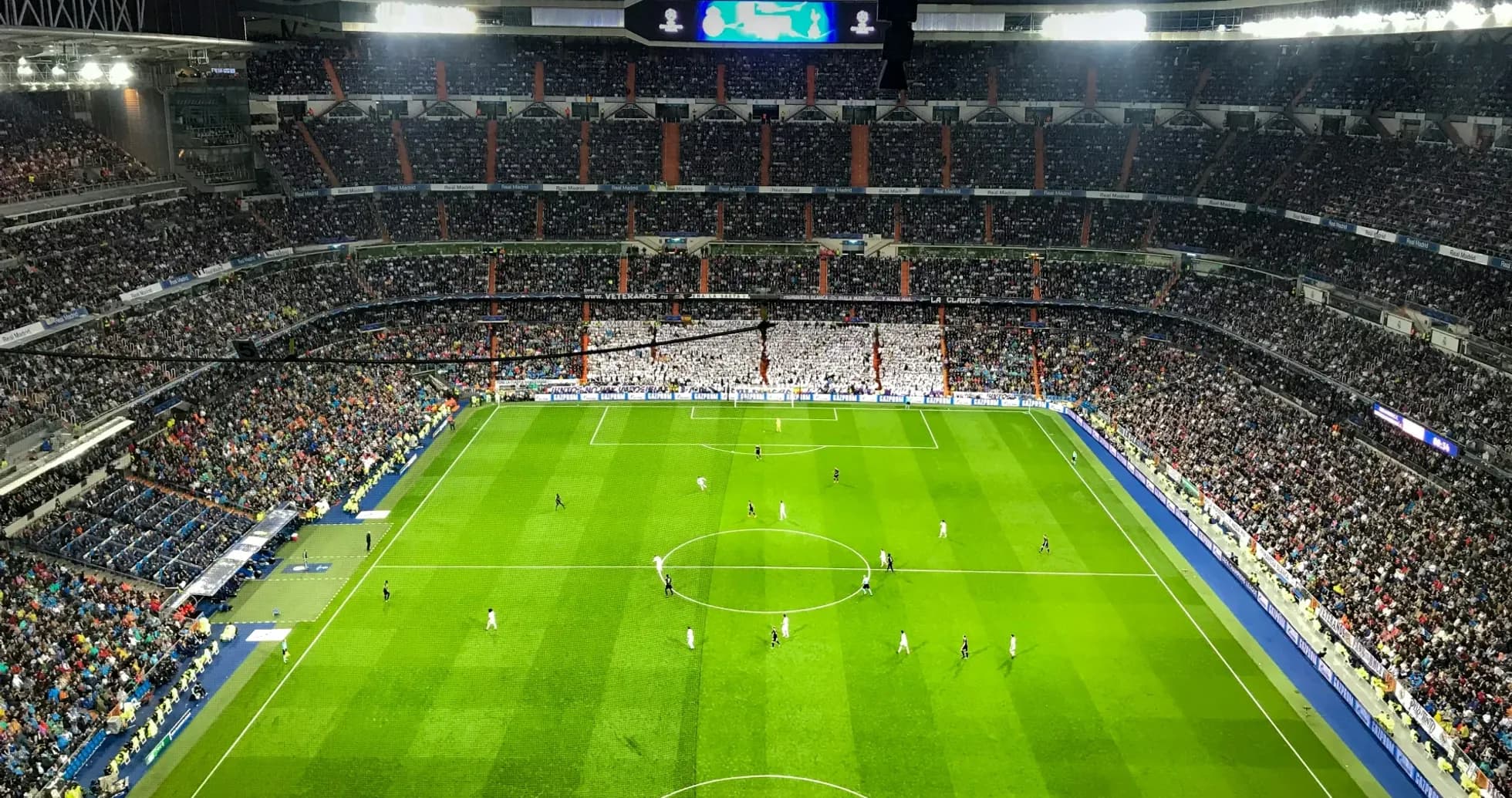
Vestri’s 0-3 home defeat to Qarabag at Throttarvollur in the UEFA Europa League 1st Qualifying Round unfolded as a controlled, almost textbook away performance from the Azeri side. With no cards shown and limited statistical granularity available, the tactical story is written primarily through structure, spacing, and the timing of Qarabag’s three goals rather than volume metrics. The visitors imposed their shape and quality early, built a decisive 0-2 lead by half-time, and then managed the second half through calculated substitutions and tempo control, while Vestri struggled to translate defensive numbers into coherent progression or sustained pressure.
Qarabag lined up in a clear 4-2-3-1, and that framework underpinned everything. The back four of Matheus Silva, B. Huseynov, B. Varkonyi, and B. Langa provided a stable base, but the real control came from the double pivot of Pedro Bicalho and M. Jankovic. From the opening minutes, Qarabag used these two as the primary circulation hub, allowing the front four to adopt aggressive, high starting positions. J. Mouaddib, Kady Borges, and A. Zoubir operated between the lines behind lone forward Z. Sawo, constantly rotating to unbalance Vestri’s defensive block.
First Goal
The first goal at 5' encapsulated Qarabag’s early tactical superiority. With Vestri still settling, Qarabag’s front unit found space quickly: Sawo dropped off the last line to link play, and his assist for Mouaddib came from exploiting the gap between Vestri’s midfield and defence. The timing of the run and the verticality of the move suggested a pre-planned pattern: pivot into feet, bounce into the half-space, and attack the channel before Vestri could compress. Going 0-1 down so early forced Vestri to defend deeper than ideal, compressing their own attacking potential.
Vestri’s starting structure was less clearly defined, officially without a recorded formation, but the personnel point towards a back-heavy setup. With defenders Edson Eduardo, G. Einarsson, S. Fall, M. Hagbardsson, and B. Eydal all in the XI, Vestri appeared to prioritise numerical security at the back, likely a back five or very flat back four with wide defenders cautious to advance. In midfield, J. Stensson, A. Johannsson, J. Selven, and E. Duah had to cover large horizontal distances, and that lack of clear vertical staggering made progression through the thirds difficult. As a result, Vestri rarely threatened Qarabag’s block consistently and struggled to connect their midfield to any advanced presence.
Second Goal
The second Qarabag goal at 29' again highlighted the visitors’ structural advantages. Bicalho’s strike, assisted by Sawo, came from a situation where the double pivot was allowed to step into advanced positions. With Vestri pinned back and reacting to the movement of the three attacking midfielders, the pivot line had time to arrive late at the edge of the block. This is typical of a well-drilled 4-2-3-1: once the first line of pressure is broken, the pivots can overload the central lane. Vestri’s compactness around their own box prevented immediate penetration at times, but they could not prevent Qarabag from recycling attacks until a clean shooting lane opened.
At 0-2 down by half-time, Vestri’s main issue was not just defensive fragility but the lack of an exit plan. With so many defenders on the pitch and no clear focal point up front, their transitions were short-lived. Any attempted counters were likely isolated runs from midfielders rather than structured breaks with support. Qarabag, by contrast, could afford to keep their full-backs relatively conservative, trusting the front four and pivots to generate enough threat without overcommitting.
Third Goal
The third goal at 56' by Sawo, assisted by Kady Borges, effectively ended the contest and demonstrated Qarabag’s capacity to attack from wide and central zones. Borges, operating as a creative midfielder, found the angle to feed Sawo, whose movement across the line continued to trouble Vestri. At 0-3, Qarabag could switch from aggressive expansion to game management.
The substitution wave at 63' was decisive in terms of tactical recalibration. For Vestri, three changes arrived simultaneously: G. Hauksson (IN) came on for J. Stensson (OUT), B. Hermannsson (IN) came on for E. Gardarsson (OUT), and K. Cheshmedjiev (IN) came on for S. Fall (OUT). These moves suggested an attempt to freshen the midfield and adjust the defensive personnel, possibly to add more energy and ball-carrying capacity. However, making triple changes in the same minute, at 0-3, also indicated a reactive rather than proactive game plan.
Qarabag mirrored the timing of those changes but with a different objective: load management and preservation of control. O. Kashchuk (IN) came on for J. Mouaddib (OUT), R. Cephas (IN) came on for A. Zoubir (OUT), and S. Lobato (IN) came on for Pedro Bicalho (OUT), all at 63'. Removing Mouaddib, Zoubir, and Bicalho—three key creative and controlling pieces—once the game was effectively decided pointed to a focus on protecting legs for future qualifiers while trusting squad depth to maintain structure. With Kashchuk and Lobato, Qarabag retained technical security in midfield, while Cephas offered fresh running to stretch Vestri in transition without needing to chase further goals.
Further rotations underlined the same logic. At 69', T. G. Hafthorsson (IN) came on for J. Selven (OUT) for Vestri, another midfield reshuffle likely aimed at injecting different profiles into central areas. Qarabag then replaced centre-back B. Huseynov with C. Makreckis (IN) at 74', and left-back B. Langa with E. Cafarquliyev (IN) in the same minute, subtly refreshing the defensive line while keeping the 4-2-3-1 framework intact. Vestri’s final change at 78' saw C. Morfelt (IN) come on for B. Eydal (OUT), again adjusting the defensive/midfield mix but without altering the fundamental challenge of breaking down Qarabag’s organised block.
From a disciplinary and rhythm perspective, the match was remarkably clean: no yellow or red cards for either side. That absence of interruptions helped Qarabag, whose positional play and early lead benefited from a steady tempo and minimal emotional spikes. Vestri could not use stoppages or confrontations to disrupt the visitors’ flow or reset the psychological balance.
Without concrete possession or shot data, the tactical verdict must rest on structure, goals, and substitutions. Qarabag’s 4-2-3-1 functioned as intended: the double pivot controlled central spaces, the three attacking midfielders exploited half-spaces and wide channels, and Sawo provided both link play and penalty-box presence, directly contributing to all three goals (two assists, one goal). Vestri, by contrast, fielded a defender-heavy XI that limited their offensive ceiling and left them chasing the game early without the tools to do so effectively.
In strategic terms, Qarabag produced an ideal away-leg template for a European qualifier: strike early, consolidate the lead before half-time, add a third to kill the tie’s first leg, then rotate heavily while maintaining structural integrity. Vestri’s adjustments were numerous but largely reactive, and the lack of a clearly defined attacking scheme meant that even with fresh legs, they rarely threatened to alter the tactical narrative set in the opening half-hour.
Related News
AC Milan vs Benfica: A Clash of Two Philosophies in UEFA Europa League
Five Standout Europa League Players to Watch in 2026/27
AC Milan vs Benfica Europa League Clash: Team Updates, Lineups & Broadcast Info
Omonia Nicosia vs Benfica Predicted Lineups: Team News for UEFA Europa League
Red Bull Salzburg vs Ararat-Armenia Predicted Lineups and Team News
Celje vs Red Bull Salzburg Predicted Lineups and Team News