
Queen's Park: Defying Expectations in Scottish Football
Queen's Park were supposed to fade. They were supposed to slide quietly back into the lower leagues once the money dried up and the academy shut its doors.
They have done neither.
When word spread last year that Lord Haughey was ending his financial agreement with Scotland’s oldest club, many assumed the Spiders would be dragged back into obscurity. Instead, Sean Crighton walked into the job and refused to accept that script. His side pushed towards the promotion play-off picture before finishing sixth – not spectacular, but a clear statement that Queen’s Park were not going away.
The academy, once the jewel in the club’s crown, is gone. Yet the production line hasn’t stopped. The under-17s and under-19s both won their leagues last season, a reminder that the club’s identity is still tied to youth, development and opportunity.
Behind the scenes, Haughey’s influence lingers too. His City Charitable Trust has helped turn Lochinch, tucked inside Glasgow’s Pollok Park, into a training base that would make many Premiership clubs envious.
“One thing we’ve got here is a great training centre,” says Crighton. “And, obviously, at Lesser Hampden, the pitch is unbelievable. We’ve got the facilities – we need to be a good Championship team.”
That is the standard he keeps coming back to. Facilities that look top-flight, a budget that isn’t, and a squad built to fit the Scottish FA’s Craig Mulholland vision of developing Scottish talent with an eye on both the national team and the balance sheet.
This is not new ground for Queen’s Park. Andy Robertson and Lawrence Shankland both used the club as a launchpad before becoming captains of Scotland and Rangers respectively. Crighton wants more of that.
“Josh Fowler’s moved on to St Johnstone, doing well in the Premiership,” he says. “Seb Drozd has moved on to Partick Thistle – he’s flying over there. Henry Fieldson’s gone to St Mirren.
“We’ve got a barrowload of them [this season]. Young Ross McLean has come into the team last year a couple of times and progressed well this year. He’s a manager’s dream, he’s very versatile – he can play in the middle, he can play wide, he can play at the back.
“Tyrece McDonnell as well. I think he made 26 appearances last season.”
For Crighton, this isn’t a side project. It is the job.
“We need to be that club because that’s Queen’s Park’s history. The guys that are in the national team, they started at Queen’s Park.
“When I got the job, that was it from the outset. It was, ‘can you help players progress?’ Not just me, everyone in the building. That’s what we want to try and do.
“I’ve got a sense of pride that we’ve managed to have these players play for us and then move on.”
On the pitch, the dressing room mix is striking. At 29, central midfielder Scott Martin is suddenly one of the old heads, looking around at a group stacked with teenagers and early-20-somethings trying to find their feet in a brutal division.
“Young Aiden McCallion [co-operation loan from Rangers], he’s a central midfielder as well,” Martin says. “He’s been great since he came through the door, gets on with his work, very tidy on the ball. Same with Lewis Stewart [also co-operation loan from Rangers], he’s lightning.”
The step from youth and B-team football into the Championship is not gentle.
“At Rangers, they must be so used to dominating the ball and having time,” Martin says. “But here in the Championship it’s a totally different game. It’s end-to-end, it’s high intensity.
“It will be a great experience for them because they’re learning a totally different side of the game that maybe you wouldn’t learn at a B team or an under-19s or 20s, whatever it might be. The way they have fitted in has been absolutely top notch.”
The irony is clear. Queen’s Park are being held up as a model for development, yet the table is unforgiving. After a sharp League Cup group campaign hinted at momentum, the league season has bitten back. They sit second bottom, staring up at a congested Championship where panic can spread quickly.
Martin isn’t spooked.
“Anybody can beat anybody,” he says, looking ahead to Friday’s BBC Scotland TV game at home to Ayr United – the side just one place and one point above them.
“We’ve had a lot of difficult games, but I think the Partick Thistle game was our turning point [0-0 draw] in the sense that we found that belief that we can go to, in my opinion, the hardest place in the Championship and grab a point.
“In terms of where we are this season, I think we’re OK. There’s been parts of games where we play really, really well. It’s just trying to put that all together and be more consistent.
“We’ve got a youngish squad at times as well, so it can be a bit difficult, but we’re not far away from being a right good side again.”
The narrative around Queen’s Park has shifted from survival to something more nuanced. This is a club trying to stay in the division, yes, but also trying to stay true to what made it famous in the first place: spotting talent early, polishing it, then letting it go.
The question now is simple: can a team built to develop the future of Scottish football also secure its own?
Related News

Bournemouth v Liverpool: Goals, Form and Key Matchups

Alexander Isak: Liverpool Transfer Was an Easy Decision

Queen's Park: Defying Expectations in Scottish Football

Messi's Intense Exchange with MLS Commissioner After Campeones Cup Victory
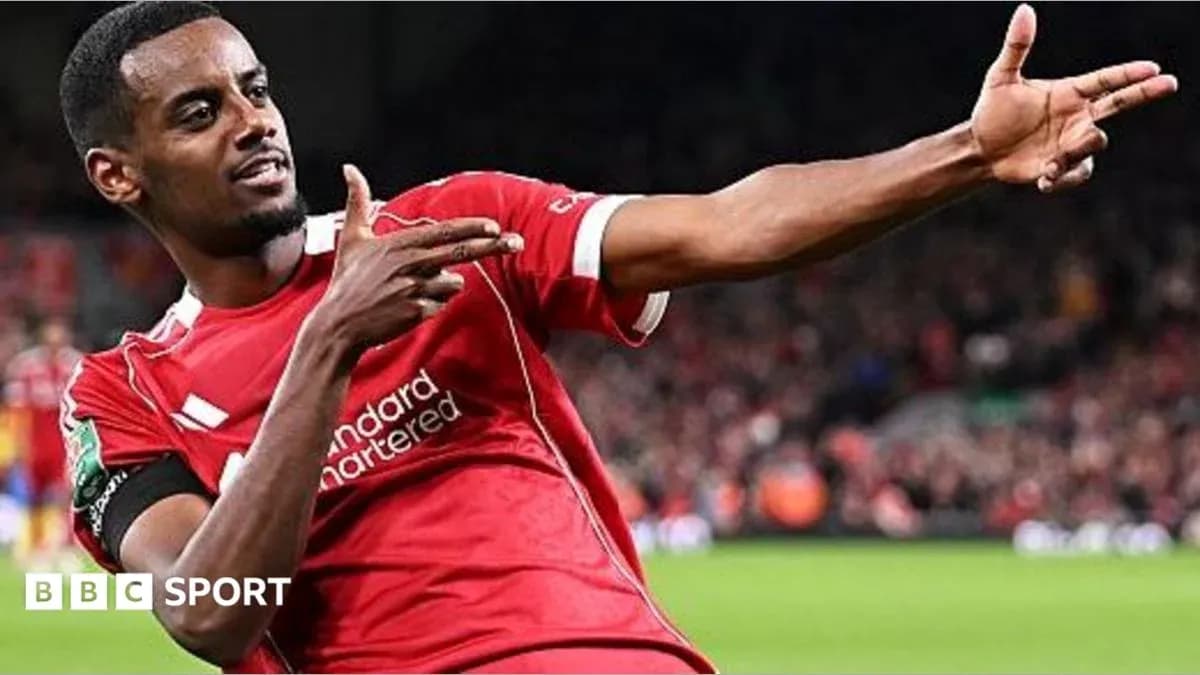
Alexander Isak's Journey: From Newcastle to Liverpool

Tony Popovic's Bold Changes for Socceroos Squad Against Brazil