
Rangers vs Jagiellonia: UEFA Europa League Showdown
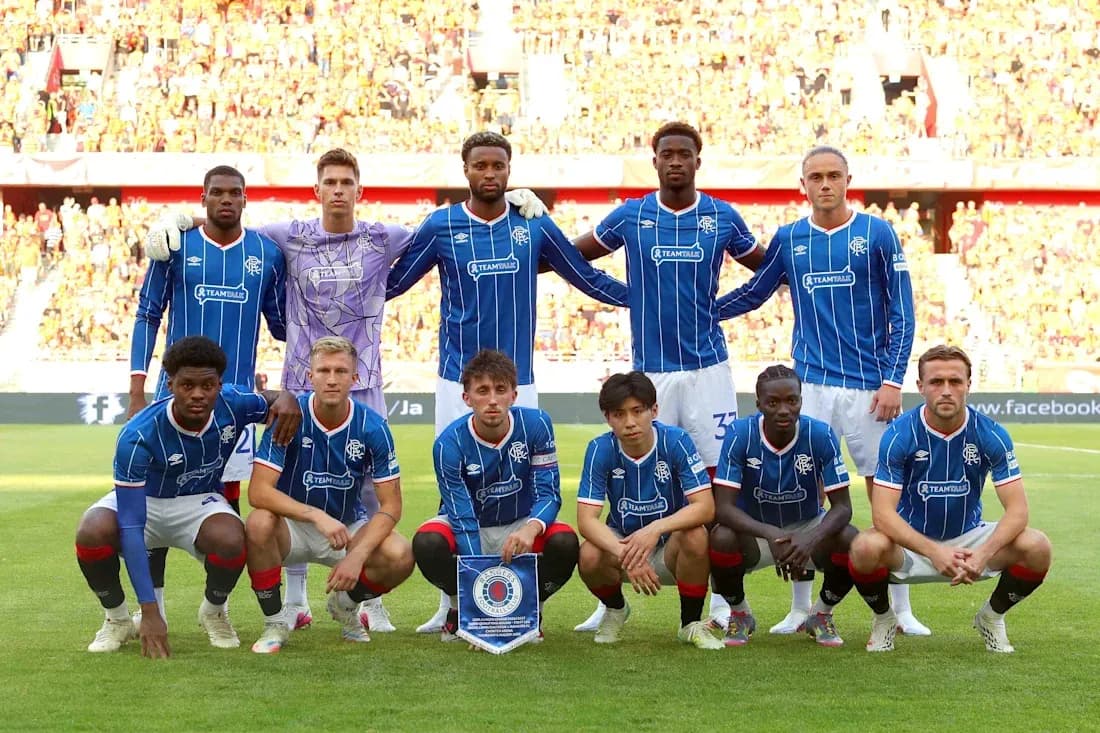
On 13 August 2026, the floodlights of Ibrox Stadium in Glasgow will frame a European night loaded with jeopardy. Rangers return home wounded after a 2-1 defeat in Bialystok, needing a response in this UEFA Europa League 3rd Qualifying Round second leg. Jagiellonia arrive with a narrow lead and the knowledge that one more composed performance could carry them to a major continental scalp on one of Europe’s most intimidating stages.
Season Context
With no full group standings available yet, this tie is being defined by a tiny sample: one match each in this Europa League campaign. For Rangers, that single outing was the 2-1 loss away to Jagiellonia, leaving them with 1 game played, 0 wins, 0 draws and 1 defeat, scoring 1 and conceding 2. The arithmetic is simple: they must overturn that deficit at Ibrox to keep their European season alive.
Jagiellonia’s continental story so far is the mirror image. They have played 1 match, winning it 2-1 at home, with 2 goals scored and 1 conceded. That result gives them the aggregate edge and a psychological platform; they can approach Glasgow knowing that even a draw is enough to progress, and that they have already shown they can trouble Rangers’ back line.
Form & Momentum
Rangers’ recent Europa League form line is stark: L. One match, one defeat, and the numbers underline the fragility so far, with 1 goal scored and 2 conceded across that single outing (1.0 scored and 2.0 conceded per game). It is too small a sample for sweeping judgments, but the early pattern is of a side that can create and score, yet leaves itself exposed when transitions break down.
Jagiellonia, by contrast, arrive with a clean, if equally small, ledger: W. Their only Europa League match this year produced a 2-1 victory, meaning 2.0 goals scored and 1.0 conceded per game. That blend of efficiency in front of goal and relative defensive control gives them a modest but real momentum edge heading into a hostile away leg.
Head-to-Head Patterns
The history between these clubs is as fresh as it gets and entirely defined by the first leg of this tie. On 6 August 2026, at Chorten Arena in Bialystok, Jagiellonia beat Rangers 2-1 in the UEFA Europa League, season 2026 (2-1, UEFA Europa League, season 2026, August 2026). That match, with Jagiellonia as the home side and Rangers away, is the only competitive reference point we have, but it already hints at a matchup in which the Polish side’s attacking structure can unsettle the Scottish defence, while Rangers are still capable of finding a way to score even when second best.
Tactical Preview
Rangers’ statistical profile in this Europa League run is built on that lone away defeat, but it still offers clues. They are listed with a 4-2-3-1 as their used formation, suggesting a double pivot shielding the defence and a trio of advanced midfielders supporting a lone striker. With 1 goal scored and 2 conceded in that setup, the balance has not yet been right: the attacking band has shown enough to create a goal on the road, but the spaces around the full-backs and between the lines have been exploitable (2 goals conceded in 1 match).
The squad list points to how Rangers might adjust. In central defence, figures like B. Godfrey and J. Souttar give them the option of a more aggressive high line or a deeper block, while full-backs such as R. McCrorie and D. Sterling can either pin Jagiellonia back or be targeted behind. In midfield, players like C. Devlin, N. Raskin and M. Diomandé offer energy and ball-winning, crucial if Rangers want to lock Jagiellonia into their own half and prevent counters. Up front, finishers such as L. Shankland, B. Miovski and Youssef Chermiti provide different profiles: a penalty-box poacher, a link-forward and a more mobile runner in behind. Expect Rangers to lean into the 4-2-3-1’s attacking potential at Ibrox, pushing their wide players high and relying on the double pivot to control transitions.
Jagiellonia, by contrast, are profiled with a 4-3-3 in their single Europa League outing, and the numbers back up a proactive, front-foot approach: 2 goals scored and just 1 conceded in that match. The three-man midfield gives them a natural triangle to play through pressure, while the front three can stretch the pitch horizontally and vertically. In Bialystok, that shape allowed them to strike twice while limiting Rangers to a single goal, underlining a capacity to combine attacking ambition with reasonable defensive solidity (2.0 goals for and 1.0 against per game).
Their squad list hints at how they might execute the away game plan. At the back, defenders like Bernardo Vital, Y. Kobayashi and Rodrigo Conceição can build from deep but will also be tested aerially at Ibrox. In midfield, the experience of T. Romanczuk and Jesú s Imaz, alongside legs from players like D. Drachal or Sergio Lozano, can help them manage tempo and press selectively. Up front, options such as N. Prelec, Y. Sylla and K. Szmyt offer pace and direct running for counter-attacks. Jagiellonia’s 4-3-3 is well-suited to an away-leg blueprint: compact without the ball, springing quickly into wide spaces vacated by Rangers’ attacking full-backs.
Statistical Snapshot
- Competition: UEFA Europa League, season 2026 — 13 August 2026.
- Venue: Ibrox Stadium, Glasgow.
- Prediction: Win or draw for Jagiellonia — Double chance : draw or Jagiellonia.
- Win Probabilities: Home 0% / Draw 50% / Away 50%.
- Model: Rangers 33.0 — Jagiellonia 67.0.
Betting Verdict
The market still leans heavily towards a Rangers fightback at Ibrox, with home win odds clustered roughly between 1.53 and 1.60, implying an approximate probability range of around 62–65%. Draw prices around 3.95–4.14 translate to roughly 24–25%, while Jagiellonia’s away win at around 5.80–6.07 implies only about 16–19%. That contrasts sharply with the prediction model, which gives Rangers a 0% win probability and effectively splits the chance between draw and Jagiellonia. Given Jagiellonia’s first-leg victory (2-1 in August 2026) and their stronger early form line (W versus Rangers’ L), the analytical case supports the safer angle of backing Jagiellonia not to lose. In that context, the recommended play aligns with the model: the double chance on draw or Jagiellonia, taking advantage of Rangers’ status as short-priced favourites despite trailing on the pitch and on current momentum.
Related News
Gornik Zabrze vs Ferencvarosi TC: Europa League Second Leg Preview
UEFA Europa League: Red Bull Salzburg vs Pafos Preview

CSKA Sofia vs Maccabi Tel Aviv: UEFA Europa League 3rd Qualifying Round Preview
Beşiktaş vs Hradec Králové: UEFA Europa League Second Leg Preview
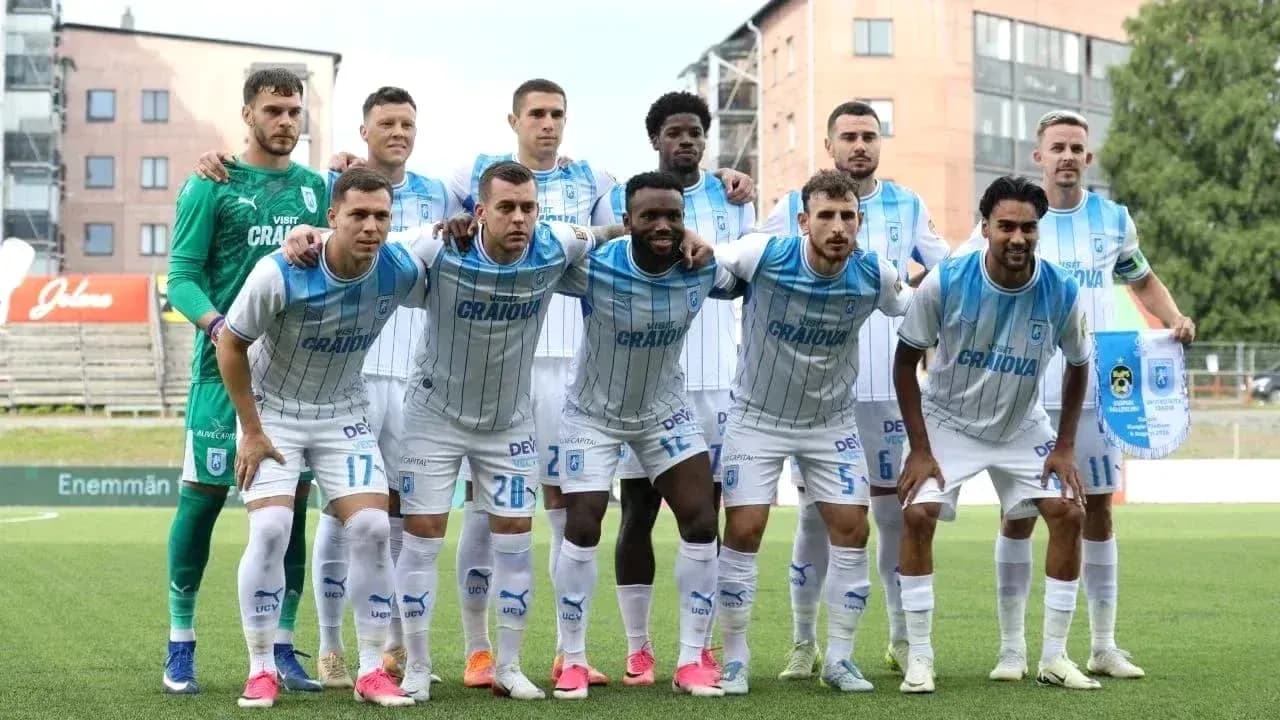
Universitatea Craiova vs KuPS: UEFA Europa League 3rd Qualifying Round Preview
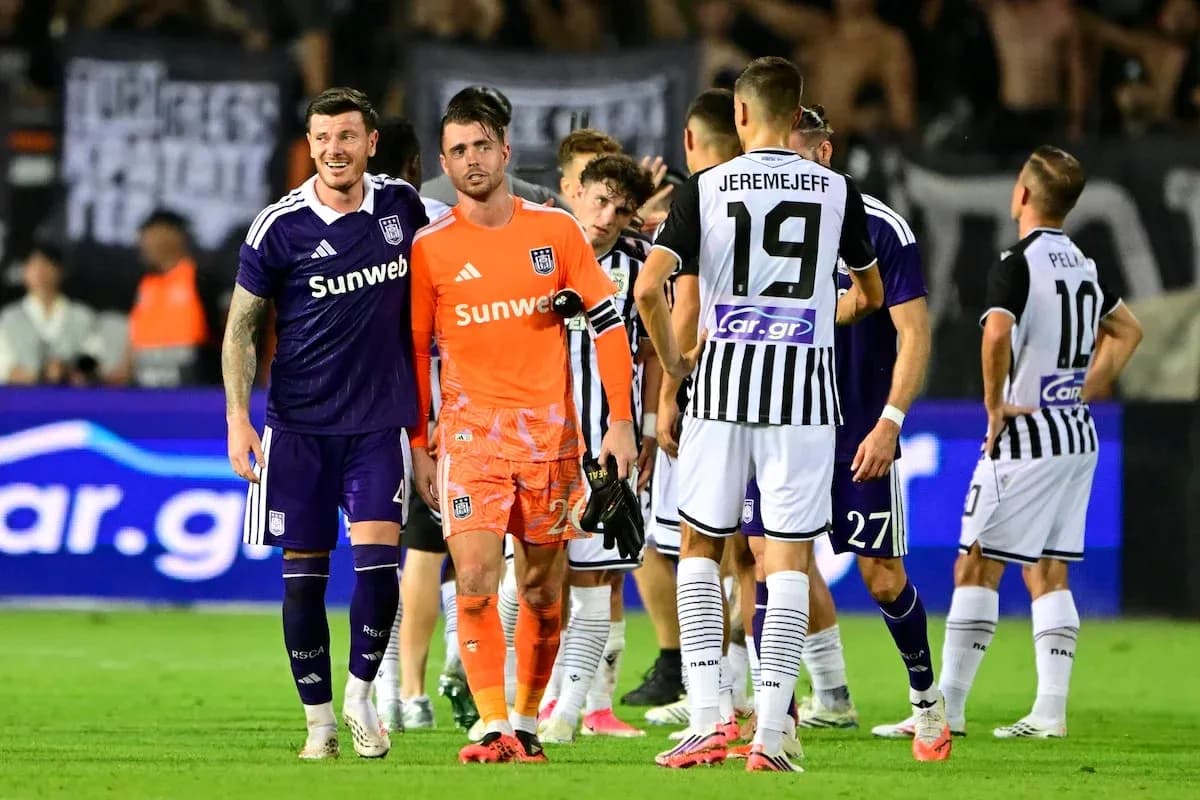
Anderlecht vs PAOK: UEFA Europa League 3rd Qualifying Round Preview