
Real Madrid Faces Right-Back Dilemma After Carvajal's Departure
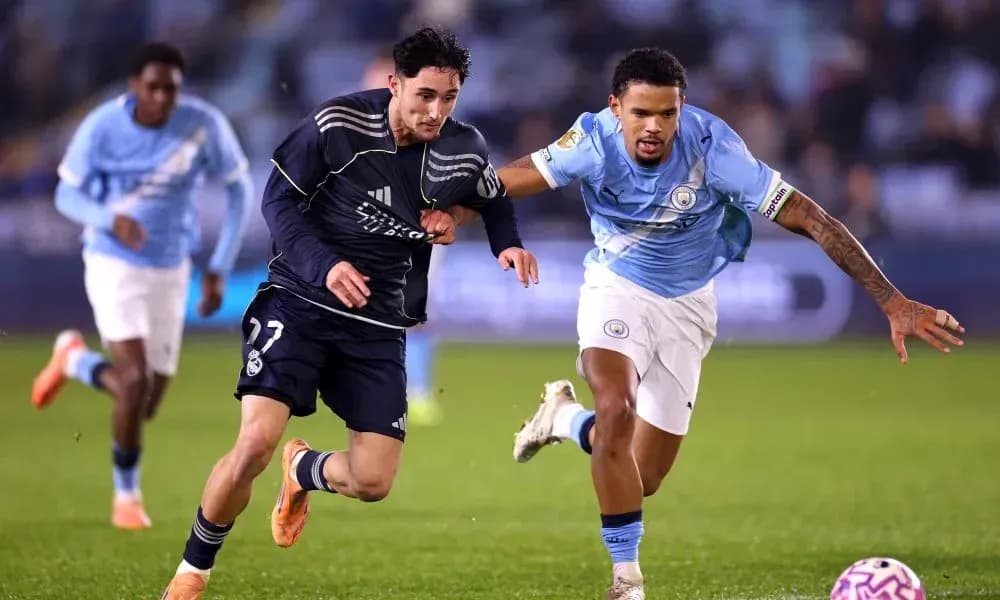
Real Madrid’s right flank is about to lose its constant.
On Saturday, when Dani Carvajal walks off the Bernabéu pitch against Athletic Club, he will be doing it in the Real Madrid shirt for the last time. A decade of snarling tackles, lung-bursting overlaps and quiet leadership is coming to an end on the same touchline he made his own.
His departure strips Carlo Ancelotti of far more than a right-back. Madrid lose a voice in the dressing room, a standard-setter in training, a player who understood what it meant to wear that shirt when the pressure bit hardest.
The position itself, though, cannot wait for sentiment.
A gap on the right – and a fork in the road
Trent Alexander-Arnold is expected to remain the first-choice right-back. The club’s long-term bet is already on the books. But Carvajal’s exit leaves a hole behind him: someone has to cover, compete, and eventually convince.
Big-name solutions exist on paper. Pedro Porro at Tottenham, Diogo Dalot at Manchester United – both admired, both tracked, both effectively out of reach. The finances, the timing, the negotiating terrain: none of it makes a deal look realistic right now.
So the gaze turns inwards, towards Valdebebas, and to two very different stories growing in the same position.
Jesús Fortea and David Jiménez. One is the prodigy Madrid once “broke the rules” to get. The other is the quiet captain who has climbed every rung without fuss.
Between them, they might just hold the answer.
Fortea – the prodigy Madrid stole
Jesús Fortea is 19, 1.75m, and plays like the right flank belongs to him.
Real Madrid tore up a long-standing non-aggression pact with Atlético Madrid to prise him from their academy when he was just 15. You do not risk that kind of political storm for an ordinary full-back. Inside the club, the label arrived quickly: Carvajal’s natural heir.
Reality, as it often does in youth football, refused to follow the script.
Instead of a smooth rise, Fortea found himself stuck with Real Madrid C while others moved up to Castilla. The path that was supposed to be clear turned crowded. When he finally reached Castilla, he struggled to nail down the role that had been virtually reserved for him in theory.
He didn’t sulk. He fought.
Fortea forced his way into the team picture and became a key figure in the Juvenil A side that went on to win the UEFA Youth League. On those European youth nights, his strengths were obvious: speed, skill, and a relentless urge to attack. He drives high, combines well, and treats the flank more like a runway than a corridor.
The caveat is equally clear inside Valdebebas. Defensively, he still has work to do. Positioning, duels, the art of suffering without the ball – those are the areas that will decide whether he can really replace Carvajal, not just in name but in responsibility.
Madrid see him as a major bet for the future. That belief is written into his contract, which runs until 2029. The question is whether that “future” starts next season or is allowed another year to breathe.
Jiménez – the silent captain
On the other side of the academy’s right-back debate stands David Jiménez, the antithesis of the wonderkid narrative.
He arrived at La Fábrica in 2013 from Móstoles URJC, a local boy with Álvaro Arbeloa as his idol. No transfer sagas, no broken pacts, no noise. Just steady progress through every youth category, season after season, until the captain’s armband of Castilla ended up on his arm almost by natural selection.
Inside Valdebebas, they talk about his professionalism first, his attitude second. He is described as a complete team player, the “silent leader” who doesn’t need a headline to leave a mark on a matchday.
On 17 December, under Xabi Alonso in the Copa del Rey against Talavera, Jiménez finally stepped onto the pitch as a Real Madrid first-team player. He has added three more appearances since, including a start against Valencia. Nothing spectacular, nothing viral – just clean, competent football in a shirt that weighs more than most.
The comparisons to Nacho Fernández are inevitable and, in truth, flattering. Like Nacho, Jiménez rarely dazzles but rarely makes a mess of things either. He reads danger early, keeps his positioning, and chooses the simple pass when the risky one would only serve the cameras.
He is 22 now. Old enough to stop being a prospect. Young enough to grow into a role if the club trusts him with it.
Two paths, one decision
This is where Real Madrid find themselves: between the high-ceiling gamble of Fortea and the low-risk reliability of Jiménez.
Promote the prodigy, and you lean into the idea of continuity with a twist – another attacking right-back, raised in-house, given the chance to grow behind Alexander-Arnold while learning the defensive dark arts at the highest level.
Back the captain, and you choose stability. A player who already knows the defensive grind, who can slot in without fuss, who offers what every title-chasing squad quietly needs: someone you can throw into a storm and trust not to sink.
Or the club could ignore both and go back into the market, searching for an external solution in a position that has already been defined for a decade by one of their own.
Carvajal’s farewell will dominate the emotion this weekend. The Bernabéu will rise for a captain, a warrior, a right-back who turned a flank into a legacy.
But once the applause fades, Madrid must answer a harder question: does the next chapter on that touchline belong to a jewel they once stole, a leader they quietly built, or a name that has not yet walked through the gates of Valdebebas?
Related News
Carlos Alcaraz Urges an End to Matches Ending in the Early Hours
Carlos Alcaraz Criticizes Late US Open Finish After 3:30 a.m. Match
Jannik Sinner Set for ATP 500 Return in Beijing with Novak Djokovic Also Competing
Meet Iva Jovic: The American Tennis Prospect Making Waves
Flavio Cobolli Shares Insights on Practice Session with Jannik Sinner Ahead of Comeback
Till vs Romero: Fight Details, Undercard, and Viewing Info for This Weekend