
Real Sociedad vs Valencia: A Season Condensed in 4-3 Chaos
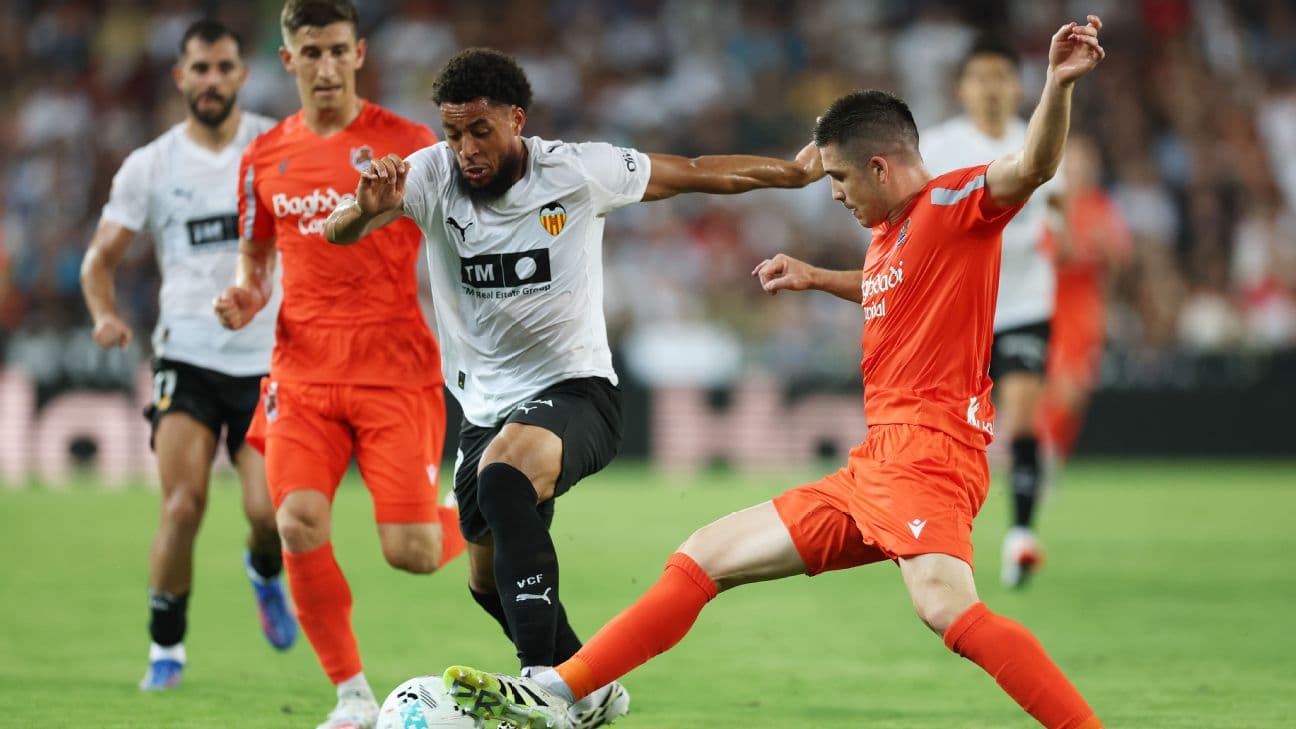
The Reale Arena under early evening light felt less like a stage for a dead‑rubber and more like a tribunal. Real Sociedad and Valencia arrived separated by a single point and one league place, 10th versus 9th, but both carrying seasons that never quite matched their ambitions. Following this result, a 4-3 away win for Valencia in La Liga’s Regular Season - 37, the table tells its own story: Real Sociedad’s overall goal difference sits at -2, the product of 58 goals for and 60 against, while Valencia’s is -11, with 43 scored and 54 conceded. This was a meeting of flawed sides whose strengths and weaknesses were written into the scoreline.
I. The Big Picture – Identity through chaos
Real Sociedad’s season-long profile is paradoxical. Overall they average 1.6 goals for and 1.6 goals against per game, but at home the numbers tilt toward volatility: 1.9 goals scored and 1.6 conceded at the Reale Arena. This is a side that can overwhelm visitors but rarely keeps them quiet, as only 2 home clean sheets in 19 underline. Valencia, by contrast, have lived on a knife-edge on their travels: away they average 1.0 goal for and 1.7 against, yet they have still collected 5 away clean sheets, often either suffocating opponents or collapsing entirely.
Those identities collided in San Sebastian. Real Sociedad’s biggest home defeat this season had already been a 3-4, and Valencia’s worst away day a 6-0; this fixture slotted neatly into that pattern of extremes. The 4-3 away scoreline felt less like an anomaly and more like an inevitable expression of both teams’ season-long DNA.
Tactically, Pellegrino Matarazzo trusted the structure that has defined Real Sociedad’s campaign: a 4-2-3-1, their most-used shape with 13 league appearances. A. Remiro behind a back four of A. Munoz, I. Zubeldia, J. Martin and A. Elustondo gave a familiar base, with B. Turrientes and C. Soler as the double pivot. Ahead of them, the trio of P. Marin, B. Mendez and A. Zakharyan supported lone forward O. Oskarsson.
Carlos Corberan answered with Valencia’s own default identity: 4-4-2, their go-to formation in 23 league matches. S. Dimitrievski anchored a back line of J. Vazquez, E. Comert, C. Tarrega and U. Nunez. The midfield band of four – D. Lopez, G. Rodriguez, F. Ugrinic and Luis Rioja – fed a front two of Javi Guerra and Hugo Duro, a pairing that symbolised Corberan’s desire to hurt Real Sociedad in transition and in the box.
II. Tactical Voids – Suspensions and absences redraw the map
Both coaches were forced to redraw their plans by a heavy absentee list. Real Sociedad were without A. Barrenetxea and D. Ćaleta-Car through yellow-card suspensions, and J. Gorrotxategi, J. Karrikaburu and A. Odriozola through injury or coach’s decision. The absence of Ćaleta-Car, a defender who has blocked 26 shots this season and carries both aerial presence and calm distribution, was particularly significant. His red-card history and aggressive style often set the tone in duels; without him, the centre-back pairing of Zubeldia and J. Martin lacked that specialist blocker against Valencia’s direct play.
On the flanks, missing Barrenetxea stripped Real Sociedad of a natural wide runner, forcing more creative burden onto A. Zakharyan and B. Mendez between the lines and pushing full-backs, especially A. Munoz, to be more aggressive in advancing.
Valencia’s injury list was even more structural. L. Beltran, J. Copete, M. Diakhaby, D. Foulquier, José Gayà and Renzo Saravia all missed out. The absence of Gayà – a full-back who combines 1 goal, 2 assists and strong defensive numbers with leadership – reshaped the left side. J. Vazquez had to step into that corridor, altering Valencia’s usual balance between overlapping threat and defensive security. Diakhaby’s absence reduced Corberan’s options for a physically dominant back line, leaving Comert and Tarrega to manage Real Sociedad’s aerial and set-piece threat without their most imposing enforcer.
Disciplinary profiles also hovered over the contest. Real Sociedad’s season card map shows a pronounced late-game spike: 22.35% of their yellow cards arrive between 76-90 minutes, with another 21.18% between 46-60. Valencia mirror that trend, with 22.86% of their yellows in the final quarter of normal time and 20.00% just after the break. This is why the match’s frantic second half, littered with tactical fouls and stretched spaces, felt pre-scripted by the data.
III. Key Matchups – Hunter vs Shield, Engine Room vs Enforcer
The headline duel was always going to be “Hunter vs Shield”: Valencia’s Hugo Duro against a Real Sociedad defence conceding 1.6 goals per game both home and overall. Duro’s league tally of 10 goals from 35 appearances, built off 29 shots (14 on target), made him the clearest poacher on the pitch. His penalty record is imperfect – 1 scored, 1 missed – a reminder that he thrives more in open play scrambles than from the spot.
Up against a home side whose biggest home defeat had already come at 3-4, Duro’s movement between Zubeldia and J. Martin was always likely to generate chaos. Without Ćaleta-Car’s 26 blocked shots and 114 duels won to anchor the line, Real Sociedad’s “shield” felt thinner, and the scoreline confirmed it.
On the other side, the attacking weight of Real Sociedad’s season resides in Mikel Oyarzabal, their 15-goal, 4-assist talisman. Even starting from the bench, his presence in the squad shaped Valencia’s defensive calculations. Oyarzabal’s 7 penalties scored from 7 attempts this season underline a ruthlessness that Real Sociedad otherwise lack; any spell he spent on the pitch forced Comert and Tarrega to defend the box with absolute discipline.
The “Engine Room” battle ran through Valencia’s midfield axis of G. Rodriguez, F. Ugrinic and Javi Guerra against Real Sociedad’s double pivot of B. Turrientes and C. Soler. Guerra, with 6 assists and 3 goals, plus 971 passes at 81% accuracy, is Corberan’s hybrid of creator and presser. His 28 tackles, 6 blocks and 23 interceptions show he is not just a passer but an enforcer in the press. Up against him, Turrientes and Soler had to juggle progression with protection; every time they lost the ball in the inside channels, Valencia’s 4-4-2 sprang into direct vertical runs from Duro and Guerra.
On the flanks, Luis Rioja’s duel with A. Elustondo and P. Marin carried its own narrative. Rioja’s 6 assists and 37 key passes, underpinned by 62 dribble attempts with 36 successes, made him the primary wide “needle” in Valencia’s attack. Real Sociedad’s right side, deprived of the usual rotation options due to absences, struggled to consistently double up on him, and Valencia’s first-half productivity down that corridor reflected that imbalance.
Defensively, Real Sociedad’s most combative profile sat on the bench in J. Aramburu. Across the season he has committed 67 fouls, drawn 43, and collected 11 yellow cards – a walking edge who, when introduced, inevitably drags the game into more duels and more risk. His presence in the squad gave Matarazzo a late-game card to play if the match tilted into a physical battle, but it also carried the danger of feeding into that late yellow-card surge (22.35% between 76-90 minutes).
IV. Statistical Prognosis – xG logic in a seven-goal drama
Even without explicit xG figures, the season’s numbers sketch a clear expected landscape. Heading into this game, Real Sociedad’s home profile – 1.9 goals for, 1.6 against – and Valencia’s away pattern – 1.0 for, 1.7 against – pointed toward a contest with a combined expected scoring band somewhere around three to four goals. Real Sociedad’s mere 3 clean sheets overall versus Valencia’s 9 suggested that the visitors were more capable of delivering a low-event away performance, but their away goals-against average of 1.7 made that unlikely against a home side as front-foot as Matarazzo’s.
Instead, the match exploded beyond those baselines into a 4-3 away win that still felt consistent with the underlying tendencies: Real Sociedad once again reached the 3-goal home ceiling that defines their biggest wins and heaviest defeats, while Valencia, whose worst away result is a 6-0 collapse, rode the volatility instead of succumbing to it.
Following this result, the tactical verdict is stark. Real Sociedad’s attacking structure, powered by Oyarzabal’s 15-goal season and supported by creative profiles like B. Mendez and A. Zakharyan, is already at a level befitting a side chasing Europe. Their issue is defensive stability: 60 goals conceded overall, a home average of 1.6 against, and a reliance on high-risk defenders like Ćaleta-Car and Aramburu whose aggression is both asset and liability.
Valencia, meanwhile, have fashioned a rugged, opportunistic identity. With Hugo Duro as a double-digit scorer, Javi Guerra and Luis Rioja combining for 12 assists, and a defensive block that, even ravaged by injuries, can still deliver clean sheets on their travels, they possess a platform to grow. But an overall goal difference of -11 and 54 goals conceded underline how thin their margin remains.
In the end, this 4-3 felt like a season condensed: Real Sociedad thrilling and fragile, Valencia flawed but ruthless. The numbers had warned us of chaos; the Reale Arena simply provided the stage.
Related News

Barcelona Dominates Sevilla in Tactical Showdown
Atletico Madrid vs Real Madrid: A Tactical Derby Analysis

La Liga Officials Admit Refereeing Mistake in Madrid Derby Over Lee Kang-in's Tackle on Federico Valverde
Elche vs Real Madrid: A Clash of Opposites in La Liga

Atletico Madrid Dominates Osasuna 4-0 in La Liga Showdown

Barcelona's Dominance: 7-2 Triumph Over Racing Santander