
The Rise of Football's New Age: Messi and Player Power
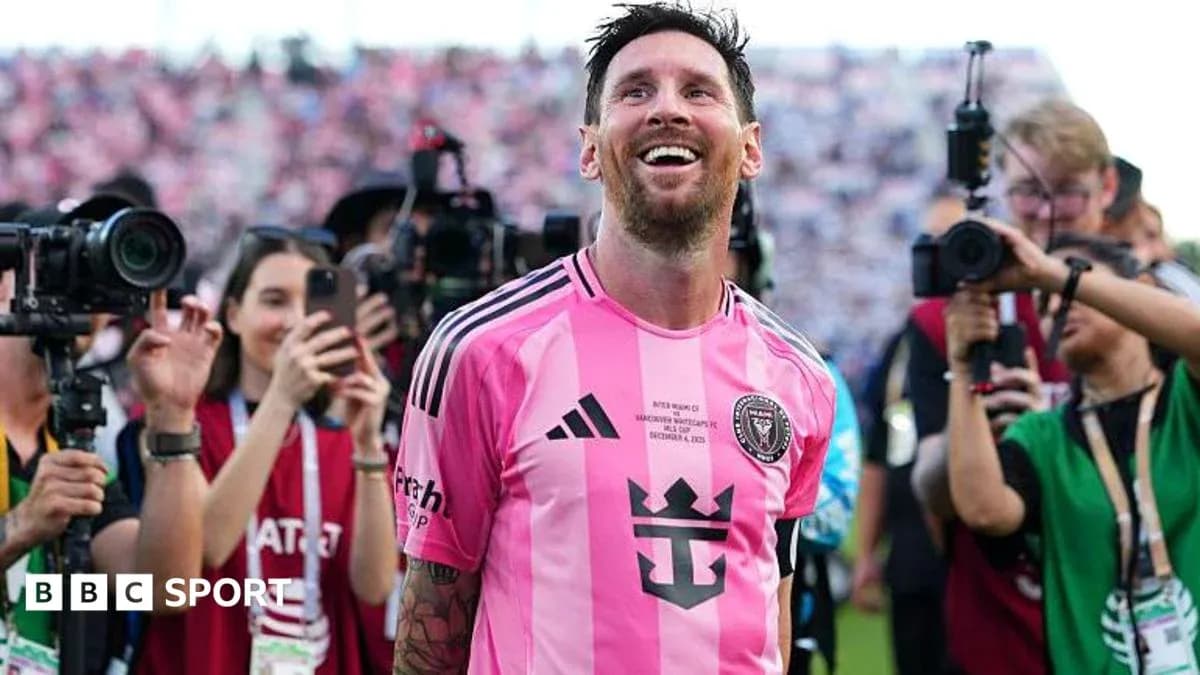
The golden ticket to football’s new age arrived in flamingo pink.
Lionel Messi stepping into Inter Miami colours was never just a transfer. It was a global marketing event. Shirts vanished from club shops, ticket prices rocketed, timelines turned neon.
But the real story wasn’t Miami.
Walk through city centres in the UK or Europe and you’ll see it: that same pink shirt on people who have never set foot in Florida, never mind DRV PNK Stadium.
"It's quite a normal thing now. But it is the player who has done the job," says sports brand strategist James Kirkham.
The badge is incidental. The name on the back is everything.
Messi v Ronaldo, Barcelona v Real Madrid, MLS v Saudi Pro League – that old binary still fuels arguments in playgrounds and on social media. Yet the modern phenomenon runs deeper than one rivalry. The sport is being reshaped by fans who follow players, not clubs.
From consoles to cult heroes
This didn’t happen overnight. It grew out of bedrooms lit by TV screens and gaming consoles.
Kirkham points to the impact of titles like EA Sports FC and Football Manager. Young fans spend years controlling virtual versions of their heroes, picking squads, swapping leagues, building Ultimate Teams. They learn the names, the attributes, the backstories. They become fluent in football far beyond their local patch.
He remembers an early wave around Zlatan Ibrahimovic, when support for a single player cut across traditional club lines. That wave is now a tide.
Kirkham argues today’s younger supporters are "less rigid or tribal than they used to be" and carry a "more encyclopaedic knowledge" of the sport. YouTube compilations, TikTok clips, trading cards – they all pull in the same direction.
"Fans play as these players in games," he says. "So there is a really thin line between virtual and real life."
If you’ve bought a striker for your Ultimate Team, watched their goals on loop, and then pull on their shirt – Atletico Madrid, Chelsea, Dortmund, whoever – the club becomes almost interchangeable. The player is the constant.
The rise of the ‘second club’
Football used to be simple. You inherited a team. Family, geography, that one fateful first match – something locked you in. You could change your job, your partner, your hairstyle. Not your club.
That still holds. But it’s no longer the full story.
Research titled ‘The Rise of the Second Club Fan’, published before this summer’s World Cup, found that 80% of global supporters now also follow a second team.
Matthew Kyle, head of insights at Engage and MTM and the report’s author, stresses this isn’t about ditching childhood loyalties. It’s about adding layers.
Fans in regions without a strong domestic league might look abroad and think: who else can I follow? A club whose story resonates. A style of play that appeals. A kit that catches the eye.
The study found the most powerful entry point isn’t history or trophies. It’s players.
"For this audience, they are the club," the report states. "These fans track individuals, not institutions."
A star moves. A chunk of the fanbase moves with them.
Griezmann, LeBron and the power of the narrative
Football’s relationship with player power on and off the pitch flicked into sharp focus in the summer of 2018.
Days before France began their World Cup-winning run, Antoine Griezmann teased ‘The Decision’ – a half-hour documentary on Spanish TV to reveal his future. Barcelona were confident. So were most viewers, especially after Gerard Pique, whose company produced the show, fired out a popcorn emoji on social media.
Instead, in the final scene, Griezmann stood in front of Atletico Madrid’s Metropolitano and announced he was staying. Two endings had reportedly been filmed to preserve secrecy. Only one saw the light.
The forward, a self-confessed NBA obsessive, had taken his cue from LeBron James’ similarly titled special in 2010, when the basketball star chose Miami Heat on live television. Griezmann wanted to own his story. The reaction was mixed. He and Pique took flak.
Kyle believes that kind of "self-commercialisation" would land very differently now if the protagonist were Erling Haaland or Kylian Mbappe. Griezmann, in many ways, was just early.
Today, leading players run their own YouTube channels, pumping out behind-the-scenes footage and curated glimpses into their lives. Haaland does it. Ronaldo does it. Jude Bellingham does it. So does Lionesses midfielder Ella Toone.
"Players are becoming their own distribution levers," says Kyle. "With some in particular taking a driving seat in terms of 'how I project myself onto the world' and building their own channels and audience."
The result? Players hold the narrative. Fans can follow their journeys with unprecedented intimacy.
More than endorsements
This new era demands more than a boot deal and a billboard.
"Players are far more culturally symbolic than they used to be," says Kirkham. They still front campaigns, but the relationship has changed. The smartest ones understand that supporters want to see values as well as volleys.
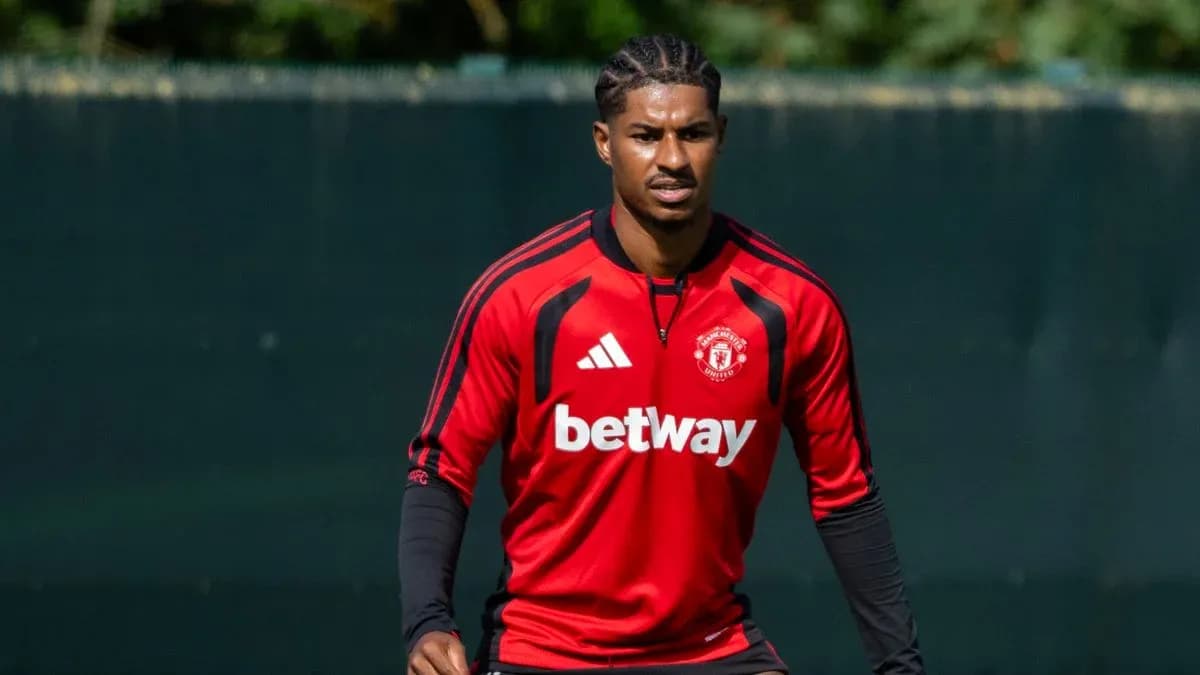
Marcus Rashford’s work during Covid, which helped trigger changes in government policy on free school meals, is a stark example. His impact spilled beyond football, and young fans noticed.
"They look for stuff that is aligned to them, who they are, their causes and where they're from," Kirkham says. That alignment builds a deeper bond. It gives fans a reason to stay with a player through club changes, injury spells, even dips in form.
And there is no bigger stage to showcase that than a World Cup.
World Cup: a global shop window
With the tournament in North America this summer, the World Cup doubled as a launchpad for personal brands.
Cape Verde goalkeeper Vozinha turned from relative unknown to cult figure almost overnight. His heroics against Spain lit up the tournament; his Instagram exploded from around 50,000 followers to nearly 30 million.
The established stars cashed in as well. Spain and Barcelona prodigy Lamine Yamal saw his numbers surge. So did Bellingham. Even Ronaldo, already the most-followed athlete on Instagram, added a healthy chunk.
The biggest winner, though, was Haaland.
Norway’s forward turned the tournament into a global coming-out party for his personality as much as his football. Fans piled into his Instagram, TikTok and Snapchat accounts.
Kyle lays out the numbers: Haaland gained more than 51 million followers across his social platforms between 1 July and the end of the tournament. In the first six months of the year, he’d added 11 million.
The goals helped. So did Norway’s run to the last eight and the now-famous rowing celebration with their fans. But the real magic lay in the details.
Haaland’s image oscillated between superstar and everyman: cowboy hats, joking with team-mates, helping the kit man, trading comments with fans online. Viral clips of his "bromance" with Bellingham took off. A Russian model who looked uncannily like him added to the meme storm.
"Haaland was a massive winner from the World Cup," says Kyle. The numbers back him up.
When the hero moves on
For clubs, this all poses a blunt question: if fans arrived for the player, do they vanish when the player walks out the door?
The ‘national hero’ effect offers both opportunity and risk.
Trabzonspor are riding that wave right now after signing Egypt star Mohamed Salah at the end of his glittering nine-year spell with Liverpool. Tottenham experienced it for a decade with Son Heung-min, whose presence helped turn Spurs into South Korea’s most-followed foreign club, overtaking Manchester United, before the forward left for LAFC last summer.
"Son is a great example," says Kyle. "He wasn't a global superstar when he arrived but he was a huge player from South Korea, and over the course of his time with them Spurs became the most-supported foreign club there."
When Son departed, Tottenham didn’t see a mass exodus from their Korean social channels. They did, though, see a small bump in followers for his new club.
That pattern is instructive. Some fans stay with the shirt; others travel with the player.
Kyle argues the challenge for clubs is to keep those new eyes engaged.
"The easy answer is to say global superstars will do it on their own and these clubs without them will struggle," he says. "But every club has characters."
Every player leaves eventually. Even the legend who retires in your colours. The trick is to treat them as an asset while they’re there and build a broader cast around them.
Supporters, especially the newer, more fluid ones, want more than 90 minutes of football. They want access.
Behind-the-scenes clips. Dressing-room jokes. Training-ground mic’d-up sessions. "A day in the life" features. Content that makes you stop scrolling even if you don’t care about the crest.
Welcome to Wrexham showed how powerful that can be when done well.
Following the owner
Which leads to a new twist: what if the star isn’t on the pitch at all?
"Ryan Reynolds and Rob Mac would have been a huge draw for people who don't know football," says Kyle of Wrexham’s Hollywood owners. For some, the attraction is simple curiosity. For others in the traditional football world, the hook is scepticism: what do these two actually know about the game?
Either way, people are watching. And that’s the point.
Football now plays out like a rolling drama. Seasons feel like TV series – arcs, cliffhangers, characters rising and falling. Transfer sagas, social media spats, documentaries, ownership battles. The ball is just one part of the script.
And the audience? Increasingly, they’re not pledging allegiance to a club for life. They’re tuning in for the stars, wherever they go, whoever they play for, whatever colour the shirt – flamingo pink or otherwise.
Related News
Fenway Sports Group Agrees Minority Sale at Liverpool
Arteta Unfazed by Contract Talks Ahead of City Clash
Chelsea vs Real Sociedad: Alonso's Stamford Bridge Debut
Marcus Rashford's Return: A Pre-Season Clash with AC Milan
Barcelona Pursue Rodri and Álvarez as Transfer Deadline Approaches
Tottenham's Attack Transformation: Gakpo, Savinho, and Balogun