
Roberto De Zerbi's Transformation of Tottenham: From Tears to Triumph
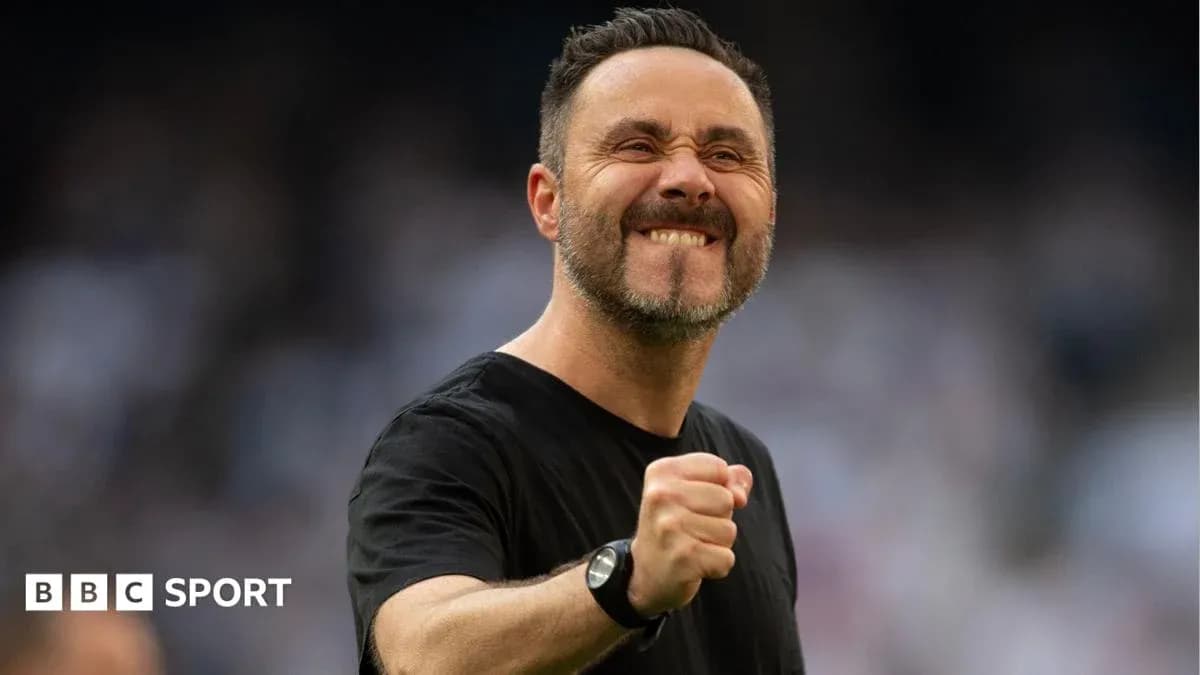
There was a point last season when Roberto De Zerbi looked around the Tottenham dressing room and wondered aloud: “Did we pass away?”
Players were flat on their backs. Some were crying. A 1-0 defeat at Sunderland, his first game in charge, had left the squad broken and the club staring down the barrel. It was game one of a seven-match scramble just to stay in the Premier League.
They survived on the final day. Barely. But four months on from that grim afternoon at the Stadium of Light, Tottenham look and feel like a different club.
From tears in Sunderland to coffees in Sydney
In Sydney, on a private floor of the team hotel a short walk from the Harbour Bridge and Opera House, the mood could not be more different. Laughter cuts through the corridor. Players lounge with flat whites made by the squad’s own barista. Competitive table tennis matches rattle on in the background.
Around £237m of new signings are drifting in and out of those games, folding into a squad that has gone from fearing the drop to talking, quietly but firmly, about trophies again.
Club-record arrival Sandro Tonali has already pulled on the shirt on this pre-season tour. So have Mateus Fernandes, Jan Paul van Hecke, Andrew Robertson and Martin Dubravka. Marcos Senesi, fresh from a World Cup final with Argentina, skipped Australia and New Zealand but has now joined training at Hotspur Way.
“I deserve to want the top players, because now Tottenham deserves to build up a top team,” De Zerbi says. It no longer sounds like a wish. It sounds like a plan.
Two plans, one survival, and a promise
Tottenham had prepared for both futures. One transfer blueprint for relegation, one for survival. De Zerbi insists he would have stayed to manage in the Championship, but he never had to test that promise. Plan A is in full swing.
At the height of the crisis in April, he sat down with his squad over and over again.
“At the beginning of my time in April I had one million individual meetings,” he jokes. The message was blunt. If you want out, say so. But first, help keep the club up.
“They told me if they didn't want to be here. I said: ‘Yes, help me to stay up, and then I help you to leave. If you don't help me to stay up, you stay underwater with me’.”
Some could yet go. Club captain Cristian Romero and goalkeeper Guglielmo Vicario remain at risk of being lured away. De Zerbi talks of “respecting the will” of players, but within a structure that is being rebuilt around him.
A new regime, a shark in the market
Tottenham’s transformation has not been limited to the pitch. The past 12 months have brought sweeping changes in the boardroom, driven by fan anger and the Lewis Family Trust’s decision to reset the hierarchy.
New chief executive Vinai Venkatesham now fronts the organisation. Technical director Johan Lange, the lone survivor from the previous regime, leads recruitment alongside him. They are backed by director of football operations Rafi Moersen and performance director Dan Lewindon, both hired from City Football Group. Lewindon’s brief is simple: fix the injury record.
De Zerbi, though, has no interest in being a distant head coach. He wants his fingerprints on everything, especially transfers.
“In the transfer market, when I want one player, I become like a shark,” he says. “No chance to say no.”
That ruthless streak has delivered two landmark deals: £85m for Fernandes from West Ham and £100m for Tonali from Newcastle. Tottenham beat Manchester United and Manchester City to those midfielders, and snatched Van Hecke despite interest from Chelsea.
“I love working in the transfer market. It's not a pressure, it's one of the nicest parts in my work, in my job,” he explains. Part of the appeal is the responsibility. If he calls a player himself, he feels he can build something deeper from day one.
With Fernandes, that connection started at home. De Zerbi spoke with the midfielder’s parents and told his father he would be a “second dad” in England.
Transfers at this level are a tangle of timing, money and ego. Insiders say Tottenham knew they had to move fast and hit hard: strong fees, competitive wages, and De Zerbi personally selling the project.
He did it with Van Hecke in typically direct fashion. After the defender assisted Georginio Rutter’s 95th-minute equaliser for Brighton in a 2-2 draw in April – a goal that threatened Spurs’ survival – De Zerbi sent him a message.
“You wanted to push down Tottenham for Brighton when you made the assist to Rutter, now you have to come to me, you have no choice,” he told him.
With Tonali, the approach was just as targeted. The day after Tottenham secured safety with a final-day win over Everton, De Zerbi texted the midfielder. Soon after, he was in Tonali’s home in Brescia for a decisive conversation. Club staff then drove the deal over the line.
And he is not done. De Zerbi is teasing one last attacking “bomba” this window, with two forwards expected, including a move for Manchester City’s Savinho.
Spending big, thinking long
The money is eye-catching. The Lewis family injected £100m in June. But De Zerbi rejects any suggestion of recklessness. He argues that Tottenham are only doing what Chelsea, Arsenal and Liverpool have done in recent years: paying heavily to catch up.
They have also brought cash in. Luka Vuskovic’s £45m move to Brighton represents a significant sale. The futures of Lucas Bergvall and Djed Spence remain uncertain.
“We assessed the request of Vuskovic [to join Brighton], with Vinai, with Johan together, because I consider Tottenham's money my money,” De Zerbi says. “It's like the owner is my father, I think you don't want to ask your father to lose money.
“Like all the big clubs, we have to sell a player at as big of a price as possible and we have to bring a player with a small price, we are starting for a plan of five seasons because we are building.”
That discipline has a hard edge. Tottenham walked away from a permanent deal for Joao Palhinha from Bayern Munich, not because De Zerbi doubted his quality, but because the financial package did not fit the model.
Killing the negativity
The rebuild has not only been financial or tactical. It has been emotional.
After that opening defeat at Sunderland, it was not just the players who sagged. Staff at the training ground felt the gloom too.
“The day after I organised a meeting without players and I said, ‘The first one I see say something negative, I send you home immediately’,” De Zerbi recalls.
He wants to rip out the fatalism that had seeped into a club that finished 17th in back-to-back seasons, the first of those under Ange Postecoglou, softened only by a Europa League triumph.
Now, he talks about changing “behaviour, attitude and spirit” as much as formations and pressing triggers. He took his players out for “one big dinner in Mayfair, with alcohol” at the end of last season, a deliberate attempt to loosen the tension and remind them they were more than a relegation story.
He still believes they could have stayed up earlier, that late results did not reflect performances. But he also knows what that near-miss did to their heads.
“I think they considered themselves in that moment worse than the people thought,” he admits. The healing is ongoing. “I hope next time they organise [dinner and drinks] for themselves.”
The coach who once walked into a dressing room full of tears now talks about love, friendship and care as the foundations of a “top, top, top” team.
From Sunderland to Sydney, the journey has been brutal, fast and expensive. The question now is not whether Tottenham can survive. It is whether De Zerbi’s shark instincts and softer touch can drag them back to where he insists they belong.
Related News
Carlos Alcaraz Urges an End to Matches Ending in the Early Hours
Carlos Alcaraz Criticizes Late US Open Finish After 3:30 a.m. Match
Jannik Sinner Set for ATP 500 Return in Beijing with Novak Djokovic Also Competing
Meet Iva Jovic: The American Tennis Prospect Making Waves
Flavio Cobolli Shares Insights on Practice Session with Jannik Sinner Ahead of Comeback
Till vs Romero: Fight Details, Undercard, and Viewing Info for This Weekend