
Rodri's Transfer to Barcelona: A Game-Changer for Rivalries
Rodri to Barcelona already feels bigger than a headline. It is the kind of move that bends storylines, sharpens rivalries and forces Europe’s heavyweights to look in the mirror.
According to MUNDO DEPORTIVO, the Spain midfielder seriously weighed offers from both Barcelona and Real Madrid before committing to the Camp Nou. His explanation of that choice cuts through the usual summer noise and shows how the game’s elite now judge the biggest decision of their careers.
This was not a romantic return to Spain. It was not a late twist driven by ego or impulse. Rodri spoke of a turbulent break, of two giants trying to pull him away from Manchester City, and of the need to study the “full picture” before he moved.
In the end, he went where he felt the sporting plan was clearest. The project that stirred him a little more. The place he believes can stretch him further and still deliver trophies.
In today’s market, that matters.
Barcelona win the argument, not just the race
Transfers at this level are often reduced to salary figures, shirt sales and social media clips. Rodri’s reasoning sounded refreshingly old‑fashioned: football first.
Inside Barcelona, Deco and Hansi Flick did the heavy lifting. They mapped out a role, a pathway, a dressing room hierarchy. They convinced him that his prime years would be best spent anchoring their midfield, not Madrid’s.
These are the margins that decide the very top deals. Clarity of plan. The right conversations. A manager who can look a player in the eye and explain, in detail, how and where he will be used.
Barcelona did not simply pounce on an opportunity. They persuaded. They sold a vision. They beat Real Madrid in a straight sporting argument, and that is a powerful message in itself.
Respect for Madrid, but a different road
Rodri did not dress up the difficulty of saying no to Real Madrid. He stressed that turning them down was anything but easy and highlighted how impeccably they treated him throughout the process.
That is the language of someone who understands the scale of the institution he has refused. Saying no to Madrid still carries weight. Rodri did not pretend otherwise.
His comments about José Mourinho, who tried to lure him to the Bernabéu, added nuance. Rodri said:
"Bueno, no creo que sea lo suyo desvelar una conversación privada, pero evidentemente expresó sus ganas de que fuera y de lo que podía aportar al equipo. El trato fue muy bueno. Cuando tomé la decisión también le llamé para agradecer el interés y el trato. Me parece un grandísimo entrenador, ya lo ha demostrado allá donde ha ido en sus grandes etapas y el Real Madrid va a ser un duro rival para esta Liga."
It was a composed, thoughtful answer. Diplomatic without being cold. He acknowledged the effort, chose his path, and then made sure to close the loop with a phone call.
In a sport that often chews up courtesy, he chose gratitude.
Drawn to Barça, not running from City
One line will resonate loudly in Catalonia. Rodri did not frame this as an escape from Manchester City, or as a move driven by frustration elsewhere. He cast it as a positive pull towards Barcelona.
That distinction gives the transfer a different weight. Barcelona did not just inherit the fallout of another club’s problem. They actively won over a player at the very top of his game.
He also refused to be dragged into the swirl of off‑field theories around Madrid’s interest. No gossip. No side‑swipes. He kept the focus on football, on Spain, on his own career path.
It sounded like a player who has lived for years at the summit and learned to keep his distance from the circus.
His observation that in England football is largely kept to football added another layer. It hinted at a midfielder forged in the Premier League’s intensity, now looking for a different kind of pressure, a different stage, a different type of scrutiny.
La Liga’s balance tilts
If Rodri hits his usual level, this move can tilt the season. Barcelona have secured control, intelligence and bite at the base of midfield. They have done it while edging out Real Madrid for one of the most coveted operators in the game.
That is bigger than one signing. It speaks to pull. To planning. To the enduring force of the Barcelona badge when the pitch is laid out clearly enough.
For Madrid, there will be annoyance but not humiliation. They went hard, they argued their case, they behaved properly. They were not snubbed out of hand; they were beaten in a tight call.
For Barcelona, the satisfaction runs deeper. They have landed a player who knew exactly what the alternative looked like and still chose them.
Manchester City left with a vacuum
From a Manchester City perspective, the emotions collide.
There is pride, first of all. Pride in seeing Rodri spoken about as the midfielder both Barcelona and Real Madrid wanted above all. That tells you everything about his status in the modern game.
He became the calm in the storm. The organiser in possession. The metronome who made a great team feel balanced and secure.
But there is also that familiar irritation when Europe’s traditional giants circle a City player and behave as though he naturally belongs in their ecosystem. This version of Rodri was built in Manchester. He sharpened his positional sense in the Premier League, carried enormous responsibility and evolved into one of the sport’s most influential midfielders under relentless pressure.
If he has gone, City fans will likely wish him well, while quietly wondering how anyone replaces that authority.
The Barcelona versus Real Madrid drama will feel distant to many at the Etihad. Their questions are brutally simple. Who controls games for City now? Who dictates tempo when the match starts to fray? Who restores order when chaos breaks out?
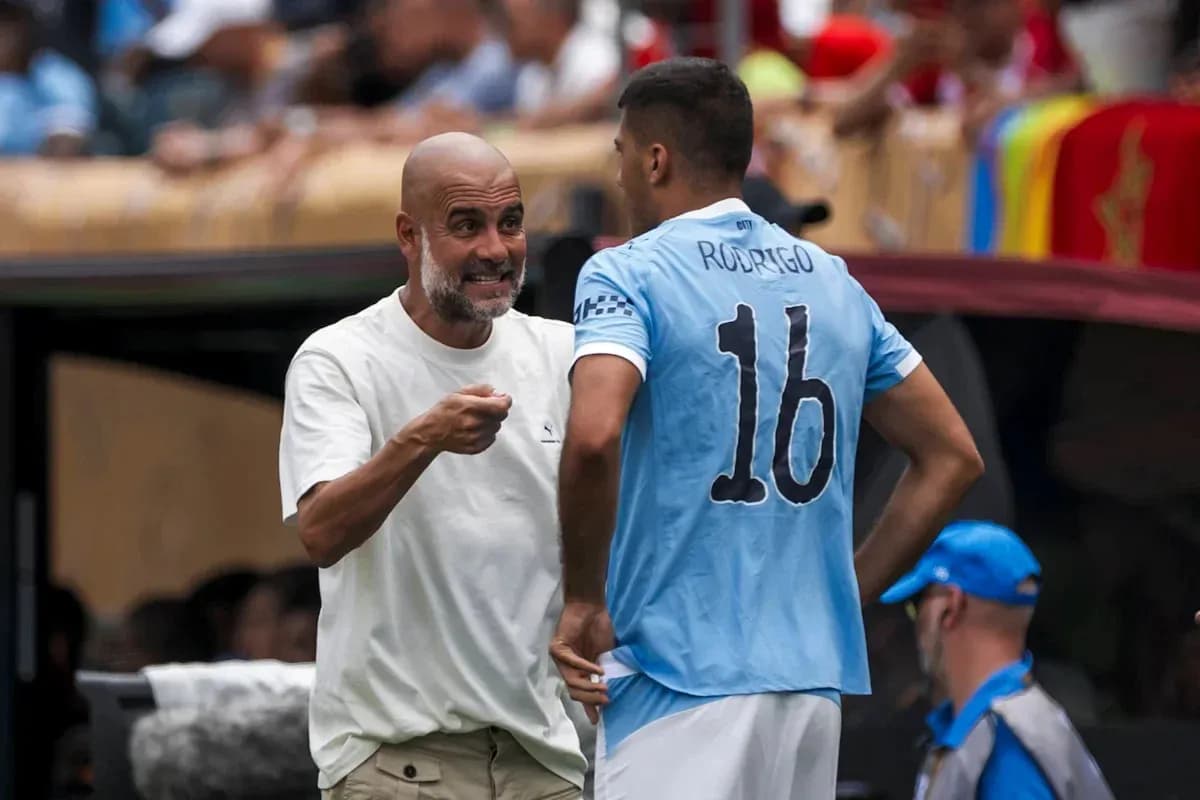
That is Rodri’s true legacy in Manchester. He leaves a hole in the middle of the pitch, and all the glamour of Spain will not fill it for Pep Guardiola.
Related News
Cork Football Team of the Week: Stars Shine in Group Stages
JJ Gabriel: Manchester United's Rising Star Faces Transfer Turmoil
Rodri's Transfer to Barcelona: A Game-Changer for Rivalries
Moratti's €500m Bid for Messi That Was Never Considered
Glentoran Target Jim Magilton as New Manager
Leeds United Challenge Goal Decision for Jayden Bogle