
Sacramento Republic Tops Colorado Springs in Tight USL Championship Match
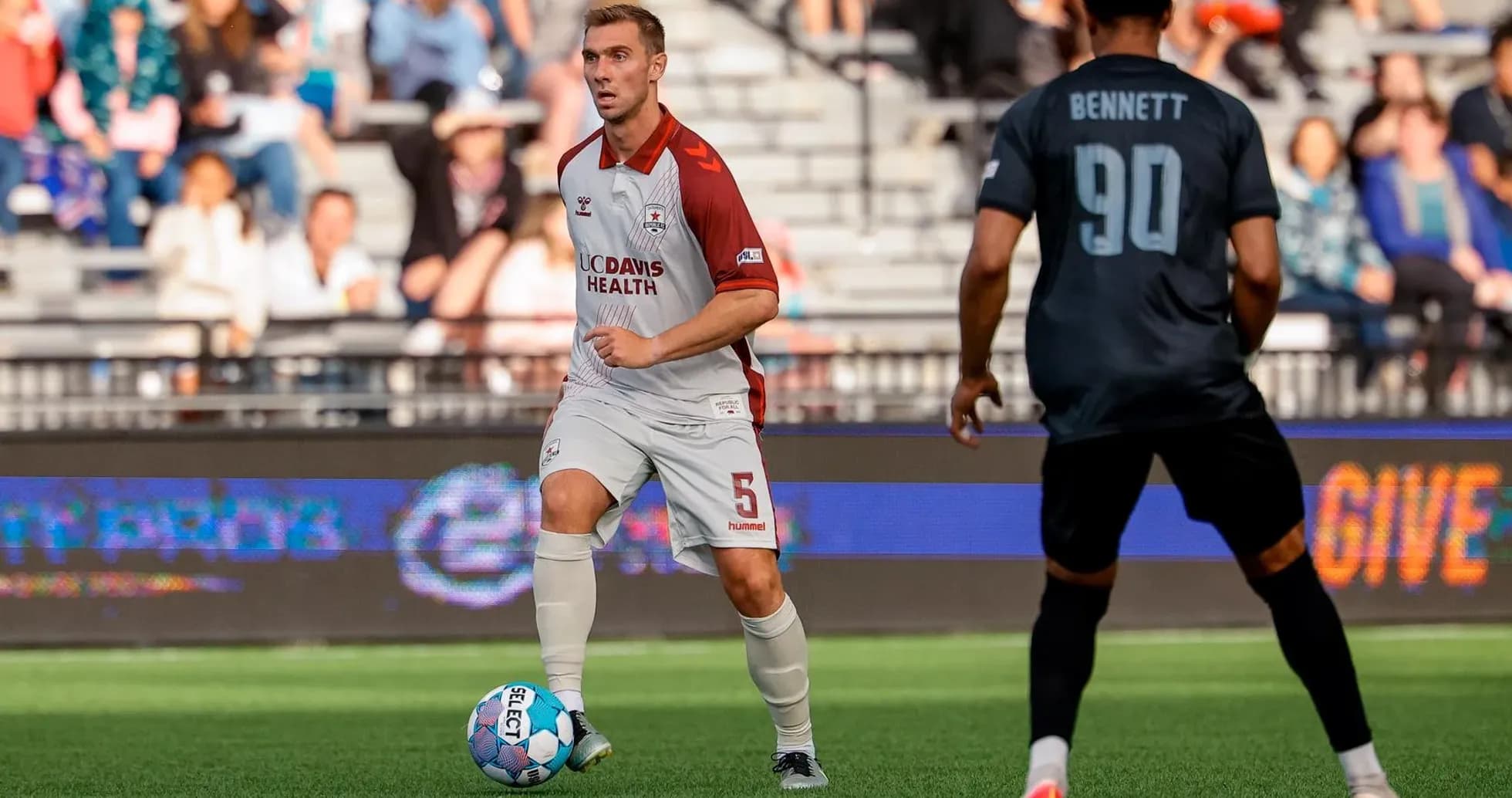
Under the lights at Weidner Field, a tight USL Championship Group Stage contest tilted the Western balance. Colorado Springs, 11th in the section heading into this game, fell 0–1 at home to a Sacramento Republic side that arrived in 5th, already tracking toward the promotion playoff picture. The margins were as fine as the mountain air: a single goal separating two teams whose seasonal profiles had promised a clash of styles rather than a shootout.
Colorado Springs came into the night as one of the league’s more volatile sides. Overall they had scored 18 and conceded 18, their goal difference sitting at 0 through 11 matches. At home they had been more dangerous, with 10 goals scored and 7 conceded across 5 fixtures, an average of 2.0 goals for and 1.4 against. Sacramento, by contrast, had built their position on control and defensive stability: 13 goals for and 11 against overall, with a total average of just 1.2 goals scored and 1.0 conceded per match. On their travels they were cautious, scoring 4 and conceding 6 in 6 away games, an away average of 0.7 goals for and 1.0 against.
Alan McCann’s selection for Colorado Springs reflected that attacking tilt. C. Shutler anchored the side, with a defensive unit shaped around P. Burner, T. Maples, M. Mahoney and A. Rocha. In front of them, S. Williams and S. Masereka formed the central spine, while T. Magee and B. Creek offered running lanes and width. The creative and finishing burden fell heavily on Y. Hanya and K. Bennett, tasked with turning the home side’s strong attacking averages into something tangible against one of the league’s stingier defenses.
Neill Collins answered with a Sacramento XI built for control and late-game punishment. D. Vitiello started in goal, shielded by a back line of J. Gurr, J. Timmer, L. Desmond and M. Benitez. In midfield, D. Crisostomo and M. Kaye provided the engine, with T. Wolff and M. Rodriguez linking play and threading lines into the half-spaces. Further forward, D. Wanner and K. Edwards gave Sacramento the capacity to break quickly and exploit transitions.
The tactical voids in this contest were less about absences and more about structural habits. Colorado Springs, heading into this game, had a clear offensive rhythm: their goals were spread but peaked between 61–75 minutes (25.00%) and 76–90 minutes (18.75%). They were a side that grew into matches, with 3 goals between 46–60 minutes and another 3 in the final quarter-hour of normal time. Yet that same period was their undoing defensively. They had conceded 5 of their 18 total goals in the 61–75 minute window (25.00%) and a striking 7 in the 76–90 range (35.00%). The last quarter of games was both their surge and their collapse.
Sacramento’s defensive map cut directly across that pattern. Heading into this game, they were most vulnerable early in halves: 45.45% of their goals against arrived between 16–30 minutes, and 36.36% between 31–45. After the break, they tightened significantly, conceding only 1 goal in each of the 61–75 and 76–90 minute bands (9.09% apiece). That meant Colorado’s natural late push was always likely to run into Sacramento’s most compact phase.
Discipline and emotional control were another quiet subplot. Colorado Springs had collected yellow cards fairly evenly across matches, with a slight rise between 46–60 minutes (20.00%). Sacramento, however, often rode the line: 29.03% of their yellows came between 31–45 minutes and 25.81% between 76–90. Collins’ side plays on the edge when games tighten, but they had yet to see a red card this season, suggesting a group that knows how far to push.
Within that framework, the key matchups became clear. The “Hunter vs Shield” battle was Colorado’s attacking unit—embodied by the forward presence of Bennett and the movement of Hanya—against a Sacramento defense that had allowed just 11 goals overall and only 6 on their travels. With Colorado Springs averaging 2.0 goals at home and Sacramento conceding 1.0 away, the question was whether the home side’s tempo and penalty-box threat (they had scored all 5 of their total penalties this season, with 100.00% conversion and no misses) could crack a back line that had already produced 4 total clean sheets, 2 of them on the road.
In the “Engine Room,” S. Williams and S. Masereka were charged with disrupting the measured distribution of Crisostomo and Kaye. Sacramento’s attack thrives on building pressure into the final third of matches—38.46% of their goals had come between 76–90 minutes, with another 23.08% between 61–75. That late-game surge intersected almost cruelly with Colorado Springs’ late defensive frailty, making the final quarter-hour the most dangerous territory for the hosts.
Following this result, the 0–1 scoreline felt like a statistical inevitability wrapped in a narrow narrative. Sacramento leaned into their identity: low-scoring, structurally sound, and ruthless when the game’s tempo suited them. Colorado Springs, whose overall averages of 1.6 goals for and 1.6 against had signaled volatility, again found themselves on the wrong side of fine margins.
In xG terms, the pre-match profiles pointed to a cagey contest tilted slightly toward Sacramento’s defensive solidity and late punch. Colorado’s home firepower always gave them a path, but the intersection of Sacramento’s late scoring peak and Colorado’s late defensive weakness made a narrow away win or a low-scoring draw the most likely outcomes. The 0–1 final at Weidner Field simply confirmed what the numbers had been whispering: Sacramento Republic are built to suffer, then strike, and Colorado Springs are still learning how to survive the moments when matches are decided.
Related News
San Antonio's Tactical Edge Secures 2–1 Victory Over Colorado Springs

Charleston Battery Dominates Loudoun United 4–1 in Statement Win

Miami FC vs Orange County SC: USL Championship Clash Highlights
Colorado Springs vs San Antonio: USL Championship Group Stage Preview

Charleston Battery vs Loudoun United: Match Preview
Miami FC vs Orange County SC Match Preview