
Savinho's Record Move: A Statement for City Football Group
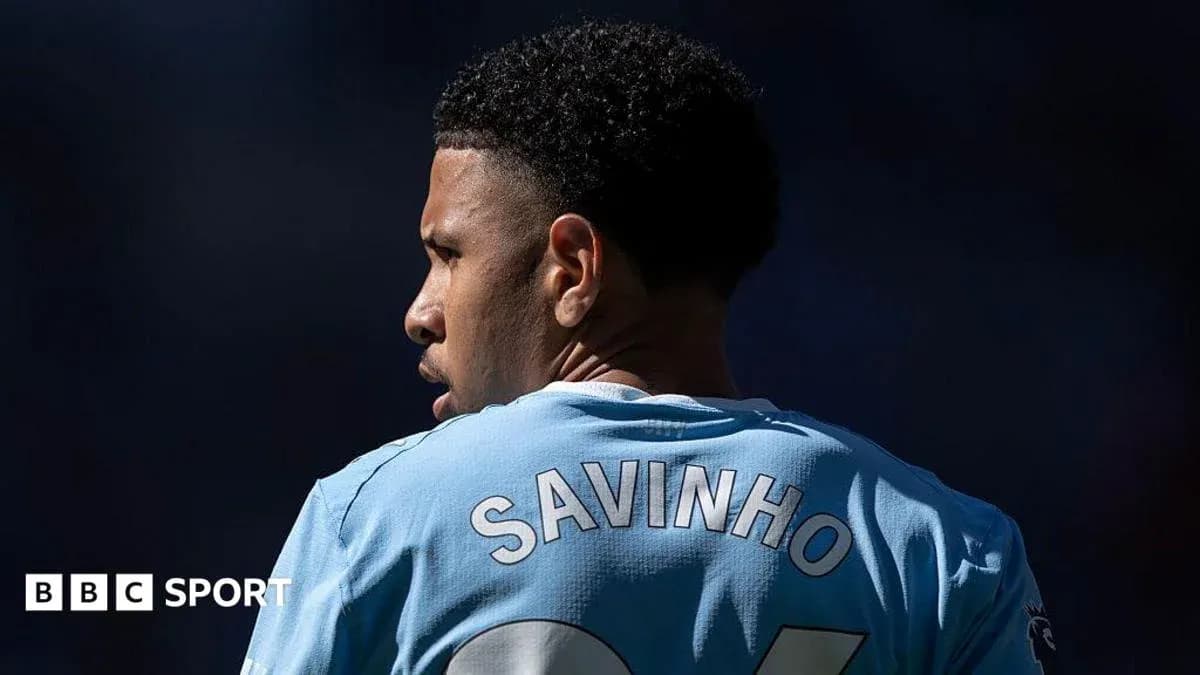
For the City Football Group, Savinho’s move to Tottenham is more than another big sale. It is a statement.
A £75m fee, with a further £10m in add-ons, makes the Brazilian winger the most lucrative outgoing transfer in Manchester City’s history. In a model built on talent spotting, development and trading across a global network of clubs, this is the deal that crystallises the entire project in one player.
From Troyes ghost to Girona star
Savinho’s journey through CFG has been anything but straightforward.
He arrived in Europe in 2022 as a record signing for Troyes from Atletico Mineiro, a headline arrival for the French club but one who never kicked a ball for them. At 18, he was immediately pushed out on loan, first to PSV for the 2022-23 season, then to Girona for 2023-24.
It was in Spain that the story truly caught fire.
At Girona, Savinho became one of La Liga’s breakout players. He featured in 37 league games, driving a remarkable campaign that ended with Girona qualifying for the Champions League for the first time in their history. Nine goals, eight assists, constant menace from wide areas – enough to earn him a place in the La Liga team of the year and to turn him from a prospect into a serious asset.
City moved quickly. In 2024 they bought him from Troyes for £30.8m, a fee that raised eyebrows. Was that the genuine market rate after his Girona explosion, or an internal valuation shaped by CFG’s own ecosystem? The question lingered. The numbers now make the answer feel almost academic.
Manchester stint: modest returns, massive profit
On the pitch in England, Savinho did not tear up the Premier League.
Across two seasons at City he scored just twice in the league, though he did lay on 12 assists. In his first campaign under Pep Guardiola he made 48 appearances in all competitions and delivered 16 goal contributions, with eight Premier League assists – more than any of his team-mates that year.
Impressive? Yes. Transformative? Not quite.
Financially, though, he has been golden. A player brought into the CFG system as a teenager, moved between clubs in the network, then sold for a potential £85m at 22. Even allowing for the internal transfer from Troyes to City, the profit sits close to £70m if all Tottenham’s bonuses are triggered.
“It’s a success story for the group,” said Brian Marwood, CFG’s managing director of global football, speaking to BBC Sport. He framed the strategy clearly: the aim is to push players towards the pinnacle of the group – Manchester City – while accepting that some will become “good assets” along the way. Savinho, he argued, has been both.
Girona wanted one more year – City and Spurs had other ideas
Girona did not want to let go easily.
“Our intention from the moment that we reached the Champions League was to try to get him to stay for another year,” said Quique Carcel, the club’s director of football.
For a time, that felt possible. City weighed up two options: integrate Savinho fully into Guardiola’s squad, or let him continue as Girona’s spearhead in the Champions League, gaining another year of top-level minutes in a familiar environment.
Carcel described a genuine debate inside City. Another season in Catalonia was “a very good option”. Then Pep Guardiola and Txiki Begiristain signalled they saw Savinho as ready for City’s first team. Once that interest became clear, Carcel admitted, the player “didn’t have any doubts”.
He stepped into Guardiola’s squad. A year later, Tottenham stepped in with a bid that turned him from project to record sale.
Tottenham’s gamble, CFG’s vindication
Not everyone is convinced Spurs have struck value.
There are voices around the game who insist Tottenham have overpaid for a winger with just two Premier League goals to his name. Those doubts will not go away until Savinho answers them on the pitch in north London.
Inside CFG, though, this is a resounding win. A 22-year-old, signed at 18 from South America, polished in the group’s ecosystem, showcased in La Liga, then sold for a sum that reshapes the balance sheet. In a football economy where player trading now underpins entire business models, deals like this are gold.
CFG’s network now stretches to 12 clubs worldwide. The Savinho story is the clearest example yet of how that web can be used to move a player, build his value and, ultimately, cash in.
City’s conveyor belt: when selling becomes an art
Savinho’s sale sits alongside another trend at Manchester City: the club’s growing expertise at selling young talent.
Over the past five years, City have banked more than £250m from offloading players developed in their academy or polished within their system. Morgan Rogers, Douglas Luiz, Cole Palmer, Liam Delap and Oscar Bobb are just a handful of those who have gone on to play for rival Premier League clubs.
Some of those exits now look like under-valuations. Rogers left for Middlesbrough in February 2024 for an initial £8m; by the summer of 2025, Chelsea were paying £117m for him. Palmer was sold to Chelsea for £40m in 2023 and would command a far higher fee now.
That is the risk baked into City’s approach. They will not get every call right. Some players will explode after they leave. Some will fade. Marwood is candid about the difficulty of judging teenagers with limited data and wildly different backgrounds.
“One of the hardest bits about signing young players is that you don’t know an awful lot about them,” he said. The ones who make it, he argued, adapt quickly, work relentlessly and keep pushing. He pointed to Oleksandr Zinchenko, Taty Castellanos and Jack Harrison as examples of players who have carved out strong careers after entering the group young.
Not every story becomes a Savinho-style jackpot. That is the nature of the recruitment game.
The next wave already forming
Even as Savinho packs for London, City and CFG are already staring three and four years down the line.
Inside the club, there is real excitement around Ryan McAidoo, the 18-year-old who has already made his senior debut. Japan’s Shin Miidera, a 16-year-old attacker at partner club Yokohama F. Marinos, is being tracked closely. So is American midfielder Cavan Sullivan, just 16 and currently with Philadelphia Union, but already lined up to join City when he turns 18.
Vitor Reiss, who spent last season on loan at Girona from City, is another tipped to make the jump.
“In an ideal world you would love for them to stay with you from the beginning right through to the very end,” Marwood admitted. Reality looks different. Players move. Markets shift. The challenge, as he put it, is simple and relentless: “OK – Savinho’s gone – but where is the next one?”
That question drives everything. CFG want a “conveyor belt of talent”, powered by their network of clubs, each one a possible stepping stone to Manchester or a launchpad to a lucrative sale.
Savinho has just shown the model at its most profitable. The real test now is whether City and CFG can keep finding the next version – before someone else does.
Related News
Barcelona's Pursuit of Julian Alvarez Intensifies Amid Arsenal Interest
Barcelona's Financial Recovery: From Chaos to Stability

Liverpool’s Next £100m Gamble: The Case for Sangare
Liverpool Summer Clear-Out: Chiesa Linked to Inter Milan
Real Madrid Edges Espanyol in Stoppage Time
Trent Alexander-Arnold Reflects on Diogo Jota's Legacy at Anfield