
Scott McTominay's Transformation at Napoli: From Manchester United to Star Player
Scott McTominay left Old Trafford for £26 million with a suitcase full of doubts trailing behind him. A good soldier, they said. A squad man. Useful, but never truly indispensable after 255 appearances for Manchester United.
Naples has torn up that script.
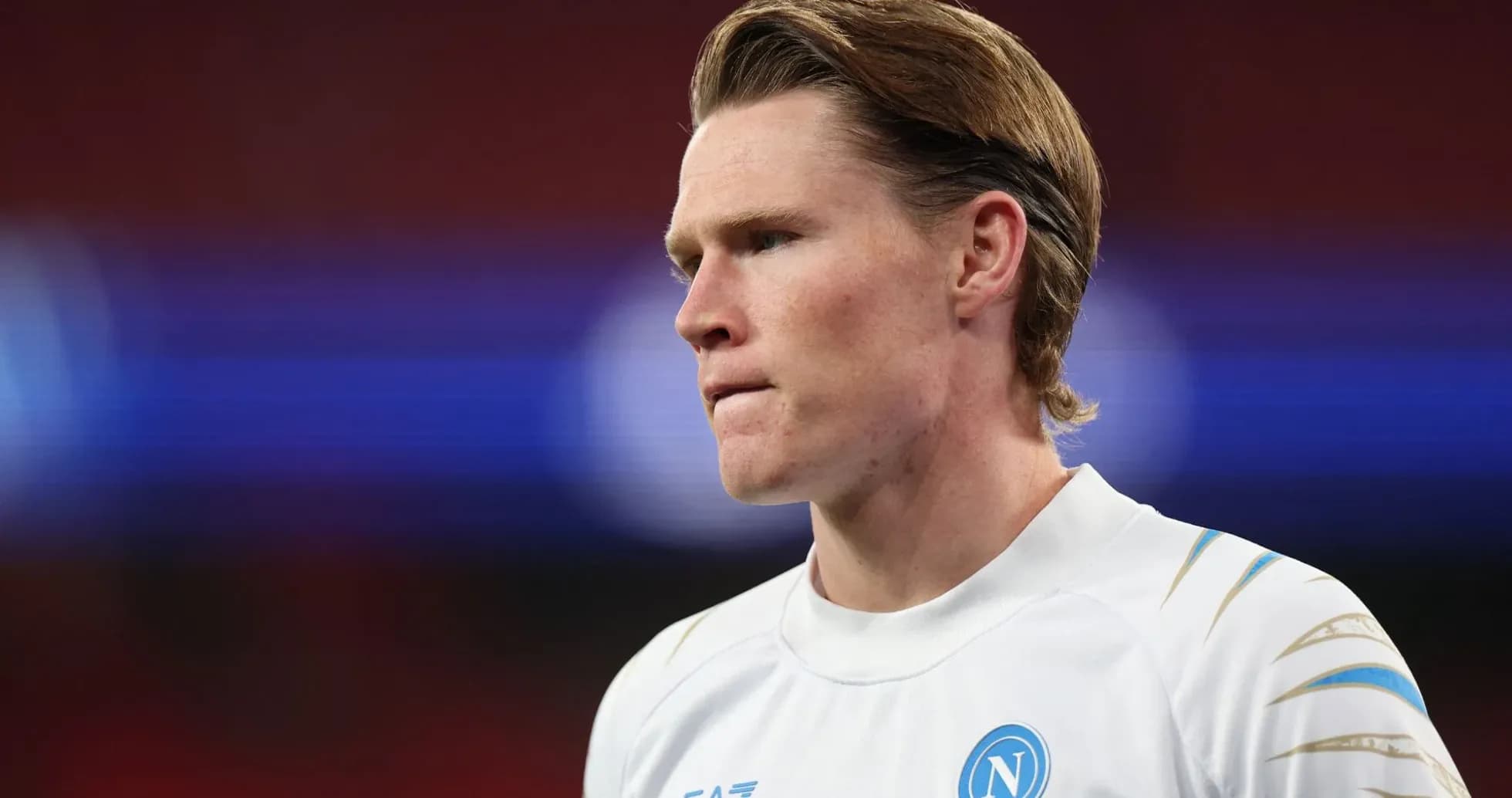
At Stadio Diego Armando Maradona, the shackles have gone. The deep-lying, holding role that muted his game in Manchester has been replaced by something far more dangerous: McTominay as a marauding No.10. He has responded with 27 goals across two seasons, driving Napoli to the title, collecting a division MVP award and forcing his way into Ballon d’Or conversations. The player once seen as a water-carrier has become a headline act.
United, predictably, are taking heat for letting a home-grown product walk away just as he was about to bloom. The academy graduate they never fully trusted as a starter is now a symbol of what might have been. Talk of a move away from Naples has swirled across recent windows, yet so has word of a new deal running through to 2030. McTominay’s future is no longer a question of whether he belongs at the top level. It’s about where he chooses to show it.
“Winning mentality” that England will covet
For former Scotland defender Colin Hendry, the answer might eventually lie back in British football. Speaking to GOAL in association with Estafa.info, he made it clear that Premier League clubs will be watching.
“Seeing what he's done for Napoli a couple of years back, such a massive influence on them and what they achieved, then there's going to be somebody in England probably thinking, ‘you know what, we wouldn't mind bringing that here because he has got that winning mentality’,” Hendry said.
He stressed he was not accusing the traditional elite of lacking that edge, but underlined how rare it is to find. “And I'm not saying that the top six, top eight clubs don't have a winning mentality, but over the years, it’s not easy to find.”
For Scotland, that mentality was supposed to carry into the World Cup. McTominay had been central to their long-awaited return to the biggest stage, firing the Scots to a first appearance since 1998. His stunning overhead kick against Denmark in a crucial qualifier felt like a turning point for a generation.
World Cup frustration after long-awaited return
McTominay arrived in North America billed as one of Scotland’s key men. He left as part of a squad that fell flat in the group stage, another campaign ending early and abruptly.
“So Scott, he was going to be a big player for us in the World Cup and the World Cup didn't work I don't think for him as it didn’t for a lot of Scottish players,” Hendry admitted.
He did not spare the wider team either. “I was disappointed with Scotland in the World Cup, if I'm being honest. Then again, I suppose a lot of people would say that we were disappointing in 1998.”
The parallels were hard to ignore. Back then, Hendry was on the pitch as Scotland’s hopes were crushed. This time, he watched a familiar pattern unfold from afar.
The opening defeat to Haiti cut deep. “I think everybody was completely disappointed after 1-0 against Haiti. The initial game really set us up - I mean, really, really set us up,” he said. The tone was set, and not in the way the Tartan Army had dreamed of during those long years of absence.
Against Morocco, Scotland were stunned again, conceding within 70 seconds. Oddly, Hendry felt that blow jolted them into life.
“In a strange fashion as well, us going down 1-0 within 70 seconds against Morocco actually worked in our favour a little bit because they had their noses in front and we had to then react. The good thing is that they didn't score a second or a third goal, but we had to actually react to that and had a practically whole game to do that.”
The margins, as ever, were fine. Hendry pointed to one big moment that could have changed everything.
“Could we have had a penalty on John McGinn? I think so. I think generally if that's a free-kick outside the box, which it would have been given as a free-kick outside the box, it's obviously a penalty if it's in the box and it wasn't given.”
It never came. Nor did the late surge Scotland needed.
“But I think on the whole, we were disappointing,” Hendry concluded. “But then again, as I said, people going back to 1998, it was disappointing in the end because we ended up getting gubbed by Morocco in the final game, which was a disappointment as well.”
Tartan Army writes its own story
On the pitch, frustration. Off it, something else entirely.
Hendry lit up when he spoke about the supporters who turned North America into a travelling carnival of dark blue. “The one shining light about the World Cup in 2026 was the Tartan Army. They've now got history in America that's totally untouched.”
He has seen it close up. “I've even seen some of the fans that are local to me, North East Tartan Army from Peterhead, they're back out in Boston in October - they're going back, they've got the boat and everything organised, it’s remarkable.”
The players left with regrets. The fans left with stories, songs and new routes mapped across the Atlantic.
Somewhere between those two realities sits McTominay: a man transformed in Naples, a national-team figure still chasing the tournament performance to match his club status.
He has already escaped the role United cast for him. The next question is whether his peak years unfold under the Neapolitan sun, or under the glare of Premier League floodlights once again.
Related News
Driouech's Rangers Move Falls Apart—PSV Faces Fourth Transfer Blow
Toby Alderweireld Backs Vincent Kompany for FIFA President

Arsenal Pursues Jarell Quansah to Strengthen Defence
Scott McTominay's Transformation at Napoli: From Manchester United to Star Player
Barcelona Pursues Rodri Transfer with 48-Hour Deadline

Fernando Diniz's Frustration Over Memphis Depay Transfer Collapse