
Slovan Bratislava Secures 2-0 Victory Over Mjallby AIF
Slovan Bratislava’s 2-0 win over Mjallby AIF at Tehelne Pole Stadion was built on clear structural superiority rather than volume of chances. In a UEFA Champions League 3rd Qualifying Round tie that finished level in possession at 50–50, Yaya Toure’s 4-1-4-1 imposed territorial and positional control, while Karl Aksum’s 3-4-3 never fully converted its wing structure into sustained pressure. The shot profile – 4 shots on goal for Slovan versus 2 for Mjallby – underlined a game where the hosts created the cleaner looks and protected their own box more effectively, turning a balanced share of the ball into a decisive scoreboard edge.
Tactical Overview
Tactically, Slovan’s 4-1-4-1 hinged on the single pivot P. Pokorny screening in front of a back four of S. Cruz, S. Markovic, K. Bajric and C. Blackman. With no blocked shots recorded for either side and Slovan limited to 4 shots on goal and 7 off target, the pattern suggests a controlled but selective attacking approach: rather than flooding the box, the hosts focused on well-timed incursions, especially down the right. Cruz’s involvement in both goals, each time as provider, reflects how the right-back was given license to overlap beyond the nominal wide midfielder line, using the security of Pokorny’s holding role to step high and deliver from advanced zones.
Ahead of Pokorny, the four-man band of M. Kianga, A. Mustafic, R. Ibrahim and S. Camara worked to pin Mjallby’s wide midfielders and stretch their back three horizontally. The first key adjustment came immediately after the break at 46', when Toure introduced T. Barseghyan (IN) for M. Kianga (OUT). This shifted Slovan’s right side from a more direct, forward-running profile to a technically sharper, ball-to-feet presence. The change paid off almost instantly: at 47', S. Camara finished a move assisted by S. Cruz to make it 1-0. The timing indicates Slovan targeted Mjallby’s structural vulnerability in defensive transition right after half-time, with Cruz exploiting the channels outside the wide centre-back.
Mjallby’s Approach
Mjallby’s 3-4-3, with R. Wallinder in goal behind a back three of T. Pettersson, L. Svanberg and A. Iqbal, aimed to gain width through the midfield line of V. Granath, J. Gustavsson, V. Gustafson and I. Hoffmann. However, with only 2 shots on goal and 4 off target, their front three of J. Kjaer, J. Bergstrom and A. Samuelsen rarely received the ball in positions to threaten between Slovan’s lines. The equal share of possession but lower shot output indicates that much of Mjallby’s ball circulation occurred in safer zones, in front of Slovan’s compact block, rather than breaking through it.
Defensive Strategies
Defensively, Slovan accepted a higher foul count (15 fouls to Mjallby’s 9) as the cost of aggressive counter-pressing and tactical disruption. The yellow cards to Rahim Ibrahim at 44' for “Foul” and to Alen Mustafić at 62' for “Foul” underline a willingness from the central midfielders to halt transitions when Mjallby tried to spring their front three. S. Camara’s booking at 58' for “Simulation” is the only disciplinary moment not rooted in defensive work, but it also reflects Slovan’s attempts to keep Mjallby pinned back and draw contact in advanced areas.
On the Mjallby side, the two bookings – Tom Pettersson at 43' for “Foul” and Villiam Granath at 50' for “Foul” – map onto their difficulty in handling Slovan’s wide overloads and half-space runs. Pettersson, operating on the left of the back three, was repeatedly exposed by Cruz’s forward surges and Camara’s movements inside; his caution before half-time constrained his aggression for the remainder of the match. Granath’s card shortly after the opening goal hints at Mjallby’s struggle to reset their pressing structure once they were forced to chase the game.
Substitutions and Tactical Adjustments
Substitutions were a central tactical lever. For Slovan, the double change at 59' – A. Yirajang (IN) for M. Kukharevych (OUT) and C. Martinez (IN) for R. Ibrahim (OUT) – refreshed the attacking line and added vertical running. Yirajang’s later goal at 78', again assisted by S. Cruz, to make it 2-0, shows how the hosts maintained their right-sided pattern throughout: full-back overlap, wide combination, then a late-arriving runner attacking the box. The 76' switch, with D. Matsuoka (IN) for A. Mustafic (OUT), rebalanced midfield energy and protected the lead, while the 83' introduction of L. Hofstadter (IN) for S. Camara (OUT) closed the game with fresher legs in the pressing line.
Mjallby’s bench moves were more reactive than transformative. At 56', A. Youssef (IN) for I. Hoffmann (OUT) and T. Miettinen (IN) for L. Svanberg (OUT) adjusted the wing and back-line profiles, but the structural 3-4-3 remained. The 72' double change – L. Tidstrand (IN) for V. Granath (OUT) and O. Lindberg (IN) for J. Kjaer (OUT) – sought extra thrust on the flanks and a different focal point up front, while M. Agnarsson (IN) for V. Gustafson (OUT) at 87' was a late attempt to inject creativity. Yet with no increase in shot volume or quality reflected in the statistics, these changes did not disrupt Slovan’s defensive scheme.
Goalkeeping Performance
In goal, D. Takac (Slovan Bratislava) and R. Wallinder (Mjallby AIF) do not have recorded save numbers in the data, but the shots on goal figures frame their workloads: Takac faced 2 efforts on target, Wallinder 4. The absence of any blocked shots and the clean sheet for Slovan indicate that Takac’s protection was strong, with the back four and Pokorny limiting Mjallby to relatively few clear sights of goal. Conversely, Wallinder was exposed more often, particularly from Slovan’s right, where Cruz’s delivery repeatedly found runners inside the box.
Statistical Summary
Statistically, the verdict is of a match where the raw possession split (50–50) is misleading if read as parity. Slovan generated double the shots on goal (4 to 2) and more attempts overall (7 shots off goal versus 4), while conceding fewer corners (2 to 4) but more fouls (15 to 9). The lower corner count for Slovan aligns with their preference for incisive entries rather than repeated crossing from deep; Mjallby’s higher corner total reflects attacks that were often shepherded wide and ended without central penetration.
Discipline was slightly heavier on the hosts – 3 yellow cards to 2 – but the pattern of “Foul” bookings for both sides shows a physically contested midfield rather than a breakdown of control. With no red cards and no recorded expected goals or goals prevented metrics, the clearest indicators remain the shot profile and the tactical flow: Slovan used their 4-1-4-1 to create superior wide dynamics and protect central spaces, while Mjallby’s 3-4-3 never fully translated its width into high-quality chances. The 2-0 scoreline, achieved through two well-constructed moves down the right, accurately reflects that strategic edge.
Related News
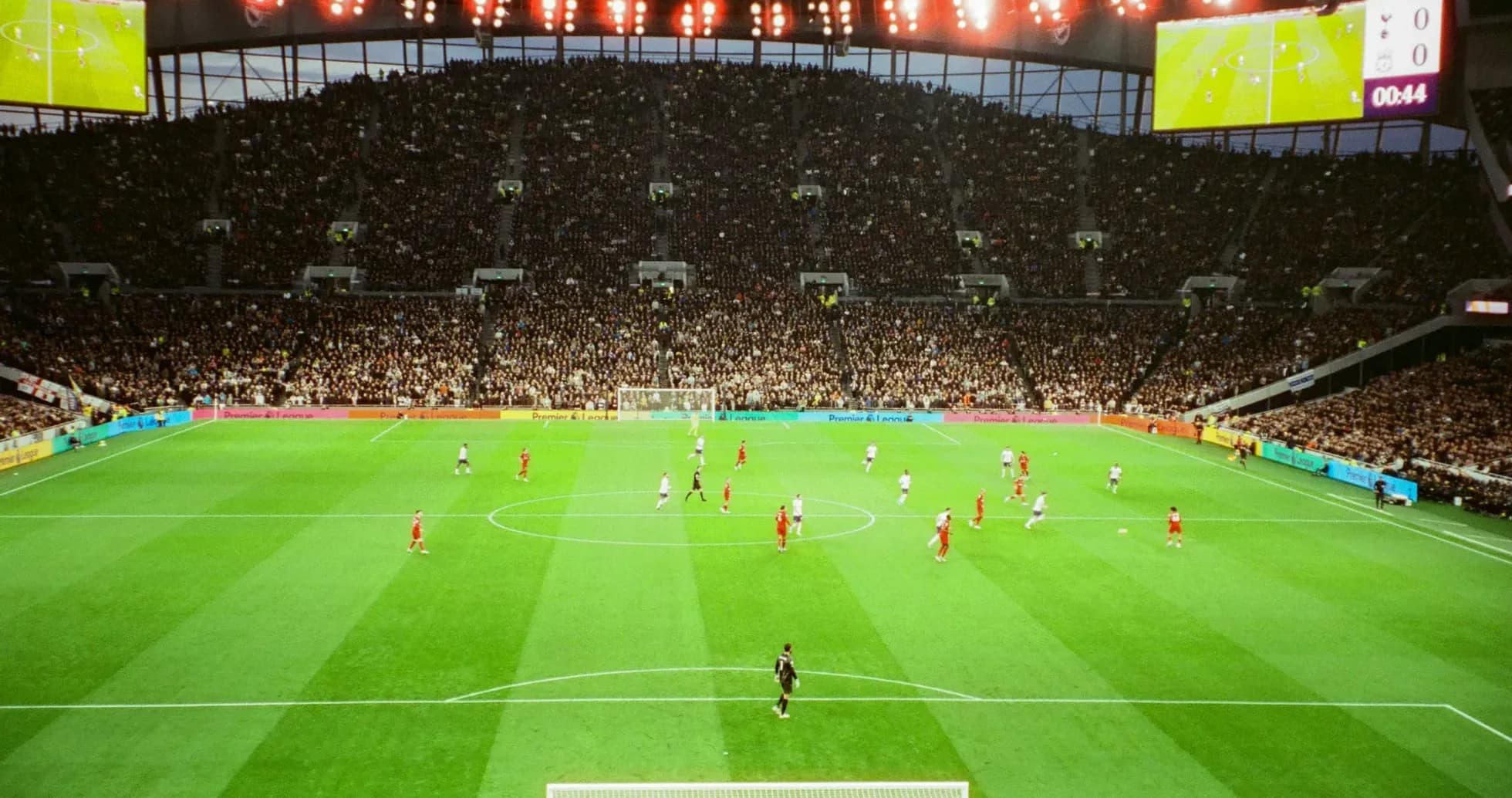
Slovan Bratislava Secures 2-0 Victory Over Mjallby AIF
Hapoel Beer Sheva Dominates FK Crvena Zvezda in UEFA Qualifiers

Celje Dominates Ararat-Armenia in UEFA Champions League Qualifier
Lyon Dominates Sparta Praha in 3-0 Victory: Tactical Analysis
Kauno Žalgiris vs Dinamo Zagreb Tactical Analysis
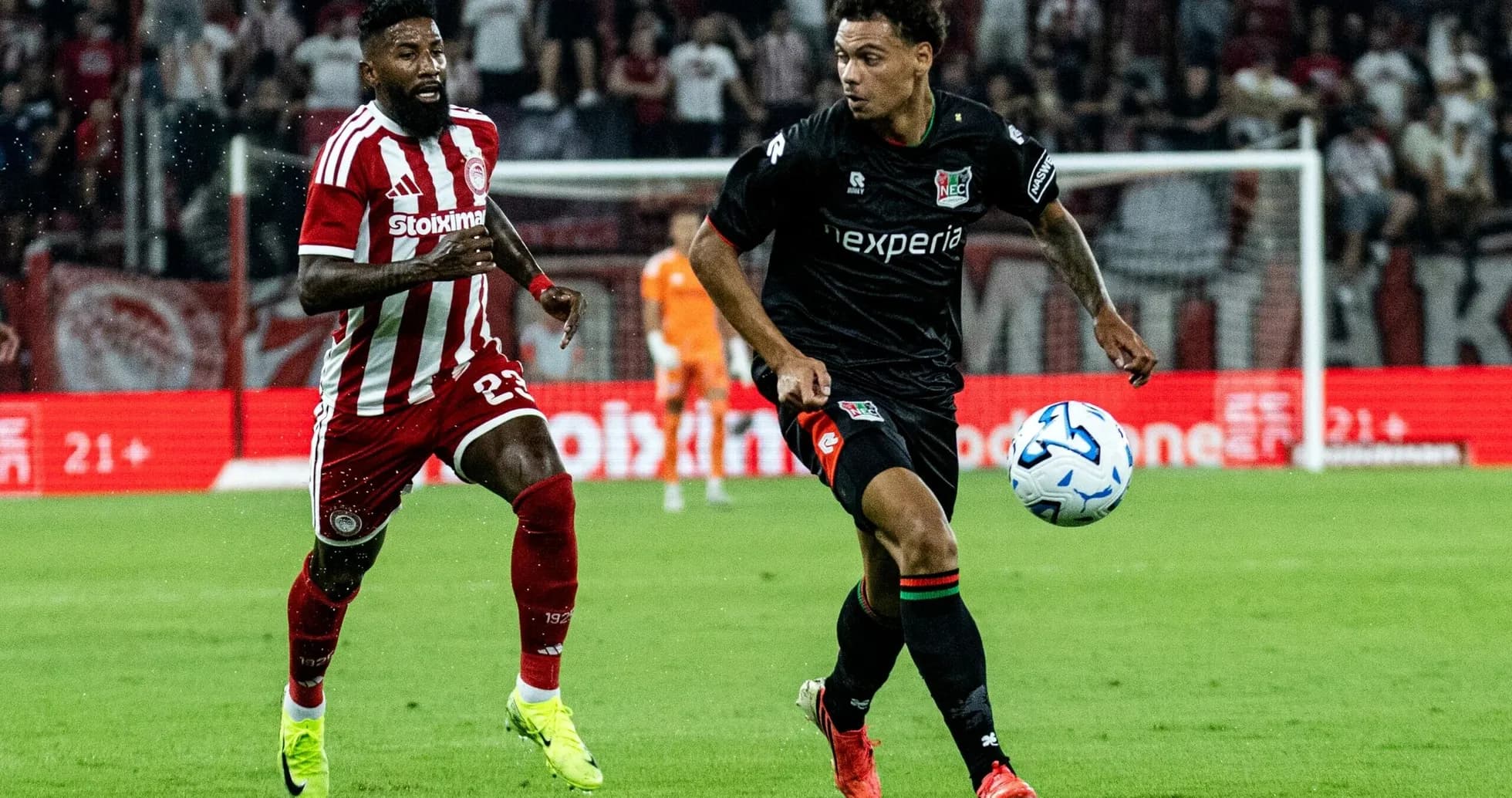
NEC Nijmegen Triumphs 2-1 Over Olympiakos Piraeus in Tactical Battle