
Sporting JAX vs Detroit City: A Stark USL Championship Clash
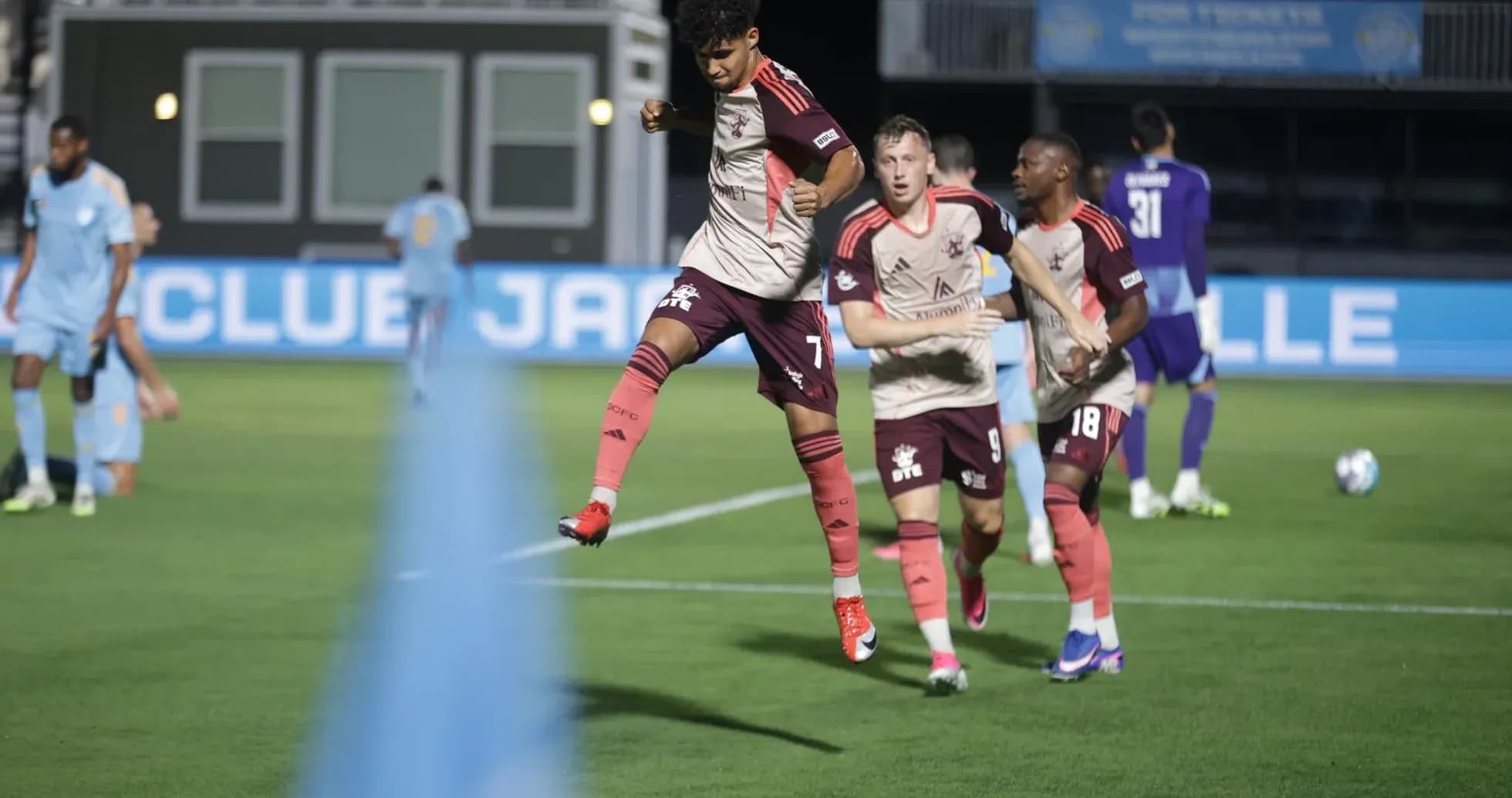
Under the Florida night sky at Hodges Stadium, a top‑versus‑bottom clash in the USL Championship’s Group Stage unfolded with brutal clarity. Sporting JAX, rooted in 13th place with 3 points and a goal difference of -19 heading into this game, were hosting a Detroit City side sitting 2nd with 21 points and a +6 goal difference. On paper it was a mismatch; on the pitch, the 2-6 final scoreline underlined just how wide the gulf currently is between these two squads.
This was not a knockout tie, but it carried the edge of one. For Sporting JAX, winless overall across 13 league matches heading into this game, it felt like a referendum on their identity. Detroit City arrived as a hardened promotion contender, their campaign built on defensive discipline at home and opportunistic attacking on their travels.
Sporting JAX’s seasonal DNA is stark. Overall, they had scored 15 and conceded 34 heading into this match, averaging 1.2 goals for and 2.6 against per game. At home, the imbalance is even sharper: 10 goals for and 20 against across 6 fixtures, an average of 1.7 scored but 3.3 conceded. They had yet to win anywhere, with 0 victories in 13 and no clean sheets. Their form line – “LDLLLLLLLDDLL” – tells a story of a team perpetually on the brink, rarely able to sustain control.
Detroit City’s profile is almost the inverse. Overall, they had 19 goals for and 13 against, averaging 1.5 scored and 1.0 conceded per match. At home they are suffocating (10 scored, 3 conceded), but their away numbers – 9 for and 10 against across 7 games, with 1 win, 2 draws, and 4 defeats – suggest a side still learning how to impose themselves on their travels. Yet their biggest away win, a 2-6 result, hints at a devastating ceiling when their attacking patterns click; this match in Jacksonville echoed that ruthlessness.
Tactically, both lineups were named without explicit formations, but the personnel choices told their own stories. For Sporting JAX, C. Olivares started in goal, shielded by a defensive unit featuring E. Rito, W. Ackwei, R. Edwards, and H. Neville, with T. Rose also listed among the starters and likely part of the back line or a defensive hybrid role. In midfield, the trio of W. Kuzain, R. Somersall, and J. Rossiter carried the burden of linking play and providing some semblance of control, while R. Pedder and E. Jaaskelainen offered attacking thrust.
On the bench, coach options like K. Sadlier, B. Soumaoro, J. Evans, L. Granitur, A. Gomez, A. Al Qaq, and E. Underwood gave Sporting JAX variety in forward and midfield reinforcements, but no obvious defensive specialist capable of radically tightening a back line that had already conceded 6 at home in their heaviest defeat.
Detroit City’s XI, named by Danny Dichio, was built for verticality and aggression. C. Herrera anchored the side in goal, with a defensive core including D. Amoo-Mensah, C. Montgomery, T. Silva, and K. Hernandez-Foster. Ahead of them, A. Diop and P. Etaka offered central presence, while Rafa Mentzingen and D. Smith provided wide or advanced creativity. The forward line, completed by B. Morris and A. Diouf, looked primed to exploit any disorganization in transition.
The substitutes’ bench reinforced Detroit’s structural balance: C. Saldana as alternative in goal; A. Stanley, R. Williams, and R. Hope-Gund as defensive options; M. Rodriguez, C. Rutz, and H. Yamazaki ready to inject energy and attacking variation. In a match that finished 2-6, the depth and clarity of roles in this group were evident.
Disciplinary trends framed the emotional undercurrent. Sporting JAX’s yellow-card distribution heading into this game showed a clear late-game spike: 26.47% of their bookings arriving between 76-90 minutes, with another 20.59% in the 61-75 window. Their red cards were split evenly, 50.00% between 16-30 minutes and 50.00% between 76-90, painting a picture of a side that can lose composure either when chasing an early game that slips away or when fatigue and frustration peak late on.
Detroit City’s caution map is more controlled but still telling. Their yellows cluster in the middle phases: 27.27% between 46-60 minutes and another 27.27% between 61-75, suggesting a team that tightens the screw and accepts bookings as the cost of game management. Their single red card had come in the 16-30 minute range, a reminder that their aggression can occasionally spill over.
In the “Hunter vs Shield” matchup, the contrast was brutal. Sporting JAX’s defence, conceding an average of 3.3 goals at home, faced a Detroit City attack that averages 1.3 away and has already produced a 6-goal explosion on their travels. That structural mismatch was borne out in the 6 goals conceded on the night, matching the heaviest home defeat already logged in their seasonal record.
In the “Engine Room,” Sporting JAX relied on the industrious pairing of W. Kuzain and R. Somersall to screen and build, with J. Rossiter tasked with knitting phases together. Opposite them, A. Diop and P. Etaka, supported by the movement of Rafa Mentzingen and D. Smith, repeatedly found ways to turn midfield possession into direct threat. Without detailed xG numbers, the scoreline itself acts as a proxy: Detroit’s attack was not just more clinical, it was structurally superior in how often it reached dangerous zones.
From a statistical prognosis standpoint, the outcome aligned almost perfectly with the pre-match indicators. A Sporting JAX side conceding 2.6 goals per game overall and 3.3 at home was always vulnerable to a heavy defeat against a high-ranking opponent. Detroit City, with 5 clean sheets overall and a defensive average of just 1.0 goals against per match heading into this game, could afford to take risks going forward, confident they would outscore a host that has failed to score in 5 of 13 league fixtures.
Following this result, Sporting JAX are left to confront the same questions that hung over them at kickoff: how to solidify a back line that leaks chances, how to protect their emotionally volatile late-game periods, and how to translate the individual qualities of players like R. Pedder and E. Jaaskelainen into a cohesive attacking plan. Detroit City, meanwhile, will view this as the template for their away identity: aggressive, vertical, and remorseless once they sense weakness, a performance worthy of a side targeting the sharp end of the USL Championship play-offs.
Related News
San Antonio's Tactical Edge Secures 2–1 Victory Over Colorado Springs

Charleston Battery Dominates Loudoun United 4–1 in Statement Win

Miami FC vs Orange County SC: USL Championship Clash Highlights
Colorado Springs vs San Antonio: USL Championship Group Stage Preview

Charleston Battery vs Loudoun United: Match Preview
Miami FC vs Orange County SC Match Preview