
Sturm Graz vs Fenerbahçe: Key Tactical Insights for Champions League Clash
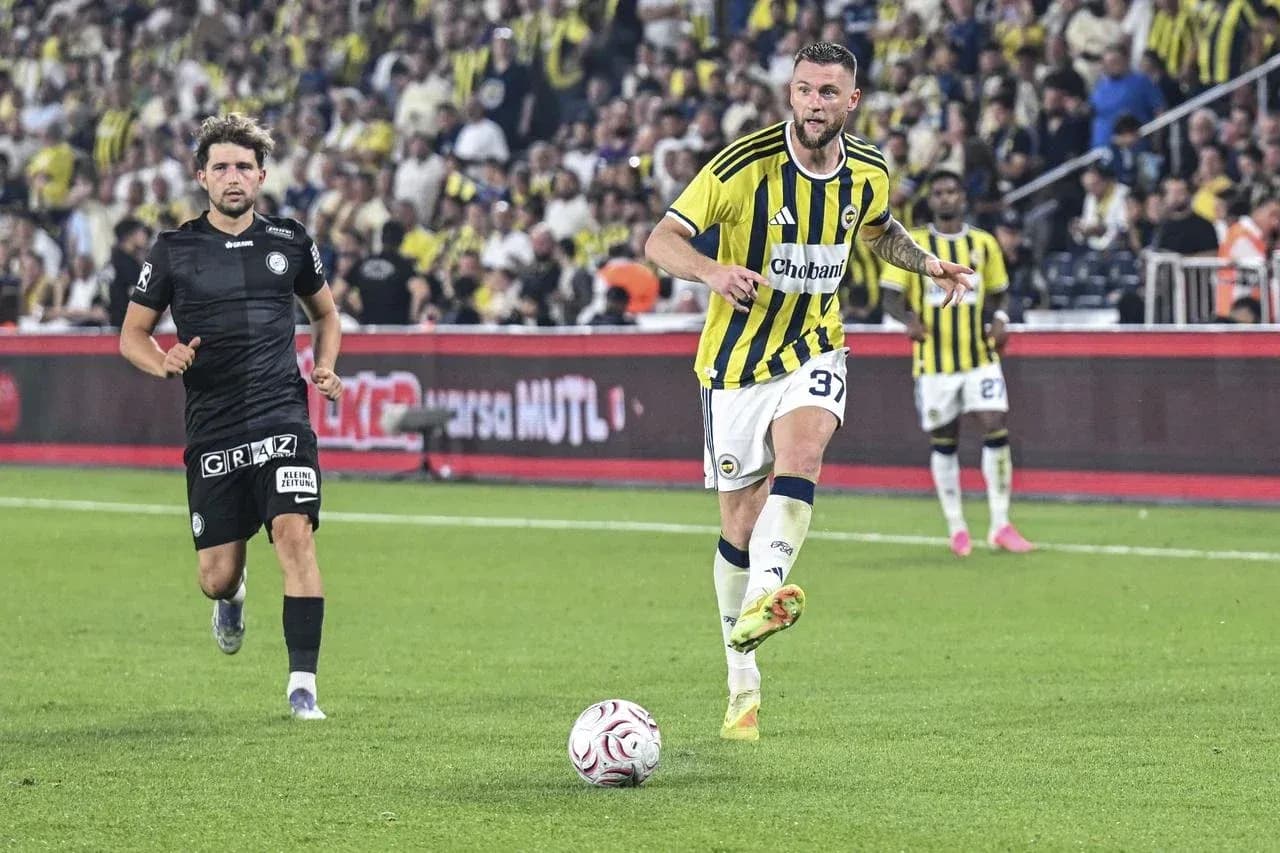
Sturm Graz host Fenerbahçe at Merkur-Arena in Graz in the 3rd Qualifying Round of the UEFA Champions League, with the tie finely balanced in seasonal terms: Fenerbahçe carry a 2-0 advantage from the first leg, so this home game is effectively a make-or-break night for Sturm’s ambition to reach the playoff round and secure a major financial and sporting step forward, while Fenerbahçe are 90 minutes away from moving one round closer to the group stage.
Head-to-Head Tactical Summary
The most recent meeting came on 5 August 2026 in Istanbul in this same 3rd Qualifying Round, where Fenerbahçe beat Sturm Graz 2-0 at Chobani Stadium Fenerbahce Sukru Saracoglu, leading 2-0 at half-time and closing the game down efficiently. In 2017, the clubs met in the UEFA Europa League 3rd Qualifying Round: on 3 August 2017 in Istanbul, Fenerbahçe drew 1-1 with Sturm Graz after leading 1-0 at half-time; a week earlier on 27 July 2017 in Graz, Sturm lost 2-1 at Merkur-Arena, with Fenerbahçe again 2-1 up at the break. Across these three fixtures, Fenerbahçe have two wins and one draw, consistently taking control early and then managing the game, while Sturm have yet to beat them despite twice having home advantage.
Global Season Picture
- League Phase Performance: There is no group-stage or league table data available yet for either side in this Champions League campaign, so their seasonal picture in this competition is defined entirely by early qualifying rounds rather than established standings, goals for, goals against, or points totals.
- Season Metrics: In the league phase-equivalent of this qualifying campaign, Sturm Graz have played 3 matches, winning 2 and losing 1, scoring 6 goals and conceding 2. They are potent at home, averaging 4.0 goals scored and none conceded per home game, but more moderate away with 1.0 scored and 1.0 conceded on average. Their preferred structure has been a 4-4-2 used in all three matches, and they have collected yellow cards mainly between minutes 16–75, indicating an aggressive mid-game phase. Fenerbahçe have also played 3 matches, with 2 wins and 1 draw, scoring 4 and conceding just 1, for an average of 1.3 goals scored and 0.3 conceded per match. At home they are extremely solid (3 goals scored, 0 conceded across 2 games), and away they have been tighter, with 1 goal scored and 1 conceded in their single road match. They have used a 4-2-3-1 in all three games, combining control in midfield with defensive stability, and their yellow cards cluster late in games, especially after the 90th minute, suggesting they are prepared to manage leads with tactical fouls.
- Form Trajectory: Sturm Graz’s form string of “WWL” shows they opened this Champions League run with two straight wins before the 2-0 defeat in Istanbul, so the trajectory has dipped at exactly the wrong moment, turning this return leg into a recovery mission. Fenerbahçe’s “WDW” reflects an unbeaten run with two wins and a draw; they come into Graz with confidence and a positive trend, having just produced a controlled home victory over this same opponent.
Tactical Efficiency
Without explicit comparison indices provided, tactical efficiency must be read from the raw season metrics. Sturm Graz’s attacking profile is front-loaded at home: 4 goals scored in their single home match and 6 overall in 3 games underline that, when they can stretch the game, their 4-4-2 can generate volume and variety of chances. Defensively, conceding only 2 goals in 3 matches (and keeping 2 clean sheets) shows they are usually compact, but the 2-0 loss away to Fenerbahçe exposed vulnerabilities against a structured 4-2-3-1 that can overload wide areas and attack the space behind their full-backs. Fenerbahçe’s numbers point to a more controlled, efficiency-driven model. Scoring 4 and conceding just 1 across 3 fixtures, with 2 clean sheets, they have shown a high defensive efficiency: they rarely allow clear chances and can sit on a lead. Their ability to keep opponents off the scoresheet at home, and limit them to a single goal away, suggests a defensive unit that is well protected by the double pivot and disciplined in transitions. In this second leg, Sturm’s need for at least two goals will likely push them to commit more bodies forward, which plays into Fenerbahçe’s strengths: they can defend deeper in a compact 4-2-3-1 block and then exploit spaces on the counter, where their season metrics indicate they do not need many chances to score. The contrast is clear: Sturm rely on volume and home momentum, while Fenerbahçe rely on structure and defensive control.
The Verdict: Seasonal Impact
This result will heavily shape both clubs’ 2026 European trajectory. For Sturm Graz, overturning a 2-0 deficit at home would transform their season, putting them one round from the Champions League group stage and significantly elevating their financial and sporting platform; failure to progress would likely reframe their European ambitions toward a potential Europa League path and shift focus back to domestic objectives. For Fenerbahçe, successfully defending their first-leg advantage would confirm them as a disciplined, continental-level side capable of navigating two-legged ties through control rather than chaos, strengthening their position as a serious group-stage contender and reinforcing the club’s wider project in 2026. A collapse in Graz, by contrast, would raise questions about game management under pressure and could cast a shadow over their domestic campaign, where expectations will already be high. In short, this second leg is a hinge fixture: for Sturm, it is about keeping the Champions League dream alive; for Fenerbahçe, it is about consolidating their status and momentum on the European stage.
Related News
Luis Díaz Confident Bayern Munich Can Win Champions League
AFC Champions League Matchday One: Insights and Team Strategies

Vincent Kompany’s Bayern Munich Future Not Tied Solely to Champions League Success
Barcelona’s Camp Nou to Host 2029 Champions League Final, Munich Confirmed for 2028
Bayern Munich's Allianz Arena Set to Host 2028 Champions League Final
Allianz Arena to Host 2028 Champions League Final for Third Time