
Sunderland vs Arsenal: Tactical Insights from Premier League Clash
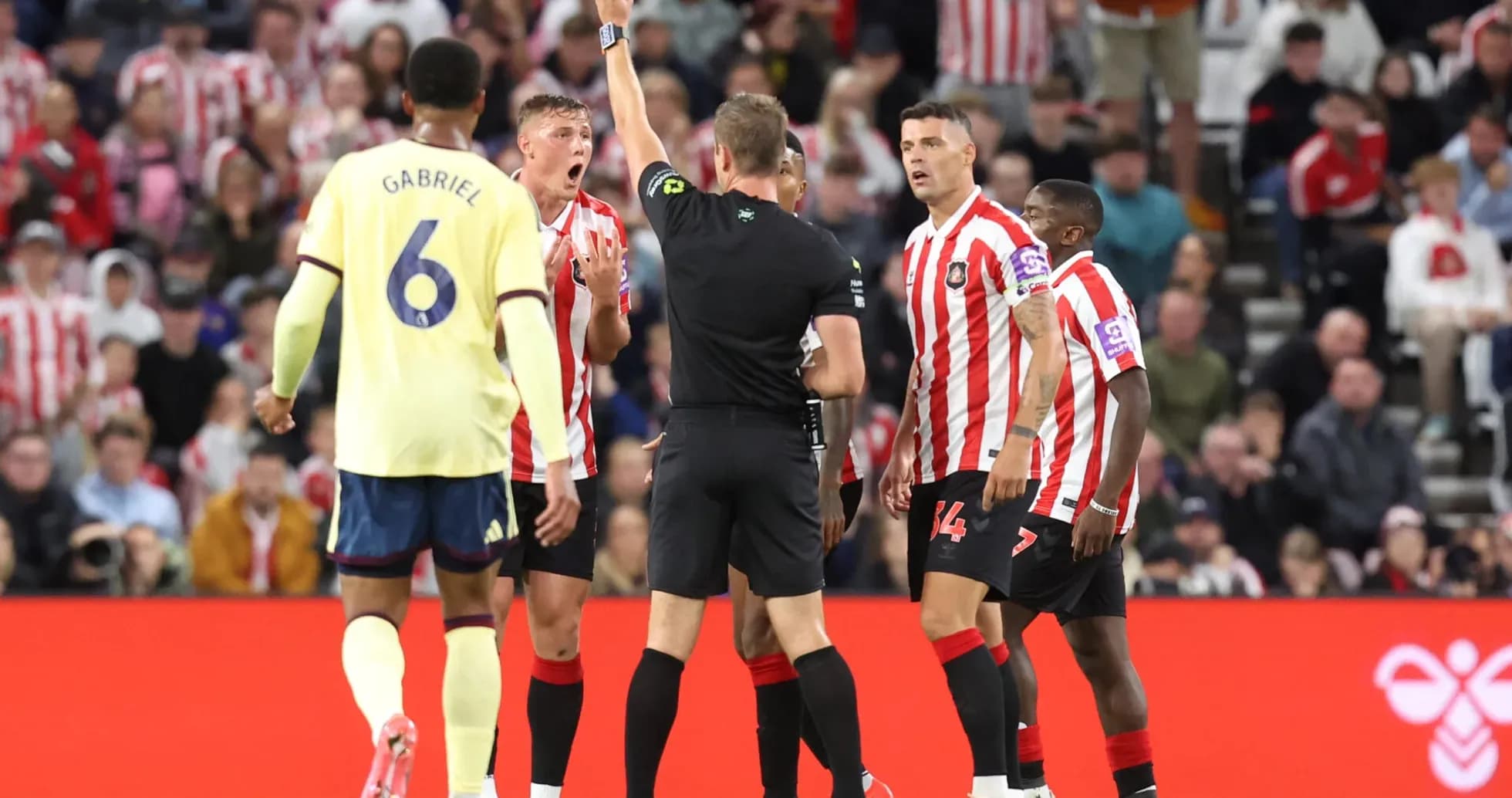
Under the Stadium of Light’s glare, this was billed as a measuring-stick night: Sunderland, newly returned and still feeling out the Premier League’s rhythms, against an Arsenal side that has started the 2026 campaign like a metronome. By full time, a 2–0 away win had preserved Arsenal’s perfect record and left Sunderland with a clearer picture of where their squad stands – and how far they must stretch tactically to live with the division’s elite.
I. The Big Picture – contrasting seasonal DNA
Heading into this game, the standings told the story starkly. Sunderland were 14th with 4 points from 4 matches, their overall goal difference at -2 from 3 goals scored and 5 conceded. At home they had been tight but blunt: 1 goal for and 2 against in 2 matches, an average of 0.5 goals scored and 1.0 conceded at the Stadium of Light.
Arsenal arrived as league leaders, 1st with 12 points from 4, and a goal difference of +7 (8 scored, 1 conceded overall). On their travels they had been immaculate: 2 away wins from 2, 3 goals scored and none conceded, averaging 1.5 goals for and 0.0 against away from home. The clean-sheet column – 3 in 4 overall, including 2 away – underlined a side built on control as much as incision.
Both managers doubled down on their seasonal blueprint with matching 4‑2‑3‑1 shapes. For Sunderland, Régis Le Bris trusted a stable spine: R. Roefs in goal behind a back four of N. Mukiele, K. Danso, D. Ballard and Reinildo; G. Xhaka and N. Sadiki anchoring midfield; T. Meunier, E. Le Fée and N. Angulo supporting lone forward B. Brobbey. Arsenal mirrored the structure: David Raya in goal, a back line of B. White, E. Konsa, Gabriel Magalhães and R. Calafiori; D. Rice with M. Lewis‑Skelly as the double pivot; B. Saka and C. Tzolis flanking M. Ødegaard behind K. Havertz.
II. Tactical voids – absences and discipline
Both squads had to navigate notable absences. Sunderland were without H. Diarra (hamstring) and R. Mundle (knee), trimming their options for energy and rotation in wide and midfield zones – areas where Le Bris already leans heavily on E. Le Fée and N. Angulo to bridge defence and attack.
Arsenal’s defensive resources were thinned by injuries to C. Mosquera (muscle) and, more significantly, W. Saliba (back). In another side, losing a central defensive pillar might force conservatism; here, it simply accelerated the integration of E. Konsa alongside Gabriel Magalhães, protected by D. Rice’s positioning and R. Calafiori’s intelligence on the left.
Disciplinary trends shaped the emotional temperature of the contest even before kick-off. Sunderland’s season-long card map shows a worrying late-game spike: 30.00% of their yellow cards arriving between 61–75 minutes and 20.00% between 76–90, with a solitary but telling red card coming in the 91–105 window. Reinildo embodies that edge: across the season he has 1 yellow and 1 red, with 8 fouls committed. G. Xhaka and D. Ballard have each collected 2 yellows, Xhaka from midfield duels and Ballard from high-contact defending.
Arsenal, by contrast, have spread their cautions more evenly, with 42.86% of their yellows arriving in added time (91–105) but no reds. C. Tzolis has 2 yellows and plays on the disciplinary line, yet remains within Arteta’s controlled-chaos tolerance. That contrast – Sunderland’s tendency to fray late against Arsenal’s late-game composure – loomed over the final quarter of an hour.
III. Key matchups – Hunter vs Shield, and the engine room
The headline duel was always going to be Arsenal’s attacking trident against Sunderland’s central defensive axis. Bukayo Saka came into the fixture as one of the league’s most dangerous wide forwards: 3 goals in 4 appearances, 10 shots (8 on target), plus a perfect penalty record this season with 1 scored from 1. His duel numbers – 42 contested, 25 won – speak to a winger who doesn’t just receive the ball in space but actively wrestles territory.
Opposite him, Reinildo and D. Ballard form a rugged left-sided defensive unit. Ballard’s 63 duels contested and 33 won underline his willingness to step into contact; he has also blocked 2 shots this season, a key detail when facing Saka’s favoured inside-cut onto his left. Reinildo adds 8 tackles and 8 interceptions, but his card history and 8 fouls committed suggest that when stretched laterally, he can be drawn into rash decisions.
Behind them, R. Roefs faced an Arsenal side averaging 2.0 goals per game overall and 1.5 away. Sunderland, by contrast, had failed to score in 1 home match and averaged just 0.8 goals overall. That imbalance framed Brobbey’s lonely task against Gabriel Magalhães and E. Konsa, both comfortable defending large spaces with D. Rice screening.
The engine room was another decisive theatre. D. Rice arrived as one of the league’s top creators from deep, with 2 assists in 4 matches, 288 passes at 91% accuracy and 6 key passes. He is not just a destroyer but the first architect of Arsenal’s attacks. Facing him, G. Xhaka – Sunderland’s heartbeat – carried his own impressive season: 246 passes at 86% accuracy, 10 key passes, 6 tackles, 2 blocks and 5 interceptions. The duel between Rice’s metronomic control and Xhaka’s combative playmaking dictated whether Sunderland could turn Arsenal’s possession into transition opportunities or whether they would be pinned.
On the left, R. Calafiori offered Arsenal an extra creative channel. With 2 assists already, 93 passes at 83% accuracy and 2 key passes, he overlapped beyond C. Tzolis, stretching Sunderland’s right side where N. Mukiele and T. Meunier were tasked with both tracking runs and launching counters.
IV. Statistical prognosis – xG logic without the numbers
Even without explicit xG figures, the shot and goal patterns paint a clear probabilistic picture. Arsenal’s overall scoring rate – 8 goals from 4 matches, with only 1 conceded – combined with 3 clean sheets suggests a side consistently generating higher-quality chances than they allow. Saka’s shot profile (10 total, 8 on target) and Havertz’s 7 shots (5 on target, 2 goals) indicate forwards who convert territory into efficient finishing rather than speculative volume.
Sunderland’s numbers point in the opposite direction. Overall they average 0.8 goals for and 1.3 against per match, with only 1 clean sheet and 1 match where they failed to score. At home, the attack has been anaemic – 1 goal in 2 matches – while the defence has been merely average, conceding 1.0 per home game. Combined with a penalty record of 2 taken, 1 scored and 1 missed (a 50.00% conversion rate), the margins that might swing tight games have not fallen their way.
Layer those trends onto the tactical landscape and the outcome feels almost pre-written. Arsenal’s structured 4‑2‑3‑1, with Rice and M. Lewis‑Skelly locking central spaces and Ødegaard, Saka and Tzolis rotating between the lines, is designed to suffocate teams like Sunderland who rely on moments from E. Le Fée and N. Angulo to break pressure. Sunderland’s late-game disciplinary spikes collide directly with Arsenal’s habit of maintaining tempo deep into added time, where 42.86% of their yellows show they are still contesting aggressively, not retreating.
Following this result, Arsenal’s perfect start extends, their defensive aura away from home intact. Sunderland, meanwhile, leave with a lesson etched into the evening: their 4‑2‑3‑1 has a coherent spine – Roefs, Ballard, Xhaka, Brobbey – but against the league’s most balanced machine, they need sharper transitions, calmer late-game discipline, and a broader attacking threat if the Stadium of Light is to become a fortress rather than a proving ground.
Related News

Tottenham Hotspur's Struggles Continue in 0-0 Draw Against Everton
Liverpool vs Fulham: Goalless Draw Reflects Early Season Realities

Manchester City vs Sunderland: Head-to-Head Stats and Historical Overview
Chelsea and Hull City Draw 2–2: A Tactical Stalemate
Brighton vs Arsenal Stats: Head-to-Head Record and Recent Meetings

Tottenham vs Aston Villa Stats: Head-to-head Record Before September 2026 Clash