
Superstar Players Transforming Football Ownership
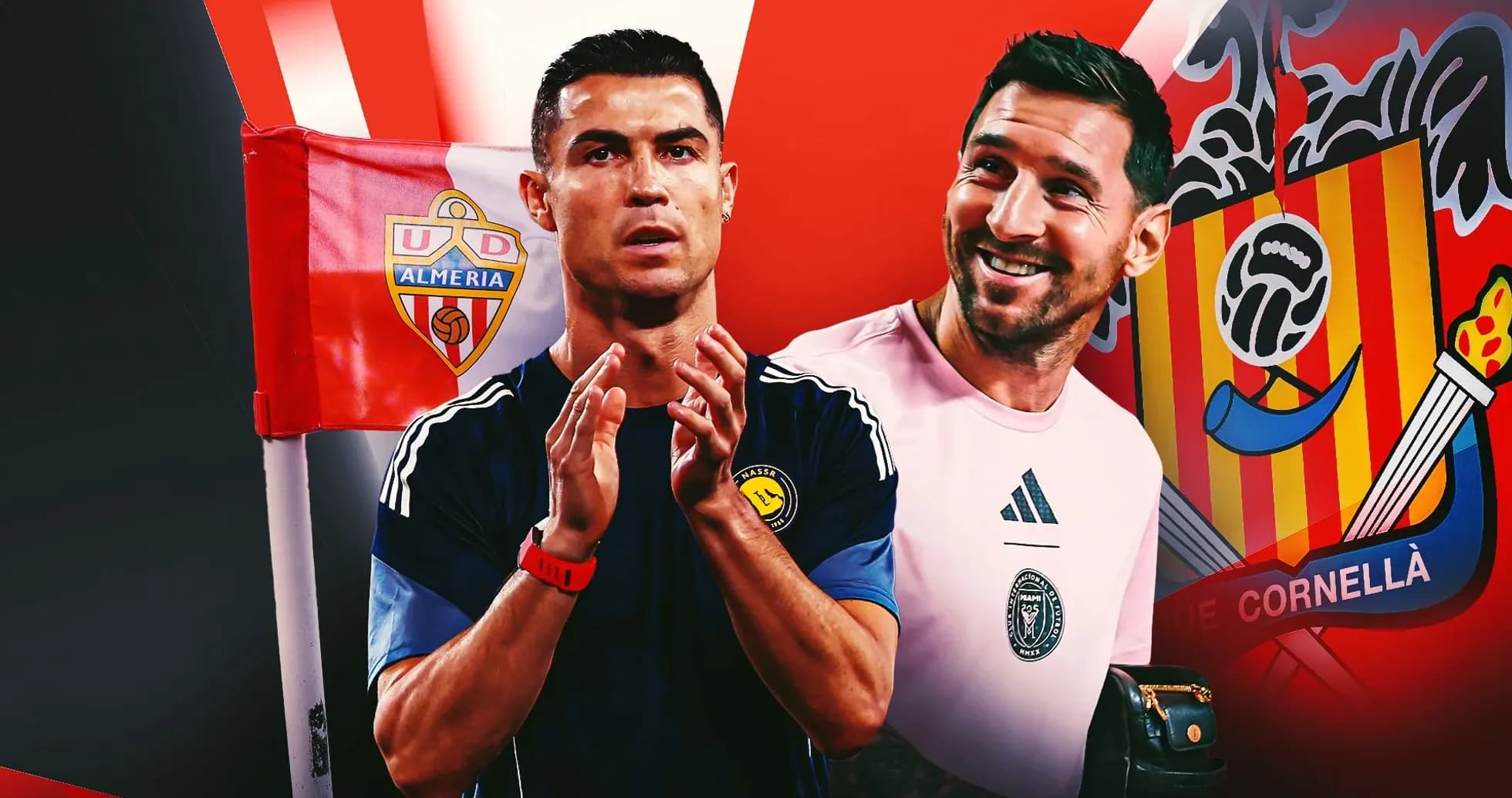
Lionel Messi, Cristiano Ronaldo, Kylian Mbappé, Luka Modrić, Vinícius Júnior, Thibaut Courtois. For two decades they’ve shaped football from the pitch. Now they’re quietly reshaping it from the boardroom.
This isn’t the usual ex-pro buying a local club in retirement. These are active global superstars dropping money, influence and reputation into projects that range from fifth-tier battlers to promotion-chasing heavyweights. Some are already working. Some are already burning. All of them say a lot about where football is heading.
Messi in Cornella: the Barcelona echo
In April, UE Cornella — a modest fifth-tier side from the south-west of Barcelona — dropped a bombshell: Lionel Messi had completed a 100 percent takeover of the club.
Cornella framed it as more than a business move. In their official statement, they called it a reinforcement of “Messi’s close ties to Barcelona and his commitment to the development of sport and local talent in Catalonia” – a thread that runs straight back to his 17 glittering years at FC Barcelona.
Messi didn’t just sign paperwork. He sent a video message to players and staff, formally introducing himself and backing their promotion push. They fell short in the playoffs, but the effect off the pitch was instant. Cornella’s Instagram exploded into the hundreds of thousands, transforming a local Catalan outfit into a club with global visibility overnight.
Underneath the new glare, there’s already a serious football base. Cornella’s academy is well regarded, and Messi is expected to keep pushing investment towards local Catalan talent. The club has pedigree in that area: Jordi Alba came through their system, as did current Barca player Gerard Martin and Arsenal goalkeeper David Raya. They also shocked Spain in 2021 by knocking Atletico Madrid out of the Copa del Rey.
Cornella is Messi’s first European club as an owner, but not his only venture. In Uruguay, he and Inter Miami team-mate Luis Suárez have created Deportivo LSM, a new professional side in the country’s fourth tier. The playing days may be winding down; the building phase is only just starting.
Ronaldo and Almeria: the serial winner turns shareholder
Cristiano Ronaldo has never hidden what he wants next.
“If I can be a club owner, why would I be a manager, sporting director or CEO?” he said after turning 40, outlining his ambition to one day own “several” clubs. The first step came in February, when his CR7 Sports Investments company acquired a 25 percent stake in Segunda División side Almeria.
“It has been a long-held ambition of mine to contribute to football, beyond the pitch,” Ronaldo said in a statement. “UD Almeria is a Spanish club with strong foundations and clear potential for growth.”
Almeria’s primary ownership remains a Saudi Arabian investment group led by Mohammed Al-Khereiji, who made no secret of why Ronaldo fits their project. He called the Portugal captain “the greatest to ever play the game”, highlighting Ronaldo’s deep knowledge of Spanish football after nine years at Real Madrid, where he became the club’s all-time top scorer and won two La Liga titles and four Champions Leagues.
The potential is obvious. Almeria were in La Liga as recently as 2024 and only missed an immediate return by the narrowest of margins, losing 2-1 on aggregate to Malaga in the playoff final. Since then, they’ve gone all-in again: hiring García Pimienta, a coach with 20 years at La Masia on his CV, and signing seven new players to target automatic promotion in 2026-27.
Ronaldo, now 41, got an early taste of the strange new reality in August. In a pre-season friendly in Lisbon, his current team Al-Nassr faced the club he now co-owns. He watched from the stands as Almeria beat Al-Nassr 2-0. On the pitch, he’s still the icon. In the stands, he’s something else entirely.
Vinícius and Alverca: a fallen club, a fast rise
Vinícius Júnior chose a different path. In February 2025, the Real Madrid winger joined a group of investors to buy Alverca in Portugal, taking between 70 and 80 percent of the shares for around €10 million.
The timing could hardly have been better. Three months later, Alverca clinched promotion for the second straight year, returning to the top flight for the first time since 1998.
It has been a long climb back. Relegated from Liga Portugal, Alverca actually folded in 2005. They reformed a year later and started again from the regional divisions. The opening came when the Vincintin family, who also owned Santa Clara, were forced to sell due to league rules preventing ownership of two clubs.
Vinícius is not the hands-on type here. His agent, Thassilo Soares, is the majority shareholder. “Our relationship with Vinícius is remote,” sporting director Fernando Malta told The Guardian via Get French Football News. “We say he is the club’s most famous fan.”
Still, that famous fan has already turned up. Vinícius visited the Complexo Desportivo for the first time early last season when Alverca hosted Benfica. They finished 10th in their first year back among the elite, helped by an extraordinary 35 signings in one season.
Malta is realistic about the ceiling. He doesn’t expect Alverca to start battling Porto, Sporting CP and Benfica for titles. “We are not a big club in terms of size, so we need to be creative in our scouting and use of data,” he said. “The club’s main objective is staying in the top division but the second is selling players.”
Yet Alverca now carries a different kind of pull. Vinícius brings star power, and he’s not alone. Team-mate Eduardo Camavinga and American rapper Travis Scott are also involved, helping with communication and marketing. For a club that once disappeared, that’s a remarkable evolution.
Mbappé and Caen: ambition, backlash and a bruising fall
Kylian Mbappé’s ownership story is already more complicated.
In June 2024, Interconnected Ventures – the company he founded – completed a majority takeover of SM Caen via its investment arm, Coalition Capital. Mbappé reportedly put in €15 million of his own money. It was a return of sorts: Caen almost signed him as a youth player in 2012 before he chose Monaco.
Caen’s official statement hailed a “significant step in the club’s strategic development” and said the deal reinforced their ambition to remain among French football’s historic clubs. At the time, they were in Ligue 2 and pushing for promotion.
The reality went the other way. Caen finished the 2024-25 season in 18th and were relegated to the Championnat National, the third tier, for the first time in 41 years. Results collapsed, popular coach Nicolas Seube was sacked, and the mood turned toxic.
Supporters made their feelings clear. Protests erupted against the new regime, and after a damaging defeat to Clermont Foot, a banner was unfurled: “SMC is not your toy.”
Mbappé has struggled to juggle Real Madrid, France, and the demands of running a professional club. Yet he did make one bold call late last year, appointing former Arsenal and France defender Gaël Clichy as head coach.
Clichy has steadied the ship, even if Caen fell short of the playoffs in May. There is at least optimism about a quick return to Ligue 2. This summer, Mbappé also approved the appointment of former Caen and Paris Saint-Germain midfielder Mathieu Bodmer as director of football. According to L’Équipe, the pair didn’t even speak before the decision was made – a detail that underlines just how stretched Mbappé’s role has become.
Modrić and Swansea: quiet influence, loud impact
While Mbappé wrestled with crisis, Luka Modrić slipped into ownership with the calm that defined his midfield play.
Shortly before ending his 13-year spell at Real Madrid last summer, Modrić became a minority investor and co-owner at Swansea City. His message to fans in the club’s press release was simple: “Hi Swansea fans, I’m Luka Modric and I’m excited to be part of the journey. My goal is to support the club’s growth in a positive way and to help to build an exciting future.”
For Swansea’s American owners – Andy Coleman, Brett Cravatt and Jason Cohen – it was a coup. They had been hunting a high-profile investor, inspired by the Hollywood-powered rise of Wrexham under Ryan Reynolds and Rob McElhenney.
Modrić knew Swansea from his Tottenham days, facing them home and away in 2010-11. According to The Guardian, his decision was driven by a desire to learn the business side of football. He has thrown himself into it, working to understand Swansea’s growth strategy and even volunteering to speak directly with potential signings.
For now, he remains a background figure at the Swansea.com Stadium, still pulling the strings for AC Milan in Serie A. That will change when he finally retires. The club is already feeling the effect of his name.
Snoop Dogg came on board as an investor a couple of months after Modrić. Martha Stewart followed in December. “It puts us in a different league in terms of some of the things that we are able to do,” chief executive Tom Gorringe said.
Swansea’s next step is clear. After missing the Championship play-offs in 2025-26 by nine points, they want back into the Premier League for the first time in nine years. Having a Ballon d’Or winner on the end of the phone as the season unfolds is an advantage very few second-tier clubs can match.
Courtois and the multi-club vision
Thibaut Courtois might not be the most glamorous name on this list, but he may be the most strategic.
At 34, still one of the world’s best goalkeepers and Real Madrid’s No.1, he has already moved into three separate ownership projects this year alone.
In February, Courtois joined an all-star investor group at Le Mans, which already included Novak Djokovic and Felipe Massa. He invested via NxtPlay Capital, the company he co-founded with Gonzalo Vilar. The timing was again impeccable: Le Mans have since celebrated a return to Ligue 1 for the first time since 2010.
Three months later, Courtois and NxtPlay became co-owners of CD Extremadura. The Spanish club has rocketed up the pyramid with four straight promotions since 2022, now sitting in the Primera Federación, the third tier.
Yet the move that resonates most is the one that took him home.
On June 1, Genk announced Courtois’ return as a minority investor and their first ever external corporate shareholder, following the club’s transition into a limited liability company. This is where his professional career began, and the emotion came through in his statement.
“I have pursued excellence all my life. At KRC Genk, I feel that same fire and ambition,” he told the club website. “This investment truly feels like coming home. Through this commitment, I want to help the club continue to grow and strengthen its sporting ambitions. From Limburg to the top of Europe.”
NxtPlay now holds a seat on Genk’s board, with Vilar handling the role while Courtois focuses on Madrid. Even so, the goalkeeper is actively shaping the club’s commercial direction. Across Le Mans, Extremadura and Genk, he has picked clubs with room to grow, with one clear target in mind: a multi-club model to rival the likes of City Football Group, Red Bull and BlueCo.
Messi in a Catalan academy hub. Ronaldo backing a promotion charge in Spain. Vinícius reviving a once-folded Portuguese side. Mbappé learning the hard way in Normandy. Modrić nudging Swansea towards the Premier League. Courtois quietly assembling a network.
The era of the superstar player-owner has arrived. The only question now is which of these projects will still be standing – and winning – when their architects finally hang up their boots.
Related News
Newcastle United's Dilemma: What Now for Nick Woltemade?
Theo Walcott's Bold Prediction for Liverpool: Unpredictable Title Challengers
West Ham Issues Warning Over Offensive Chant
Ipswich Town's Bold £150m Premier League Gamble
Superstar Players Transforming Football Ownership
Barcelona Aims to Finalize New Signings Before La Liga Opener