
Sweden's World Cup Journey: From Chaos to Graham Potter's Revival
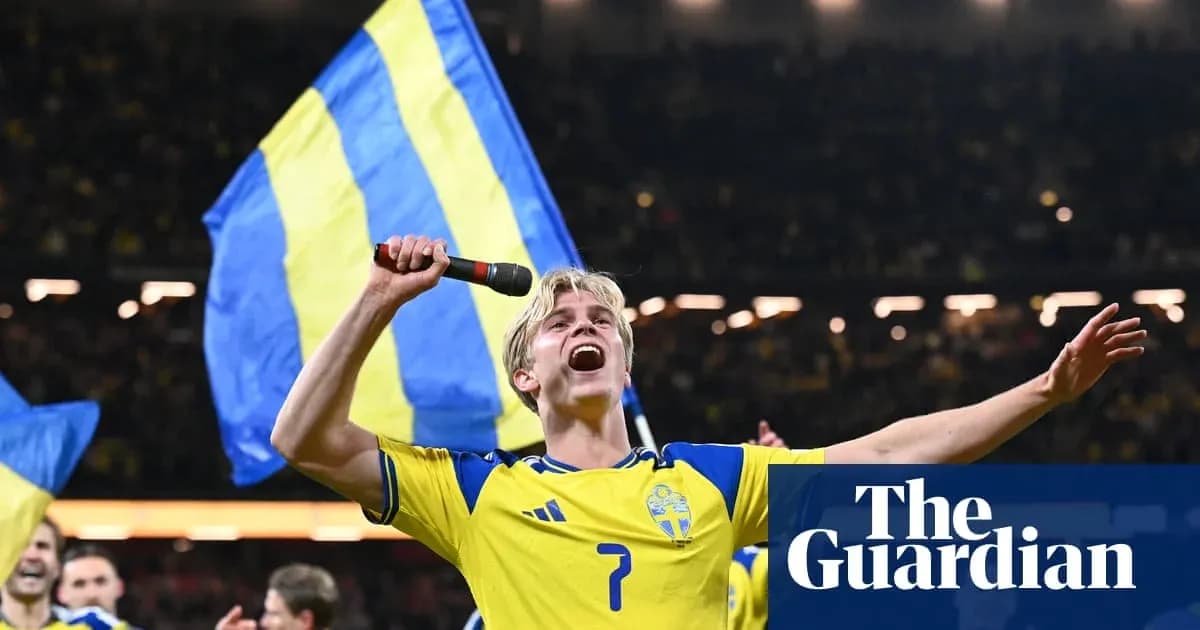
The qualifying campaign was a car crash. Sweden took one point from their first four games under Jon Dahl Tomasson, stumbled through the autumn and hit a new low with a 1-0 defeat by Kosovo in October 2025. The Dane was gone that night. So, seemingly out of nowhere, came the man who had once bewitched a small town in Jämtland.
Graham Potter returned to Sweden, and everything changed.
Potter back where it all began
For Swedish football people, Potter is not “the Chelsea guy” or “the one who struggled at West Ham”. He is the English coach who turned Östersund from a fourth-tier curiosity into an Allsvenskan club that lifted the cup and went to the Emirates and beat Arsenal. He is the outsider who learned the language, embraced the culture and left a mark.
When he told Fotbollskanalen in October 2025 that coaching Sweden would be “an incredible opportunity”, it sounded less like polite interest and more like a plea. Within days he had the job. He did not win either of his first two games, but the Swedish FA barely blinked. By March they had him signed up to 2030. That is how quickly he convinced them.
Potter spoke about preferring a back four. When the stakes rose, he went with a 5-3-2. Pragmatism over principles. He tightened the back line, narrowed the spaces, and asked his forwards to run, chase and break. Sweden went back to something that felt familiar: stubborn, organised, hard to break down, ready to spring forward.
They also went back to life.
Nations League lifeline, Gyökeres the hammer
The Nations League threw Sweden a rope. They grabbed it with both hands.
In Spain, in a semi-final against Ukraine, the plan clicked. Sweden sat deep, absorbed pressure and then tore into the spaces. Viktor Gyökeres, still finding his feet at Arsenal but unstoppable in yellow and blue, hit a hat-trick in a 3-1 win that felt like a statement as much as a result.
The final against Poland was a different beast. Tense, scrappy, often ugly. Poland looked the better side for long stretches, moving the ball cleaner, pushing Sweden back. Yet the game refused to leave Potter’s team alone. It kept offering them little moments, half-chances, broken plays.
The pressure finally told in the most dramatic way. At 2-2, with the clock ticking towards extra time, Gyökeres struck again in the 88th minute. Sweden 3-2 Poland. World Cup ticket secured.
On the touchline, Potter spoke later of an “out-of-body experience”, watching the ball hit the net and suddenly seeing the entire bench sprint past him. It was the kind of night that can bind a squad to a coach for years.
The numbers are stark: Sweden took two points from six games in their original qualifying group, yet they are going to the World Cup. That is the Potter effect in its rawest form.
A group of hazards – and a huge absence
The reward is a group that offers both possibility and peril: Tunisia, Netherlands and Japan. On paper, Sweden can dream of the knockouts. On the pitch, they will have to suffer.
They will also have to do it without their captain and most influential figure. Dejan Kulusevski will not be in North America, and his absence looms over everything. His ability to carry the ball, to knit attacks together, to drag Sweden up the pitch when they sag – there is no like-for-like replacement for that.
There is also a cloud hanging over Alexander Isak. He became the most expensive transfer in Premier League history when he left Newcastle for Liverpool for £125m, but his first season at Anfield bit hard. Form dipped, injuries lingered. He did score after coming off the bench in a 3-1 defeat to Norway on 1 June, yet the performance around that goal was worrying. Norway dominated. Sweden looked fragile.
All of which makes the new talisman impossible to ignore.
Gyökeres, the new face of Blågult
At international level, this is Gyökeres’s team now. The Arsenal forward also had a stuttering start in London, yet when he pulls on the Sweden shirt he turns into a relentless, straight-line threat. Four of Sweden’s six goals in the two playoff ties came from him. He ran in behind, he bullied centre-backs, he finished with conviction.
His popularity at home has surged with every strike. The late winner against Poland pushed it into another stratosphere. All over Sweden, fans have been mimicking his celebration, borrowed from Bane, Tom Hardy’s masked villain in The Dark Knight Rises. It is theatrical, a little menacing, and very much his.
If Sweden are to escape their group, Gyökeres will almost certainly have to drag them there.
Lagerbielke, the baron at the back
If Gyökeres is the headline act, Gustaf Lagerbielke is the subplot that keeps catching the eye.
The Braga centre-back, once of Celtic, produced a towering performance in the playoff final. He scored with a thunderous header and then spent the rest of the night making Robert Lewandowski look mortal. Sweden needed someone to stand up in both boxes. Lagerbielke did it.
His story comes with a twist: he is a baron, 254th in line to the Swedish throne. It is a detail that sounds invented, but it is very real and only adds to the intrigue. There is talk of a move to one of Europe’s big-five leagues this summer. A solid World Cup would turn whispers into bids.
Celtic’s Benjamin Nygren is another who could force his way into the spotlight, but Lagerbielke feels like the one whose role may grow fastest in North America.
Karlström, the quiet anchor
Amid all the noise about forwards and formations, Sweden’s chances may rest on something more understated: control in midfield.
Jesper Karlström offers exactly that. Now captain of Udinese in Serie A, he is a late bloomer who had to fight for his place at Djurgården, then took a detour via Lech Poznan before landing in Italy. Along the way he confronted a gambling addiction, speaking openly about how the club and his family helped pull him through.
On the pitch, he is the classic deep-lying midfielder. Strong in the tackle, tidy on the ball, able to dictate tempo. With younger talents such as Yasin Ayari and Lucas Bergvall buzzing around him, Karlström’s calm presence becomes vital. Against a technical Netherlands and a relentless, intricate Japan, Sweden will need someone to win duels and then keep the ball. He is built for that.
If this team is to go beyond the group, his work – often unnoticed – will be central.
The yellow wall on tour
Swedish fans travel. Everyone in Europe knows it by now. At major tournaments, the stands fill with yellow shirts, flags, and an easy, self-deprecating humour. Blågult supporters mix freely with opposition fans, trade chants and share beers.
Their soundtrack is “Kanna på”, a song about beer pitchers that never stop arriving. It includes the line: “We are coming with 100,000 men.” North America will not see a Viking invasion, but it will see a loud, boisterous, blue-and-yellow wave.
The relationship with the United States carries a strange, almost comic footnote. In 2017, Donald Trump told a rally: “Look what happened in Sweden last night,” citing supposed chaos linked to immigration and terrorism. Nothing of note had happened. Later he said he had been referring to a Fox News report, which only deepened the confusion. Aftonbladet responded by listing the actual events of that day: Owe Thörnqvist’s technical problems in rehearsals, a man setting himself on fire in central Stockholm, and road closures in the north due to harsh weather. That was it.
Now Sweden return to America on their own terms, with a coach who loves the country, a team that survived disaster to reach the World Cup, and a striker who celebrates like a comic-book villain.
The campaign began as a shambles. It arrives in North America as a story of revival. How far can Potter’s patched-up, Kulusevski-less Sweden push it?
Related News

Wilfred Ndidi’s Marriage Reportedly Ends as He Enters New Relationship

Cristiano Ronaldo's Top 5 Most Valuable Cars in His Extraordinary Collection
Ben Whittaker’s Challenge to Prove Eddie Hearn’s Bold British Boxing Bet
Peter Handscomb on the Challenge of Facing Indian Bowlers
How to Watch UFC 332: Silva vs. Wang Live on CBS and Paramount+ This Saturday
Raul Rosas Jr. Shares His Thoughts on the Shocking UFC Vegas 121 Finish Against Raoni Barcelos