
Tampa Bay Rowdies Dominate Brooklyn in USL 1 Match
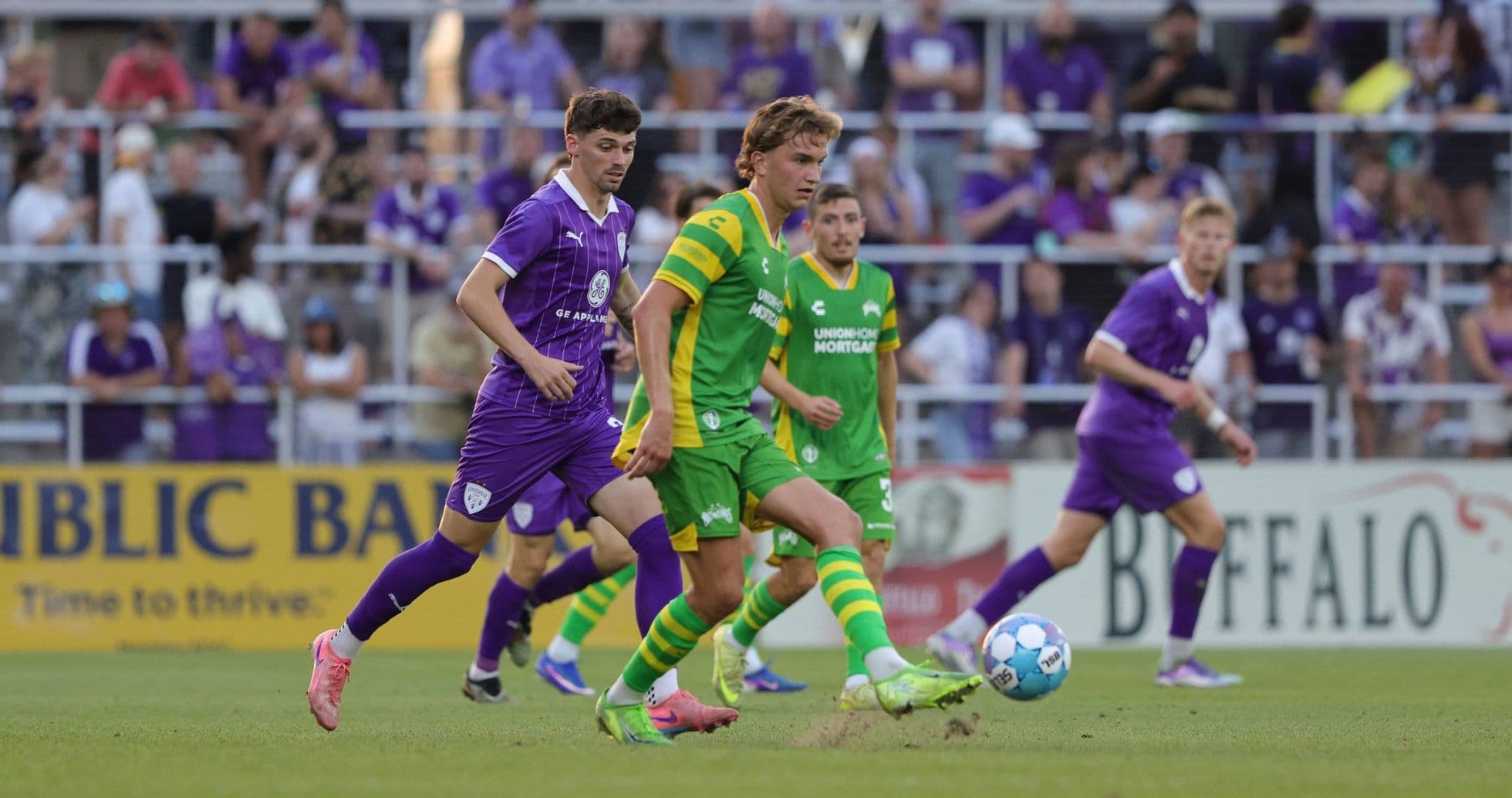
On a cool night at Maimonides Park, the numbers said this should be a mismatch, and the pitch simply confirmed the script. Brooklyn, 12th in USL 1 and fighting the gravity of a long, uneven campaign, ran into a Tampa Bay Rowdies side that sits top of the group and carries itself like a team already tuned for play-off football. The 2–0 full-time scoreline mirrored the season-long trajectories: Brooklyn’s -11 overall goal difference against Tampa Bay’s +15, a fragile host conceding 1.8 goals per game overall to a visitor that allows just 0.6.
Heading into this game, Brooklyn’s home profile was that of a team trying to build a fortress from sand. At home they had scored 6 goals and conceded 7, averaging 0.9 goals for and 1.0 against. Respectable, but thin margins for a side that had only 2 home wins from 7 and had failed to score in 3 of those fixtures. Across 13 matches overall, 13 goals for and 24 against painted a picture of a squad that works hard but often lacks the cutting edge and defensive concentration to survive long stretches under pressure.
Tampa Bay arrived with the swagger of an unbeaten away record: 5 wins and 2 draws on their travels, 9 goals scored and only 2 conceded, an away average of 1.3 goals for and a miserly 0.3 against. Eight clean sheets overall, including 5 away, told you what Brooklyn were up against: a defensive unit that rarely bends and almost never breaks.
The lineups underlined the contrast in squad identity. Brooklyn’s XI, anchored by L. Burns in goal, leaned heavily on experience and versatility. At the back, T. Vancaeyezeele, C. Frogson, V. Latinovich and Gabriel Alves formed a back line that, on paper, should have been able to absorb pressure and play out. Ahead of them, the double pivot of M. Pinto and T. McNamara offered structure and passing range, with S. Stojanovic and J. Servania tasked with linking to the front. Wide creative responsibility fell to C. Olney JR, while J. Obregon led the line, a lone reference point expected to battle a disciplined Rowdies defence.
On the bench, Brooklyn’s options spoke more to energy and change of pace than to like-for-like quality. S. Hundal and A. Kante offered direct running if the game opened up, while J. Klein and P. Mangione could tilt the midfield balance toward attack. R. Romeo provided defensive cover, and J. Lee was the insurance policy in goal. It is a bench built for chasing games rather than controlling them.
Tampa Bay’s starting side, guided by coach Dominic Casciato, felt more like a machine with interchangeable parts. J. Waite, behind a defensive unit featuring D. Acoff, L. Archer, N. Dossantos and C. Ostrem, anchored a back line that has been the foundation of their season. In midfield, S. Cruz and M. Schneider supplied the legs and balance, with L. Perez and Mattheus offering the technical edge between the lines. Up front, R. Cicerone and M. Myers formed the spearhead, a pairing tailored to exploit a Brooklyn defence that has conceded 17 goals on their travels and 7 at home, and which has often been exposed in transition.
The Rowdies’ bench was deep and flexible: L. Hilton and M. Micaletto as controllers or tempo changers, I. LeFlore and E. Conway as wide threats, Pedro Becker as a central option, and Y. Leerman plus K. Henderlong to reinforce the back line or attack as needed. J. Kachurak provided goalkeeping cover. This is a squad built not just to start well but to maintain and adapt, a crucial edge in a league where fixture congestion and game states can turn quickly.
Discipline has been a quiet but important subplot for both sides. Brooklyn’s yellow-card distribution shows a team that often gets dragged into reactive defending after the break: 21.43% of their yellows come between 46–60 minutes and another 21.43% between 91–105 minutes, a sign of late-game strain. Their red cards, both shown between 91–105 minutes, underline how fatigue and frustration can boil over at the death. Tampa Bay, by contrast, spread their cautions more across the game, but with notable spikes in the 31–45 and 76–90 ranges (23.08% in each band). They push hard at the end of both halves, walking the line between aggression and indiscipline.
That timing profile intersects sharply with the tactical narrative. Brooklyn, conceding an overall average of 1.8 goals per game, are most vulnerable once legs tire and structure frays. Tampa Bay, scoring 1.6 goals per game overall and 1.3 away, habitually turn the screw in those same late windows. Even without minute-by-minute goal data, the card patterns suggest the Rowdies intensify their press and verticality just as Brooklyn tend to foul more and chase shadows.
The “Hunter vs Shield” matchup was always going to tilt green and yellow. Tampa Bay’s attack, with 23 goals overall and a best away result of 0–2, thrives on control and opportunism. Brooklyn’s defence, whose worst away defeat was 4–1 and whose biggest home loss was 0–2, has rarely been blown apart at Maimonides Park but too often concedes the crucial first blow. With Brooklyn failing to score in 5 of 13 matches overall and Tampa Bay keeping 8 clean sheets, the probability leaned heavily toward another shutout for Waite and his back line.
In the “Engine Room”, Brooklyn’s hopes rested on McNamara and Pinto imposing a tempo that denied Tampa Bay their favoured rhythms. Opposite them, Cruz and Schneider had the task of disrupting passing lanes into Servania and Olney JR while springing quick transitions to Cicerone and Myers. Given Tampa Bay’s defensive averages and their unbeaten away record, the away midfield’s ability to win second balls and compress space between the lines was always likely to decide whether this would be a contest or a procession.
From an xG and defensive solidity standpoint, all indicators pointed toward a controlled Rowdies win with limited high-quality chances for Brooklyn. A team that averages 0.9 goals at home against a visitor conceding 0.3 away is statistically set up to struggle to create clear openings. Conversely, even if Tampa Bay’s away xG per match hovered close to their 1.3 goals average, Brooklyn’s 1.0 goals conceded at home suggested that any lapse would be punished with ruthless efficiency.
Following this result, the storyline does not change so much as it hardens. Brooklyn remain a side searching for an identity that can convert honest work into points, their squad shaped more for survival than dominance. Tampa Bay, with depth on the bench and balance across the XI, look every inch a promotion contender: compact without the ball, calculated with it, and relentlessly consistent on their travels.
Related News
San Antonio's Tactical Edge Secures 2–1 Victory Over Colorado Springs

Charleston Battery Dominates Loudoun United 4–1 in Statement Win

Miami FC vs Orange County SC: USL Championship Clash Highlights
Colorado Springs vs San Antonio: USL Championship Group Stage Preview

Charleston Battery vs Loudoun United: Match Preview
Miami FC vs Orange County SC Match Preview